1. Indications and Usage
Myelodysplastic Syndromes (MDS): Treatment of patients with intermediate-2 or high-risk IPSS-defined MDS.
Chronic Myelomonocytic Leukemia (CMML): Treatment of adult patients with CMML.
Acute Myeloid Leukemia (AML): Treatment of patients with AML (including MRC with >20-30% blasts and multiple dysplasia) according to WHO classification.
2. Dosage and Administration
Route of Administration: For Subcutaneous (SC) Injection ONLY. Intramuscular or intravenous administration is prohibited.
Recommended Dosage: 75 mg/m² administered daily for 7 consecutive days every 4-week cycle. At least 6 cycles are recommended.
Critical Administration Instructions:
Reconstitution: Reconstitute each vial with 4 mL Sterile Water for Injection to achieve a concentration of 25 mg/mL. Gently rotate to form a cloudy suspension; do not filter.
Injection: If the dose exceeds 4 mL, split equally into two syringes and inject at two separate sites (abdomen, thigh, or upper arm).
Timing: Administer within 1 hour at room temperature, or within 8 to 22 hours if refrigerated immediately after reconstitution.
3. Mechanism of Action
DNA Methylation Inhibition: Azacitidine is a cytidine analog that incorporates into RNA and DNA.
Demethylation: It inhibits DNA methyltransferase, resulting in hypomethylated DNA, which restores normal function to key genes controlling differentiation and proliferation, leading to rapid apoptosis of malignant cells.
4. Safety and Warnings
Bone Marrow Suppression: Severe neutropenia, thrombocytopenia, and anemia are common. The nadir typically occurs around days 12-14.
Hepatic Toxicity: Potential hepatotoxicity, including elevations in liver enzymes, bilirubin, and alkaline phosphatase.
Embryo-Fetal Toxicity: Can cause fetal harm; effective contraception is required for both males and females during treatment.
Renal Toxicity: Monitor renal function and electrolytes (e.g., unexplained decrease in serum bicarbonate <20 mEq/L).
5. Adverse Reactions and Clinical Research
Most Common Adverse Reactions: Bone marrow suppression (neutropenia, thrombocytopenia, anemia), nausea, vomiting, diarrhea, increased transaminases, and injection site reactions (erythema, swelling, induration).
Clinical Research Highlights: Clinical studies have demonstrated that azacitidine significantly improves overall survival and reduces the risk of transformation to AML compared to conventional care regimens (e.g., low-dose cytarabine or best supportive care).
6. Drug Interactions
Hepatotoxic Agents: Concomitant use with other hepatotoxic drugs may increase the risk of liver damage.
Myelosuppressive Agents: Concurrent use with other myelosuppressive agents may exacerbate bone marrow suppression.
Vaccines: Live or attenuated vaccines should be avoided.
7. Pharmaceutical Information
Chemical Composition: Active Ingredient: Azacitidine. Excipients: Mannitol, Sodium Hydroxide and/or Hydrochloric Acid (for pH adjustment).
Appearance: White to off-white porous cake or powder.
Packaging: Single-use vial (100 mg).
Storage: Store in the original carton at 2°C to 8°C.
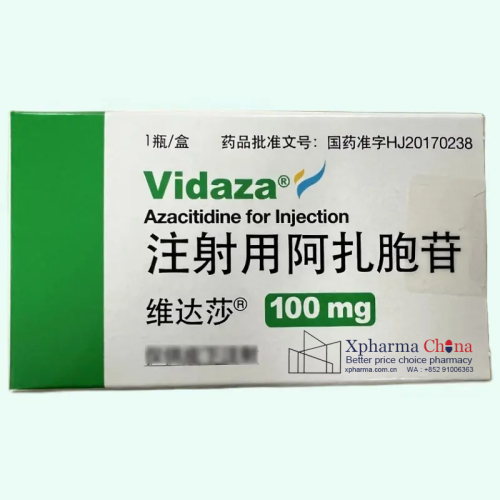
Vidaza Azacitidine for Injection
Brand Name:维达莎 ®(Vidaza®)
Generic Name: Azacitidine
Strength: 100 mg per vial, 1 vial per box
Manufacturer: Baxter Oncology GmbH
Marketing Authorization Holder: Bristol-Myers Squibb Pharma EEIG
Approval Date in China: February 14, 2022
Registration Number:国药准字 HJ20170238
Storage: Store below 30°C, protected from light. Do not freeze the reconstituted suspension. Use reconstituted suspension within 1 hour if stored at room temperature, or within 8 hours at 2°C–8°C. Avoid refrigeration after reconstitution if intended for subcutaneous injection. Refer to the full package insert for detailed storage rules.
Price&Cost:Contact Us now for the best price of Azacitidine(Vidaza)
Only logged in customers who have purchased this product may leave a review.
Reviews
There are no reviews yet.