1. Indications and Usage
Anemia in CKD: Indicated for the treatment of anemia associated with chronic kidney disease (CKD), including patients undergoing dialysis (DD-CKD) and those not undergoing dialysis (NDD-CKD).
2. Dosage and Administration
Recommended Starting Dosage: Individualized by weight. For dialysis-dependent patients, 100 mg (<60 kg) or 120 mg (≥60 kg) administered orally three times weekly (TIW). For non-dialysis-dependent patients, 70 mg (<60 kg) or 100 mg (≥60 kg) TIW.
Administration: Can be taken with or without food. The timing relative to dialysis is flexible. If a dose is missed, do not make up; resume the next scheduled dose.
Dose Adjustments: Titrate based on hemoglobin (Hb) levels to maintain Hb between 100–120 g/L. Adjust every 4 weeks based on current Hb and Hb trends over the preceding 4 weeks. Avoid excessive elevation of Hb.
3. Mechanism of Action
HIF-PHI: Roxadustat is a small molecule inhibitor of prolyl hydroxylase (PHD).
Pathway: It inhibits the degradation of hypoxia-inducible factor (HIF), leading to the upregulation of endogenous erythropoietin (EPO) production and improved iron mobilization and utilization, thereby stimulating erythropoiesis.
4. Safety and Warnings
Cardiovascular Thrombosis: Like other anemia treatments, excessively rapid increases in Hb or targeting Hb levels too high may increase the risk of thrombotic events.
Hypersensitivity: Contraindicated in patients with known hypersensitivity to roxadustat or any excipients.
Pregnancy and Lactation: Contrainicated during pregnancy and breastfeeding due to potential fetal and infant harm.
5. Adverse Reactions and Clinical Research
Common Adverse Reactions: Hyperkalemia, hypertension, insomnia, and diarrhea are commonly reported.
Clinical Research: Clinical trials have demonstrated that roxadustat effectively increases Hb levels and reduces the need for exogenous erythropoiesis-stimulating agents (ESAs) and iron supplementation in CKD patients.
6. Drug Interactions
Multivalent Cation-Containing Agents: Co-administration with antacids or phosphate binders containing aluminum, magnesium, calcium, or iron can decrease plasma exposure. Roxadustat should be taken at least 1 hour apart from these agents (except lanthanum carbonate).
UGT/OAT Inhibitors and Inducers: Co-administration with probenecid (UGT/OAT inhibitor) or rifampin (UGT inducer) can significantly alter roxadustat exposure and Hb responses.
Statins: Roxadustat may increase the exposure of certain statins (e.g., simvastatin, atorvastatin) and co-administration may increase the risk of myopathy or rhabdomyolysis.
7. Pharmaceutical Information
Active Ingredient: Roxadustat.
Dosage Forms: Available in 20 mg and 50 mg capsules.
Storage: Store at or below 30°C in well-closed containers to protect from moisture.
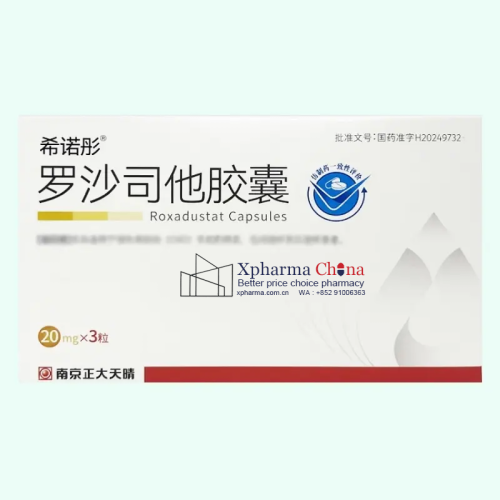
Xinuotong Roxadustat Capsules
Brand Name: 希诺彤 ®(Xinuotong®)
Generic Name: Roxadustat
Strength: 20 mg per capsule, 3 capsules per box
Manufacturer: Nanjing Chia Tai Tianqing Pharmaceutical Co., Ltd.
Marketing Authorization Holder: Nanjing Chia Tai Tianqing Pharmaceutical Co., Ltd.
Approval Date in China: December 17, 2024
Registration Number: 国药准字H20249732
Storage: Seal tightly, store below 30°C and protect from light. Refer to the full package insert for detailed storage specifications.
Price&Cost:Contact Us now for the best price of Roxadustat(Xinuotong)
Only logged in customers who have purchased this product may leave a review.

Reviews
There are no reviews yet.