1. Indications and Usage
Glecirasib citrate tablets are indicated for the treatment of adult patients with locally advanced or metastatic non-small cell lung cancer (NSCLC) with a confirmed KRAS G12C mutation who have received at least one prior systemic therapy.
2. Dosage and Administration
Recommended Dosage: The recommended dosage is 800 mg (four 200 mg tablets) taken orally once daily, administered continuously until disease progression or unacceptable toxicity.
Administration: Tablets must be swallowed whole with water and should not be split, crushed, or chewed. The tablets can be taken with or without food.
Missed Dose: If a dose is missed, do not take an extra dose on the same day. Resume with the next scheduled dose.
Dose Modifications: Dose reductions (to 400 mg, then 200 mg once daily) or interruptions are required based on the severity of adverse reactions. Patients who cannot tolerate 200 mg once daily should permanently discontinue the drug.
3. Mechanism of Action
Glecirasib is a highly selective, covalent inhibitor of the KRAS G12C mutant protein. It binds irreversibly to the cysteine residue at the G12C position, locking the mutant KRAS protein in its inactive GDP-bound state. This mechanism inhibits the aberrant signaling pathways that drive tumor cell proliferation and survival.
4. Safety and Warnings
Hepatotoxicity: Elevations in liver enzymes (AST, ALT) and bilirubin are common. Liver function tests must be monitored regularly, and dose adjustments or permanent discontinuation may be required.
Interstitial Lung Disease/Pneumonitis: May occur; monitor for new pulmonary symptoms and manage according to severity.
Hematologic Toxicity: Anemia and neutropenia are frequent adverse reactions that require regular blood count monitoring.
Embryo-fetal Toxicity: Based on its mechanism, this drug can cause fetal harm.
5. Adverse Reactions and Clinical Research
Common Adverse Reactions: The most common adverse reactions include anemia, increased blood bilirubin, increased AST, increased triglycerides, increased ALT, hypoproteinemia, and proteinuria.
Clinical Research: Efficacy and safety were established in pivotal Phase II clinical trials. The objective response rate was approximately 49.6%, with a median progression-free survival of 8.2 months and a median overall survival of 17.5 months.
6. Drug Interactions
CYP Enzymes: The impact of strong CYP3A4 or CYP2C19 inhibitors and inducers on the pharmacokinetics of glecirasib has not been fully evaluated; caution is advised.
Other Drugs: The safety and efficacy of combinations with other antineoplastic agents have not been evaluated.
7. Pharmaceutical Information
Composition: The active ingredient is glecirasib citrate.
Appearance: Light yellow to yellow film-coated tablets.
Storage: Store in a tightly closed container, protected from light and moisture.
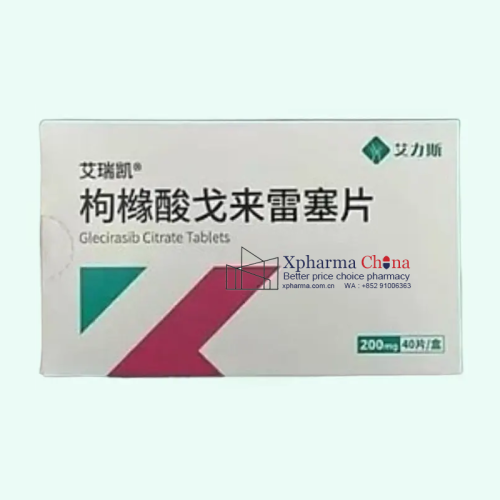
Airuikai Glecirasib Citrate Tablets
Brand Name: 艾瑞凯 ®(Airuikai®)
Generic Name: Glecirasib Citrate
Strength: 200 mg per tablet, 40 tablets per box
Manufacturer: Asymchem Life Science (Tianjin) Co., Ltd.
Marketing Authorization Holder: Shanghai Allist Pharmaceuticals Co., Ltd.
Approval Date in China: May 22, 2025
Registration Number: 国药准字H20250020
Storage: Store sealed, protected from light and moisture at temperature not exceeding 30°C; keep in original packaging, consume promptly after opening inner package, keep out of reach of children. Refer to the full package insert for detailed storage specifications.
Price&Cost:Contact Us now for the best price of Glecirasib Citrate(Airuikai)
Only logged in customers who have purchased this product may leave a review.

Reviews
There are no reviews yet.