- Indications and Usage Insulin glargine and lixisenatide injection (II) is indicated as an adjunct to diet and exercise to improve glycemic control in adults with type 2 diabetes mellitus.
- Dosage and Administration Recommended Dosage: The recommended starting dosage is 10 to 40 units administered subcutaneously once daily. Administration: The injection should be administered within 1 hour before a meal, preferably at the same time each day. It should not be administered intravenously or intramuscularly. Dose Titration: Dosage should be titrated based on individual patient response and glycemic targets. The maximum daily dosage is 40 units of insulin glargine and 20 mcg of lixisenatide. Missed Dose: If a dose is missed, it should be administered within 1 hour before the next meal.
- Mechanism of Action Insulin Glargine: A long-acting insulin analog that provides a steady basal level of insulin to regulate glucose metabolism. Lixisenatide: A glucagon-like peptide-1 (GLP-1) receptor agonist that enhances glucose-dependent insulin secretion, suppresses inappropriate glucagon secretion, and slows gastric emptying.
- Safety and Warnings Hypoglycemia: A common risk, particularly when used with other antidiabetic agents. Gastrointestinal Reactions: Nausea, vomiting, and diarrhea are common adverse reactions. Pancreatitis: Acute pancreatitis has been reported with GLP-1 receptor agonists. Renal Impairment: Acute renal failure has been reported, often associated with severe gastrointestinal reactions leading to dehydration. Thyroid C-Cell Tumors: Rodent studies have shown an increased incidence of thyroid C-cell tumors; the relevance to humans is unknown.
- Adverse Reactions and Clinical Research Common Adverse Reactions: The most common adverse reactions include hypoglycemia, nausea, vomiting, and diarrhea. Clinical Research: Efficacy and safety were established in pivotal Phase 3 clinical trials (e.g., ALIANCE trial), which demonstrated significant improvements in hemoglobin A1c compared to insulin glargine alone.
- Drug Interactions Oral Medications: The rate and extent of absorption of orally administered medications may be affected due to the delayed gastric emptying caused by lixisenatide. Other Antidiabetics: Increased risk of hypoglycemia when used in combination with sulfonylureas or insulin. Digoxin: Absorption may be reduced due to slowed gastrointestinal transit.
- Pharmaceutical Information Composition: The active ingredients are insulin glargine and lixisenatide. Appearance: A clear, colorless solution for subcutaneous use. Storage: Store in a refrigerator at 2°C to 8°C. Do not freeze. Once in use, it may be kept at room temperature (below 30°C) for up to 14 days.
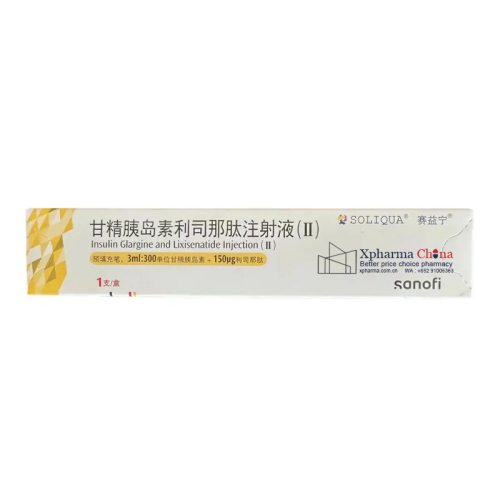
Soliqu Insulin Glargine and Lixisenatide Injection (II)
Brand Name: 赛益宁 ®(Soliqua®)
Generic Name: Insulin Glargine and Lixisenatide
Strength: Pre-filled pen, 3 mL per pen; each pen contains 300 units insulin glargine plus 150 μg lixisenatide, 1 pen per box
Manufacturer: Sanofi-Aventis Deutschland GmbH
Marketing Authorization Holder: Sanofi-Aventis Groupe
Approval Date in China: August 19, 2019
Registration Number: 国药准字HJ20190027
Storage: Unused pre-filled pens: store at 2°C–8°C, protect from light, do not freeze. After first use: store below 25°C and finish within 28 days, do not refrigerate again. Keep away from children. Refer to full package insert for detailed storage rules.
Price&Cost:Contact Us now for the best price of Insulin Glargine and Lixisenatide(Soliqua)
Only logged in customers who have purchased this product may leave a review.
Reviews
There are no reviews yet.