1. Indications and Usage
Dapagliflozin tablets are indicated as an adjunct to diet and exercise to improve glycemic control in adults with type 2 diabetes mellitus. It is also indicated to reduce the risk of cardiovascular death and hospitalization for heart failure in adults with chronic heart failure and to reduce the risk of sustained eGFR decline, end-stage kidney disease, cardiovascular death, and hospitalization for heart failure in adults with chronic kidney disease.
2. Dosage and Administration
Recommended Dosage: The recommended dosage is 10 mg taken orally once daily.
Administration: It can be taken with or without food. The dose should be taken at approximately the same time each day.
Dosage Modification: If initiation is based on eGFR for glycemic control, the starting dose is 5 mg once daily for patients with eGFR ≥45 mL/min/1.73 m². For heart failure or chronic kidney disease, 10 mg once daily is recommended if eGFR is ≥25 mL/min/1.73 m².
Monitoring: Renal function and volume status should be assessed prior to initiation and periodically thereafter.
3. Mechanism of Action
Dapagliflozin selectively inhibits sodium-glucose cotransporter 2 (SGLT2) in the kidneys. This inhibition prevents the reabsorption of filtered glucose, thereby increasing urinary glucose excretion and lowering blood glucose levels.
4. Safety and Warnings
Diabetic Ketoacidosis: Cases of diabetic ketoacidosis (DKA), including euglycemic DKA, have been reported. The drug should be temporarily discontinued during acute illness, surgery, or restricted caloric intake.
Acute Kidney Injury: Acute kidney injury, sometimes requiring dialysis, can occur.
Hypotension and Volume Depletion: Increased risk is seen in elderly patients, those on diuretics, or patients with renal impairment.
Genital and Urinary Tract Infections: Risk of genital mycotic infections and urinary tract infections is elevated due to increased urinary glucose excretion.
Necrotizing Fasciitis of the Perineum: A rare but life-threatening bacterial infection of the perineum (Fournier’s gangrene) has been reported.
5. Adverse Reactions and Clinical Research
Common Adverse Reactions: The most frequent adverse reactions include genital mycotic infections, urinary tract infections, nasopharyngitis, increased urination, and hypotension.
Clinical Research: Major clinical trials (such as DECLARE-TIMI 58, DAPA-HF, and DAPA-CKD) have demonstrated that dapagliflozin reduces major adverse cardiovascular events, heart failure hospitalizations, and slows the progression of chronic kidney disease.
6. Drug Interactions
Diuretics: Concomitant use with diuretics may increase the risk of hypotension and volume depletion.
Insulin and Insulin Secretagogues: Increased risk of hypoglycemia when used in combination; dose reduction of insulin or secretagogues may be necessary.
Digoxin: Dapagliflozin is a P-gp substrate; co-administration may increase digoxin exposure.
7. Pharmaceutical Information
Composition: The active ingredient is dapagliflozin. Common excipients include microcrystalline cellulose, lactose monohydrate, anhydrous lactose, and magnesium stearate.
Appearance: The tablets are yellow, biconvex, round (5 mg) or diamond-shaped (10 mg), film-coated tablets.
Storage: Store at 20°C to 25°C (68°F to 77°F). Keep the container tightly closed to protect from moisture.
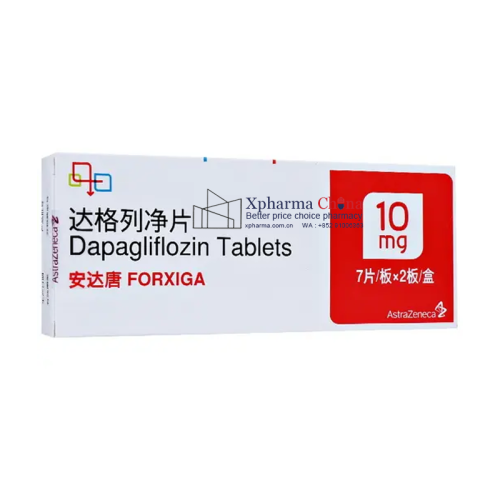
Forxiga Dapagliflozin Tablets
Brand Name: 安达唐 ®(Forxiga®)
Generic Name: Dapagliflozin
Strength: 10 mg per tablet, 7 tablets per blister, 2 blisters (14 tablets total) per box
Manufacturer: AstraZeneca Pharmaceuticals LP
Marketing Authorization Holder: AstraZeneca AB
Approval Date in China: March 10, 2017
Registration Number: 国药准字HJ20170119
Storage: Store below 30°C, tightly sealed, avoid moisture and direct sunlight. Keep out of reach of children. Refer to the full package insert for detailed storage specifications.
Price&Cost:Contact Us now for the best price of Dapagliflozin(Forxiga)
Only logged in customers who have purchased this product may leave a review.



Reviews
There are no reviews yet.