1. Indications and Usage
Stroke and Systemic Embolism: Indicated for the prevention of stroke and systemic embolism in adult patients with non-valvular atrial fibrillation (NVAF).
Venous Thromboembolism: Indicated for the treatment of acute deep vein thrombosis (DVT) and/or pulmonary embolism (PE) and for the prevention of recurrent DVT and PE.
2. Dosage and Administration
Standard Dosing: The recommended dose is 150 mg orally twice daily for NVAF, DVT/PE treatment, and prevention of recurrent DVT/PE.
Dose Reduction: The dose may be reduced to 110 mg twice daily for patients ≥80 years old, those with increased bleeding risk, or those taking verapamil.
Administration: Capsules should be swallowed whole with water; do not open. They can be taken with or without food.
3. Mechanism of Action
Direct Thrombin Inhibitor: Dabigatran etexilate is a prodrug that is rapidly hydrolyzed in the plasma to dabigatran, a direct thrombin inhibitor.
Anticoagulant Effect: Dabigatran binds reversibly to free and clot-bound thrombin, inhibiting its activity and preventing the conversion of fibrinogen to fibrin, thereby preventing further thrombosis.
4. Safety and Warnings
Bleeding Risk: There is an increased risk of bleeding, which can be severe or fatal. There is no specific antidote currently available for routine reversal.
Spinal/Epidural Hematoma: Epidural or spinal hematomas may occur in patients treated with dabigatran who receive neuraxial anesthesia or spinal puncture, potentially resulting in long-term or permanent paralysis.
Renal Impairment: Use is contraindicated in patients with severe renal impairment (CrCL <30 mL/min) due to increased bleeding risk.
5. Adverse Reactions and Clinical Research
Common Adverse Reactions: The most common adverse reactions (>15%) are gastrointestinal symptoms, including dyspepsia, abdominal pain, and nausea. Major bleeding events, such as intracranial hemorrhage, are also significant risks.
Clinical Research: Pivotal trials (e.g., RE-LY) demonstrated that dabigatran was superior to warfarin in preventing stroke or systemic embolism in NVAF patients, with similar rates of major bleeding.
6. Drug Interactions
P-gp Inhibitors: Strong dual P-gp inhibitors (e.g., ketoconazole, ritonavir, dronedarone) increase dabigatran exposure and bleeding risk.
P-gp Inducers: Strong P-gp inducers (e.g., rifampin) decrease dabigatran exposure and efficacy.
Antiplatelet Agents: Concomitant use with aspirin or other antiplatelet agents increases the risk of bleeding.
7. Pharmaceutical Information
Active Ingredient: Dabigatran etexilate.
Excipients: The capsule contains microscopic pellets. Excipients may include sugar spheres, talc, and coating agents such as methacrylic acid copolymer.
Appearance: Hard gelatin capsules.
Storage: Store in the original container to protect from moisture.
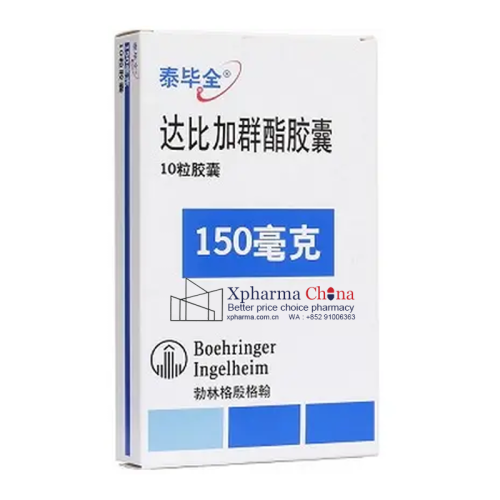
Pradaxa Dabigatran Etexilate Capsules
Brand Name: 泰毕全®( Pradaxa®)
Generic Name: Dabigatran Etexilate
Strength: 150 mg per capsule, 10 capsules per box
Manufacturer: Boehringer Ingelheim Pharma GmbH & Co. KG (original manufacturer); Shanghai Boehringer Ingelheim Pharmaceutical Co., Ltd. (domestic sub-packager)
Marketing Authorization Holder: Boehringer Ingelheim International GmbH
Approval Date in China: March 2013 (initial launch approval; updated registration issued in 2017)
Registration Number: HJ20170138 (import registration), J20171036 (domestic sub-packaging approval)
Storage: Seal tightly, store in dry environment below 25℃; avoid moisture and intense heat; keep out of children’s reach, follow detailed storage instructions on the package insert.
Price&Cost:Contact Us now for the best price of Dabigatran Etexilate(Pradaxa)
Only logged in customers who have purchased this product may leave a review.
Reviews
There are no reviews yet.