1. Indications and Usage
Anesthesia: Lidocaine Hydrochloride Injection is indicated for the production of local or regional anesthesia for infiltration, nerve blocks, or surface anesthesia.
Antiarrhythmic: It is indicated for the treatment of ventricular arrhythmias, such as ventricular premature beats and ventricular tachycardia, particularly those associated with acute myocardial infarction or digoxin toxicity.
2. Dosage and Administration
Anesthesia: The maximum recommended dose for infiltration anesthesia without epinephrine is 4.5 mg/kg, and 7 mg/kg with epinephrine. Dosage varies by block type (e.g., nerve blocks, epidural).
Antiarrhythmic: The usual loading dose is 1-1.5 mg/kg administered intravenously over 2-3 minutes. A maintenance infusion of 1-4 mg/min may follow.
Administration: Must be administered slowly by IV. Epinephrine can be added to prolong duration but should be avoided in digitalized patients.
3. Mechanism of Action
Sodium Channel Blockade: Lidocaine is a Class Ib antiarrhythmic agent and a local anesthetic.
Electrophysiology: It blocks voltage-gated sodium channels, inhibiting the influx of sodium ions. This stabilizes the neuronal membrane, prevents the propagation of action potentials, and suppresses automaticity in cardiac Purkinje fibers.
4. Safety and Warnings
Central Nervous System (CNS) Toxicity: Systemic absorption can cause CNS effects ranging from drowsiness and paresthesia to seizures and coma.
Cardiovascular Toxicity: High plasma concentrations can cause hypotension, bradycardia, conduction blocks (AV block), and cardiac arrest.
Methemoglobinemia: Rare cases of severe methemoglobinemia have been reported with local anesthetics.
5. Adverse Reactions and Clinical Research
Common Adverse Reactions: CNS effects (drowsiness, tremors, seizures), cardiovascular effects (hypotension, bradycardia), and allergy/hypersensitivity reactions.
Clinical Research: Extensive clinical trials have established its efficacy and safety profile for ventricular arrhythmias and various local anesthetic applications.
6. Drug Interactions
Beta-Blockers and Cimetidine: Can inhibit liver metabolism, increasing lidocaine blood concentration and the risk of toxicity.
Barbiturates: Can induce the metabolism of lidocaine, potentially reducing its efficacy.
Other Antiarrhythmics: Concomitant use with Class I antiarrhythmics may increase the risk of additive cardiovascular depression.
7. Pharmaceutical Information
Active Ingredient: Lidocaine Hydrochloride.
Excipients: Sodium chloride, water for injection.
Appearance: A clear, colorless solution.
Storage: Store at controlled room temperature and protect from light.
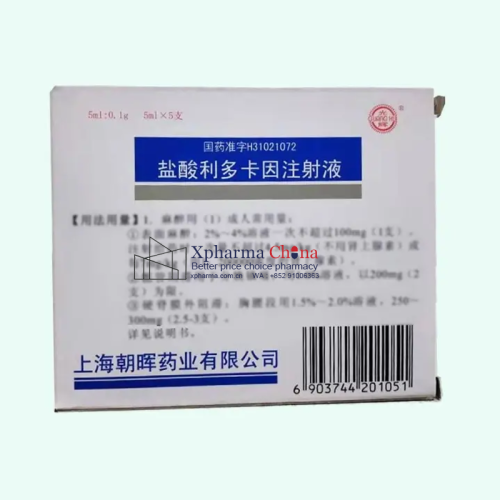
Guanghui Lidocaine Hydrochloride Injection
Brand Name: 光辉®(Guanghui®)
Generic Name: Lidocaine Hydrochloride
Strength: Each ampoule contains 0.1 g lidocaine hydrochloride in 5 mL solvent; 5 ampoules per box
Manufacturer: Shanghai Zhaohui Pharmaceutical Co., Ltd.
Marketing Authorization Holder: Shanghai Zhaohui Pharmaceutical Co., Ltd.
Approval Date in China: Refer to official drug approval record corresponding to the domestic generic approval
Registration Number: 国药准字H31021072
Storage: Seal containers tightly, keep away from light and store at room temperature; keep out of children’s reach, follow detailed storage specifications written on the package insert
Price&Cost:Contact Us now for the best price of Lidocaine Hydrochloride(Guanghui)
Only logged in customers who have purchased this product may leave a review.
Reviews
There are no reviews yet.