
1. Indications and Usage
Vascular Angiography: Coronary angiography, peripheral angiography, aortic angiography, and digital subtraction angiography (DSA).
CT Imaging: Computed tomography (CT) enhancement for head and body examinations.
Urography: Intravenous urography to visualize the urinary tract.
Other Procedures: Spinal angiography and other radiological examinations requiring contrast media.
2. Dosage and Administration
General Principle: Dosage is determined by the specific examination type, patient age, weight, cardiac output, and technical requirements.
Adult CT Imaging: Typically 50-150 ml depending on the area of interest.
Pediatric CT Imaging: Generally 2-3 ml/kg, with a maximum dose of 50 ml.
Angiography: Varies by vessel; total iodine dose should generally not exceed 3g.
Hydration: Adequate hydration before and after administration is required to reduce the risk of contrast-induced nephropathy.
3. Mechanism of Action
X-ray Attenuation: The high atomic number of iodine provides radiopacity, enhancing tissue contrast in X-ray-based imaging.
Osmolality: Being an isosmolar agent, it has an osmolality similar to human blood plasma, which significantly reduces the risk of osmotic stress on the kidneys and endothelium compared to high-osmolar contrast media.
Pharmacokinetics: It is rapidly distributed in the extracellular fluid and primarily excreted unchanged by the kidneys via glomerular filtration.
4. Safety and Warnings
Nephrotoxicity: Contrast-induced nephropathy (CIN) is a major risk, especially in patients with pre-existing renal impairment, diabetes, or dehydration.
Hypersensitivity: Severe anaphylactoid or allergic reactions (e.g., bronchospasm, angioedema, anaphylactic shock) may occur and require immediate emergency intervention.
Cardiovascular: Arrhythmias, myocardial ischemia, or hypotension may occur during injection, particularly during intra-arterial administration.
Pregnancy and Lactation: Use in pregnancy only if the benefit outweighs the risk. Breastfeeding should be suspended for 24 hours after administration.
5. Adverse Reactions and Clinical Research
Common Adverse Reactions: Transient flushing, nausea, vomiting, headache, and a warm or cold sensation.
Rare Adverse Reactions: Severe hypersensitivity reactions, seizures, cardiac arrest, and acute renal failure.
Clinical Research: Clinical trials have demonstrated that iodixanol provides high-quality imaging with a significantly lower incidence of adverse reactions compared to traditional low-osmolar agents.
6. Drug Interactions
Metformin: Co-administration increases the risk of metformin-associated lactic acidosis due to potential transient renal impairment. Metformin should be discontinued prior to or at the time of the procedure.
Beta-blockers: May alter the clinical presentation of hypersensitivity reactions, making them less typical and potentially difficult to distinguish from vasovagal responses.
Thyroid Function Tests: Iodine load may transiently affect thyroid function test results.
7. Pharmaceutical Information
Active Ingredient: Iodixanol.
Appearance: Colorless and clear liquid.
Osmolality: Isosmolar with human plasma (approximately 290 mOsm/kg H2O).
Storage: Store at controlled room temperature; protect from freezing and excessive heat. Do not use if particulate matter is observed.
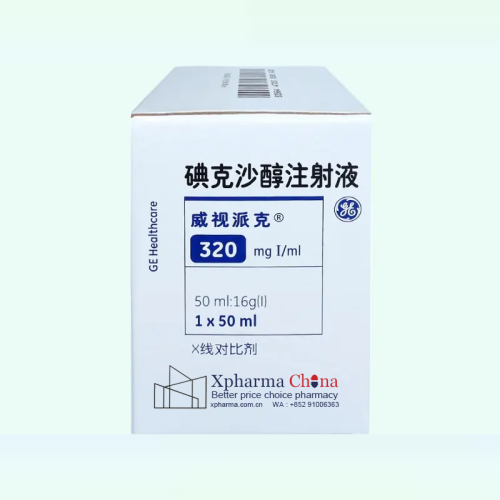
Visipaque Iodixanol Injection
Brand Name: 威视派克®(Visipaque®)
Generic Name: Iodixanol
Strength: 320 mg Iodine per mL (652 mg iodixanol per mL), total 16 g iodine per 50 mL vial, 1 vial per box
Manufacturer: GE Healthcare Ireland Limited
Marketing Authorization Holder: GE Healthcare AS
Approval Date in China: 2018
Registration Number: 国药准字HJ20181168
Storage: Store at room temperature, protected from light; do not freeze; keep out of reach of children, refer to full storage instructions in package insert
Price&Cost:Contact Us now for the best price of Iodixanol(Visipaque)
Only logged in customers who have purchased this product may leave a review.
Reviews
There are no reviews yet.