1. Indications and Usage
Peptic Ulcer Disease: Treatment of active duodenal and gastric ulcers.
Reflux Esophagitis: Management of gastroesophageal reflux disease (GERD) and erosive esophagitis.
Hypersecretory Conditions: Treatment of pathological hypersecretory conditions, such as Zollinger-Ellison syndrome.
Symptomatic Relief: Relief of heartburn and acid reflux associated with non-ulcer dyspepsia.
2. Dosage and Administration
Adults: The usual dosage is 20 mg (one capsule) twice daily, or 40 mg at bedtime.
Duodenal Ulcer: Typically treated for 4 to 8 weeks.
Gastric Ulcer: Typically treated for 6 to 8 weeks.
Reflux Esophagitis: Typically treated for 6 to 8 weeks.
Renal Impairment: Dosage adjustment is required for patients with renal failure.
3. Mechanism of Action
H2-Receptor Antagonism: Famotidine selectively and competitively blocks histamine H2 receptors on gastric parietal cells.
Acid Suppression: This inhibition suppresses both basal and stimulated gastric acid secretion, effectively raising gastric pH.
Pepsin Reduction: It significantly reduces pepsin output, aiding in mucosal healing.
4. Safety and Warnings
Gastric Malignancy: Symptoms of gastric ulcer may resemble those of gastric carcinoma; malignancy should be ruled out before treatment.
Renal Insufficiency: Reduced renal function leads to drug accumulation; dosage reduction is mandatory.
Hypersensitivity: Contraindicated in patients with a history of hypersensitivity to famotidine or the triazine class.
Pregnancy and Lactation: Use only if the potential benefit justifies the risk to the fetus or infant.
5. Adverse Reactions and Clinical Research
Common Adverse Reactions: Headache, dizziness, constipation, and diarrhea.
Rare Adverse Reactions: Reversible neutropenia, thrombocytopenia, elevated liver enzymes, and hypertriglyceridemia.
Clinical Efficacy: Clinical studies demonstrate superior efficacy compared to cimetidine and ranitidine in healing ulcers and suppressing acid secretion.
6. Drug Interactions
pH-Dependent Drugs: May decrease the absorption of drugs requiring an acidic environment (e.g., ketoconazole, itraconazole, atazanavir).
Digoxin: Increased serum digoxin levels have been reported in elderly patients.
Antacids: Can be used concurrently with antacids, but separation of dosing is recommended.
7. Pharmaceutical Information
Active Ingredient: Famotidine (C8H17N7O3S).
Appearance: Hard gelatin capsules, typically containing white or off-white powder or granules.
Storage: Store in a tight, light-resistant container at controlled room temperature.
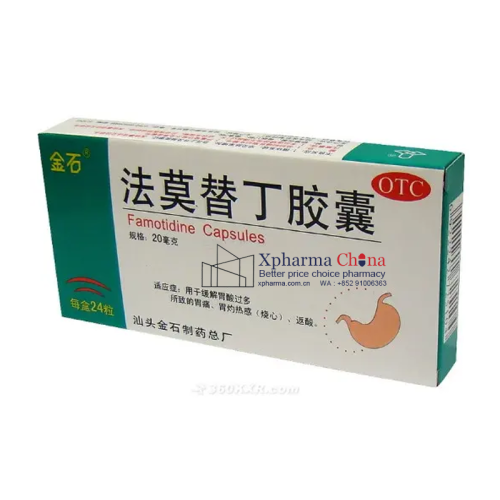
Jinshi Famotidine Capsules
Brand Name: 金石®(Jinshi®)
Generic Name: Famotidine
Strength: 20 mg per capsule, 24 capsules per box
Manufacturer: Shantou Jinshi Pharmaceutical General Factory
Marketing Authorization Holder: Shantou Jinshi Pharmaceutical General Factory
Approval Date in China: Not available
Registration Number:国药准字 H44021368
Storage: Seal tightly, store in a cool and dry place, protected from light
Price&Cost:Contact Us now for the best price of Famotidine(Jinshi)
Only logged in customers who have purchased this product may leave a review.
Reviews
There are no reviews yet.