1. Indications and Usage
Duodenal Ulcer: Treatment of active duodenal ulcer.
Gastric Ulcer: Treatment of active benign gastric ulcer.
Reflux Esophagitis: Management of reflux esophagitis.
Hypersecretory Conditions: Treatment of Zollinger-Ellison syndrome and other pathological hypersecretory conditions.
Helicobacter pylori Eradication: Used in combination with antibiotics for the eradication of Helicobacter pylori.
2. Dosage and Administration
Adults: The usual dosage is 15 mg to 30 mg once daily.
Timing: Should be taken with water, preferably before a meal.
Duration:
Duodenal Ulcer: Typically treated for 4 to 6 weeks.
Gastric Ulcer/Reflux Esophagitis: Typically treated for 6 to 8 weeks.
Zollinger-Ellison Syndrome: Typically treated for 6 to 8 weeks, with dosage adjustments up to 60 mg daily if necessary.
Special Populations: For elderly patients or those with mild hepatic or renal impairment, no specific dosage adjustment is usually required.
3. Mechanism of Action
Proton Pump Inhibition: Lansoprazole is a proton pump inhibitor that selectively inhibits the H+/K+-ATPase enzyme (proton pump) in the parietal cells of the gastric mucosa, blocking the final step of gastric acid secretion.
Duration: It provides potent and long-lasting inhibition of acid secretion, remaining effective even in an acidic environment.
4. Safety and Warnings
Gastric Malignancy: Symptoms of gastric ulcer may resemble those of gastric carcinoma; malignancy should be ruled out before treatment.
Long-term Use: Prolonged use of PPIs may lead to hypomagnesemia, vitamin B12 deficiency, increased risk of bone fractures, and potential renal damage.
Hypersensitivity: Contraindicated in patients with a history of hypersensitivity to lansoprazole, other benzimidazoles, or any excipients.
Special Populations: Use with caution in patients with severe hepatic dysfunction or those with a history of interstitial nephritis.
5. Adverse Reactions and Clinical Research
Common Adverse Reactions: Diarrhea, abdominal pain, nausea, headache, dizziness, and constipation.
Rare Adverse Reactions: Elevated liver enzymes, leukopenia, thrombocytopenia, rash, urticaria, and interstitial nephritis.
Clinical Efficacy: Clinical studies have confirmed that lansoprazole is highly effective in healing ulcers and relieving symptoms associated with GERD.
6. Drug Interactions
pH-Dependent Drugs: May decrease the absorption of drugs requiring an acidic environment (e.g., ketoconazole, itraconazole, iron salts).
Clopidogrel: Concomitant use may reduce the antiplatelet efficacy of clopidogrel.
Warfarin: May potentiate the effects of anticoagulants; INR and prothrombin time should be monitored.
Digoxin: May increase serum digoxin levels in some patients.
7. Pharmaceutical Information
Active Ingredient: Lansoprazole (C16H14F3N3O2S).
Appearance: Hard gelatin capsules, typically containing white or yellowish enteric-coated granules.
Storage: Store in a tight, light-resistant container at controlled room temperature. Protect from moisture.
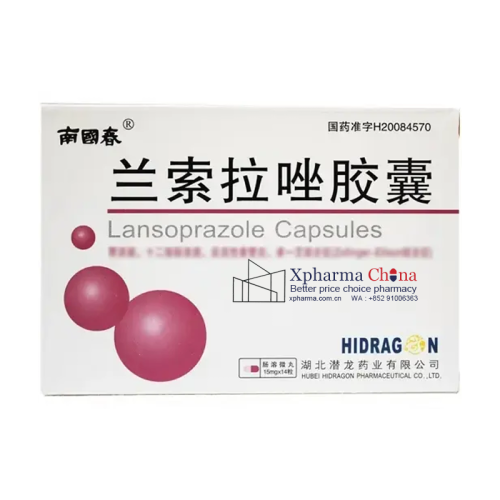
Nanguochun Lansoprazole Capsules
Brand Name: 南国春®(Nanguochun®)
Generic Name: Lansoprazole
Strength: 15 mg per capsule, 14 capsules per box
Manufacturer: Hubei Hidragon Pharmaceutical Co., Ltd.
Marketing Authorization Holder: Hubei Hidragon Pharmaceutical Co., Ltd.
Approval Date in China: Not available
Registration Number: 国药准字H20084570
Storage: Keep tightly sealed, store in a cool and dry place, protected from light
Price&Cost:Contact Us now for the best price of Lansoprazole(Nanguochun)
Only logged in customers who have purchased this product may leave a review.
Reviews
There are no reviews yet.