1. Indications and Usage
Monotherapy: Indicated as an adjunct to diet and exercise to improve glycemic control in adults with type 2 diabetes mellitus.
Combination Therapy: Used in combination with metformin when glycemic control is inadequate with metformin alone. It may also be used in combination with metformin and vildagliptin.
Restrictions: Contraindicated in patients with type 1 diabetes mellitus or diabetic ketoacidosis.
2. Dosage and Administration
Starting Dose: The recommended starting dose is 5 mg once daily, taken in the morning, without regard to meals.
Titration: For patients who tolerate 5 mg once daily and require further glycemic control, the dose may be increased to 10 mg once daily.
Renal/Hepatic Adjustment: For patients with eGFR ≥ 30 mL/min/1.73m², no dose adjustment is needed. It is contraindicated in patients with eGFR < 30 mL/min/1.73m², end-stage renal disease, or those on dialysis. For moderate or severe hepatic impairment (Child-Pugh B/C), the dose should be limited to 5 mg daily.
3. Mechanism of Action
SGLT2 Inhibition: Henagliflozin is a selective inhibitor of sodium-glucose cotransporter 2 (SGLT2) in the kidney.
Glucose Excretion: By inhibiting SGLT2, it reduces glucose reabsorption in the proximal tubule, thereby increasing urinary glucose excretion and lowering blood glucose levels.
4. Safety and Warnings
Hypovolemia: May cause symptoms of hypovolemia (e.g., symptomatic hypotension), especially in the elderly, patients with renal impairment, or those on diuretics. Volume status should be assessed and corrected before starting.
Severe Renal Impairment: Contraindicated in patients with severe renal impairment or those on dialysis due to loss of efficacy and safety concerns.
Diabetic Ketoacidosis: Cases of diabetic ketoacidosis, including euglycemic DKA, have been reported. Discontinue if suspected.
Genital Infections: Increased risk of genital infections and rare cases of necrotizing fasciitis of the perineum (Fournier’s gangrene).
5. Adverse Reactions and Clinical Research
Common Adverse Reactions: Genital mycotic infections, urinary tract infections, increased urination, and hypotension.
Hypoglycemia: Low risk as monotherapy, but the risk increases when used with insulin or sulfonylureas.
Other Adverse Effects: Weight loss, increased hemoglobin/hematocrit, and transient decrease in eGFR.
Clinical Findings: Clinical trials demonstrated significant reductions in HbA1c and fasting plasma glucose compared to placebo.
6. Drug Interactions
Rifampin: A strong inducer of metabolic enzymes and transporters. Concomitant use may reduce henagliflozin exposure; increasing the dose to 10 mg daily may be considered.
Diuretics: Concomitant use may increase the risk of hypovolemia and symptomatic hypotension.
Insulin/Sulfonylureas: May increase the risk of hypoglycemia; dose reduction of the concomitant agent may be necessary.
7. Pharmaceutical Information
Active Ingredient: Henagliflozin Proline.
Strengths: Typically available as 5 mg and 10 mg tablets.
Appearance: Pink film-coated tablets, white or almost white inside.
Storage: Store in a tightly closed container, protected from moisture, at a controlled temperature not exceeding 25°C.
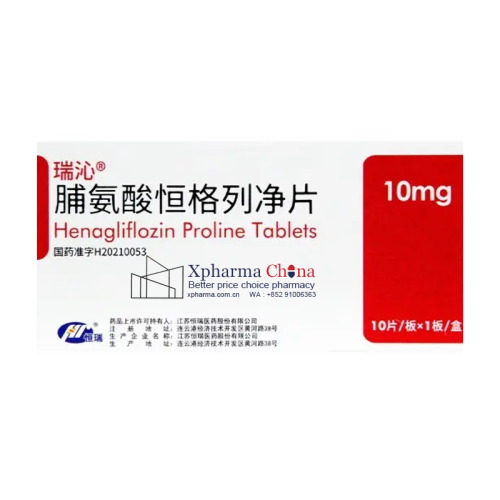
Ruiqin Henagliflozin Proline Tablets
Brand Name: 瑞沁®(Ruiqin®)
Generic Name: Henagliflozin Proline
Strength: 10 mg per tablet, 10 tablets per box
Manufacturer: Jiangsu Hengrui Pharmaceuticals Co., Ltd.
Marketing Authorization Holder: Jiangsu Hengrui Pharmaceuticals Co., Ltd.
Approval Date in China: 2021‑06‑03
Registration Number: 国药准字 H20210053
Storage: Store in a sealed, dry place, protected from light.
Price&Cost:Contact Us now for the best price of Henagliflozin Proline(Ruiqin)
Only logged in customers who have purchased this product may leave a review.

Reviews
There are no reviews yet.