
1. Indications and Usage
Potassium Supplementation: Treatment of potassium deficiency and prevention of its occurrence (e.g., in patients on diuretics).
Urinary Tract Infections: Adjunctive therapy to acidify or alkalinize urine for the conversion of urinary tract infections.
Chronic Renal Tubular Acidosis: Treatment of recurrent kidney stones associated with renal tubular acidosis.
Uric Acid Stones: Prevention of recurrent kidney stones associated with uricosuria or uric acid calculi.
Cystic Stones: Prevention of recurrent kidney stones associated with cystinuria.
2. Dosage and Administration
Administration: Swallow extended-release tablets whole; do not crush, chew, or divide them. Usually taken after meals with a full glass of water to minimize gastrointestinal irritation.
Prevention of Stones: The usual dosage is one tablet (or as directed by a physician) two to four times daily.
Correction of Potassium Deficiency: Dosage must be individualized based on blood potassium levels and renal function, typically starting with one tablet daily and adjusting based on serum potassium monitoring.
3. Mechanism of Action
Potassium Supplementation: Provides potassium ions essential for cellular metabolism, nerve conduction, and muscle contraction.
Urinary Alkalinization: Citrate is metabolized to bicarbonate in the liver, which increases urinary pH. This alkalinizes the urine, helping to dissolve existing uric acid and cystine stones and preventing their formation.
4. Safety and Warnings
Hyperkalemia: The most serious risk. Patients with renal impairment, heart failure, or those taking ACE inhibitors, ARBs, or potassium-sparing diuretics are at high risk.
Gastrointestinal Lesions: Extended-release potassium products can cause GI irritation, ulceration, or bleeding.
Contraindications: Contraindicated in patients with hyperkalemia, severe renal impairment (anuria), or acute dehydration.
5. Adverse Reactions and Clinical Research
Common Adverse Reactions: Nausea, vomiting, abdominal pain, diarrhea, and flatulence.
Hyperkalemia Symptoms: Muscle weakness, paresthesia, and cardiac arrhythmias (e.g., bradycardia, heart block).
Other Effects: Thirst, dry mouth, and skin rash.
Clinical Findings: Clinical studies confirm efficacy in preventing stone recurrence and correcting metabolic acidosis.
6. Drug Interactions
ACE Inhibitors / ARBs / K+-Sparing Diuretics: Increased risk of hyperkalemia (e.g., lisinopril, losartan, spironolactone).
NSAIDs: May decrease renal function and increase hyperkalemia risk.
Digoxin: Hyperkalemia may increase digoxin toxicity.
Quinidine: Alkaline urine may decrease quinidine excretion, increasing toxicity.
7. Pharmaceutical Information
Active Ingredient: Potassium Citrate (usually as a combination of potassium citrate and potassium bicarbonate).
Strengths: Typically available as 500 mg or 1000 mg tablets.
Appearance: White or off-white extended-release tablets.
Storage: Store at controlled room temperature (20°C–25°C) in a tight, light-resistant container.
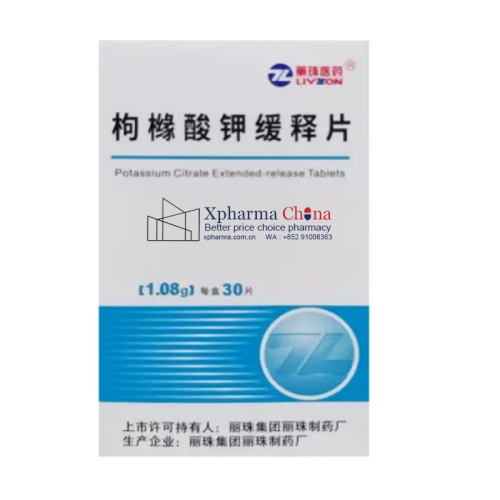
Potassium Citrate Extended‑release Tablets
Brand Name: No brand name
Generic Name: Potassium Citrate
Strength: 1.08 g per tablet, 30 tablets per box
Manufacturer: Livzon Group Livzon Pharmaceutical Factory
Marketing Authorization Holder: Livzon Group Livzon Pharmaceutical Factory
Approval Date in China: 2021‑08‑24
Registration Number: 国药准字 H20213422
Storage: Store in a sealed, dry place, protected from light.
Price&Cost:Contact Us now for the best price of Potassium Citrate
Only logged in customers who have purchased this product may leave a review.


Reviews
There are no reviews yet.