1. Indications and Usage
Thiamine Deficiency: Treatment and prevention of vitamin B1 deficiency (e.g., beriberi).
Alcohol-Related Disorders: Adjunctive therapy for patients with alcohol use disorder to prevent or treat Wernicke-Korsakoff syndrome.
Neuropathy: Adjunctive treatment for peripheral neuropathy.
Chronic Malnutrition: Nutritional support for patients with chronic gastrointestinal diseases or those on long-term parenteral nutrition.
2. Dosage and Administration
Standard Adult Dose: The usual dosage for adults is 10–30 mg (typically 1–3 capsules) three times daily, taken orally.
Severe Deficiency: In cases of severe deficiency or beriberi, higher doses may be required initially, sometimes administered intramuscularly or intravenously under medical supervision.
Administration: Can be taken with or without food, though taking it with food may minimize gastrointestinal discomfort.
3. Mechanism of Action
Coenzyme Function: Vitamin B1 is converted in the body to thiamine pyrophosphate (TPP), an essential coenzyme.
Metabolic Role: TPP is crucial for carbohydrate metabolism (specifically the decarboxylation of alpha-ketoacids in the Krebs cycle) and nerve impulse conduction.
Neurological Support: It is vital for the synthesis of neurotransmitters (e.g., acetylcholine) and the maintenance of myelin sheaths in nerves.
4. Safety and Warnings
Hypersensitivity: Anaphylaxis and other allergic reactions (including bronchospasm, shock) have been reported with parenteral thiamine. Use with caution in patients with a history of hypersensitivity.
Pregnancy and Lactation: Generally considered safe when taken at recommended dietary levels, but high doses should be used only if clearly needed.
Contraindications: Contraindicated in patients with a known hypersensitivity to thiamine or any component of the formulation.
5. Adverse Reactions and Clinical Research
Common Adverse Reactions: Generally well-tolerated at oral doses. Rare cases of headache, insomnia, or drowsiness.
Rare Adverse Effects: Severe allergic reactions (angioedema, urticaria) are more common with intravenous or intramuscular administration.
Clinical Findings: Clinical studies confirm efficacy in reversing symptoms of beriberi and improving neurological function in thiamine-deficient patients.
6. Drug Interactions
Mineral Absorbers: Oral intake of thiamine may be inhibited by heavy metal ions (e.g., mercury, lead) or strong oxidizing/reducing agents.
Alcohol: Chronic alcohol consumption interferes with thiamine absorption and metabolism, often necessitating higher doses.
Diuretics: Loop and thiazide diuretics may increase the excretion of thiamine.
Anticholinergics: May theoretically interfere with the absorption of thiamine.
7. Pharmaceutical Information
Active Ingredient: Vitamin B1 (Thiamine hydrochloride or nitrate).
Strengths: Typically available as 10 mg or 25 mg capsules.
Appearance: Hard gelatin capsules, usually containing white or off-white granules.
Storage: Store in a light-resistant, tightly closed container, protected from moisture and excessive heat.
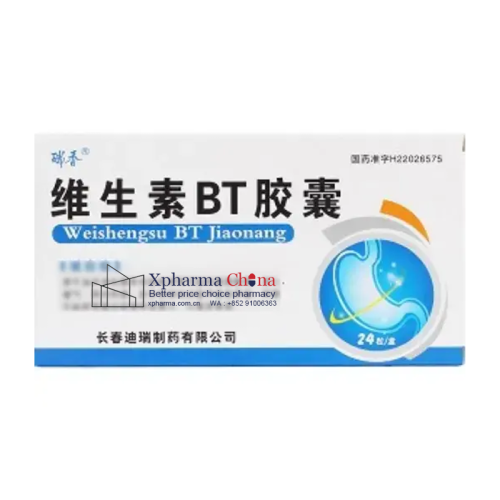
Ruixiang Vitamin BT Capsules
Brand Name: 瑞香®(Ruixiang®)
Generic Name: Vitamin BT
Strength: 0.1g per capsule, 24 capsules per box
Manufacturer: Changchun Dirui Pharmaceutical Co., Ltd.
Marketing Authorization Holder: Changchun Dirui Pharmaceutical Co., Ltd.
Approval Date in China: 2008‑05‑13
Registration Number: 国药准字H22028575
Storage: Store in a sealed, dry place, protected from light.
Price&Cost:Contact Us now for the best price of Vitamin BT(Ruixiang)
Only logged in customers who have purchased this product may leave a review.
Reviews
There are no reviews yet.