
1. Indications and Usage
Chronic Heart Failure: Indicated for symptomatic chronic heart failure (NYHA class II-IV) in patients with sinus rhythm and a heart rate ≥ 75 beats/minute, in combination with standard recommended therapy (including beta-blockers), or when beta-blockers are contraindicated or not tolerated.
Chronic Angina: Indicated for the symptomatic treatment of chronic stable angina pectoris in patients with sinus rhythm, when beta-blockers are contraindicated or not tolerated, or in combination with beta-blockers.
2. Dosage and Administration
Standard Dose: The recommended starting dose is 5 mg twice daily, taken during morning and evening meals.
Titration: After 2 weeks, if the resting heart rate remains above 60 beats/minute, the dose may be increased to 7.5 mg twice daily. If the heart rate drops below 50 beats/minute or symptoms of bradycardia (dizziness, fatigue) occur, the dose should be reduced to 2.5 mg twice daily.
Discontinuation: If the heart rate remains below 50 beats/minute or bradycardic symptoms persist, the drug must be discontinued.
3. Mechanism of Action
If Channel Inhibition: Ivabradine selectively inhibits the “funny” current (If) in the sinoatrial node.
Heart Rate Control: This current controls the spontaneous diastolic depolarization of pacemaker cells, thereby specifically lowering the heart rate without affecting myocardial contractility or atrioventricular conduction.
4. Safety and Warnings
Contraindications: Contraindicated in patients with severe hepatic impairment, resting heart rate < 60 beats/minute before therapy, sick sinus syndrome, second or third-degree AV block, acute decompensated heart failure, and severe hypotension (systolic BP < 90 mmHg).
Atrial Fibrillation: Patients must be monitored for the onset of atrial fibrillation during treatment.
Pregnancy: Should be used with caution, and effective contraception is recommended for women of childbearing age.
5. Adverse Reactions and Clinical Research
Common Adverse Reactions: The most frequent adverse reactions are photopsia (visual flashes, occurring in ~14.5% of patients) and bradycardia. Other common effects include headache, dizziness, and nausea.
Photopsia: This manifests as brief localized brightness enhancement, often triggered by sudden changes in light intensity. It is usually mild, dose-dependent, and resolves during or after treatment.
Clinical Findings: Clinical trials have demonstrated a significant reduction in the risk of hospitalization for worsening heart failure.
6. Drug Interactions
CYP3A4 Inhibitors: Concomitant use with strong CYP3A4 inhibitors (e.g., ketoconazole, ritonavir) is contraindicated as it significantly increases ivabradine plasma concentrations.
Negative Chronotropic Drugs: Caution is advised when combined with other heart rate-lowering drugs (e.g., beta-blockers, verapamil, diltiazem) due to increased bradycardia risk.
CYP3A4 Inducers: Strong inducers (e.g., rifampicin, St. John’s wort) may reduce plasma concentrations and efficacy.
7. Pharmaceutical Information
Active Ingredient: Ivabradine Hydrochloride.
Strengths: Typically available as 2.5 mg, 5 mg, and 7.5 mg tablets.
Appearance: Film-coated tablets (colors and shapes vary by strength, e.g., salmon-colored for 5 mg and 7.5 mg in some formulations).
Storage: Store at 25°C (77°F); excursions permitted to 15-30°C (59-86°F).
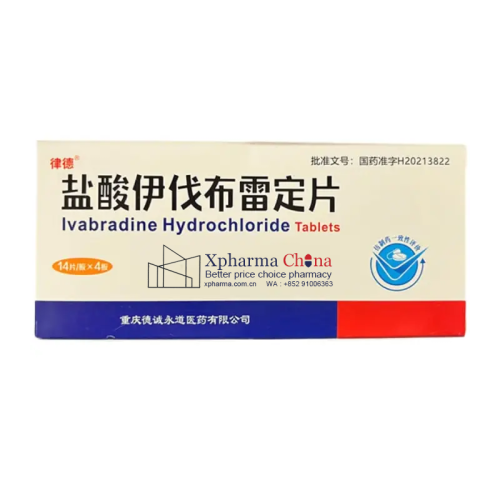
Lvde Ivabradine Hydrochloride Tablets
Brand Name: 律德®(Lvde®)
Generic Name: Ivabradine Hydrochloride
Strength: 5mg per tablet, 56 tablets per box (14 tablets ×4 plates)
Manufacturer: Chongqing Decheng Yongdao Pharmaceutical Co., Ltd.
Marketing Authorization Holder: Chongqing Decheng Yongdao Pharmaceutical Co., Ltd.
Approval Date in China: 2021‑07‑13
Registration Number: 国药准字 H20213822
Storage: Store in a sealed, dry place, protected from light.
Price&Cost:Contact Us now for the best price of Ivabradine Hydrochloride(Lvde)
Only logged in customers who have purchased this product may leave a review.


Reviews
There are no reviews yet.