1. Indications and Usage
Hyperlipidemia: Indicated for the treatment of primary hyperlipidemia and dyslipidemia. It is effective in lowering triglycerides and total cholesterol.
Cardiovascular Prevention: Used as an adjunct to diet to reduce the risk of cardiovascular events in patients with high cholesterol.
Vitamin B3 Deficiency: Used to prevent or treat niacin deficiency (pellagra).
2. Dosage and Administration
Standard Dose: The usual starting dose is 500 mg once daily or in divided doses. The dose may be increased gradually every 4–7 days based on tolerance, up to a maximum of 2000 mg daily.
Administration: Should be taken immediately after a meal (especially a fatty meal) to minimize the risk of flushing and gastrointestinal irritation. The capsule should be swallowed whole; do not chew, crush, or split.
Titration: Dosage should be titrated slowly to improve patient compliance and reduce adverse effects.
3. Mechanism of Action
Lipid Metabolism: Nicotinic acid inhibits lipolysis in adipose tissue, reducing the release of free fatty acids to the liver, which decreases hepatic triglyceride synthesis and VLDL secretion.
HDL Elevation: It significantly increases high-density lipoprotein (HDL) cholesterol levels by slowing its catabolism.
Vitamin Function: It serves as a precursor for the synthesis of coenzymes NAD and NADP, essential for cellular metabolism.
4. Safety and Warnings
Hepatotoxicity: Sustained-release formulations carry a risk of dose-dependent hepatotoxicity. Liver function tests should be monitored regularly.
Hyperglycemia: May cause insulin resistance and elevated blood glucose levels, requiring caution in diabetic patients.
Gout: Can increase serum uric acid levels, potentially precipitating gout attacks.
Contraindications: Contraindicated in patients with active peptic ulcer disease, significant liver disease, or arterial bleeding.
5. Adverse Reactions and Clinical Research
Common Adverse Reactions: Cutaneous flushing (very common), pruritus, nausea, vomiting, and dyspepsia.
Metabolic Effects: Hyperglycemia, hyperuricemia, and hypotension.
Serious Adverse Reactions: Severe liver dysfunction, myopathy, and rhabdomyolysis (especially when combined with statins).
6. Drug Interactions
Statins: Concurrent use increases the risk of myopathy and rhabdomyolysis.
Antihypertensives: May potentiate the hypotensive effects of antihypertensive drugs.
Anticoagulants: May enhance the effects of oral anticoagulants.
Niacin Esters: Increased risk of hepatotoxicity when combined with other niacin derivatives.
7. Pharmaceutical Information
Active Ingredient: Nicotinic Acid.
Strengths: Typically available as 100 mg, 250 mg, and 500 mg sustained-release capsules.
Appearance: The capsule contents are usually white or off-white granules or powder.
Storage: Store below 30°C in a dry place, protected from light and moisture.
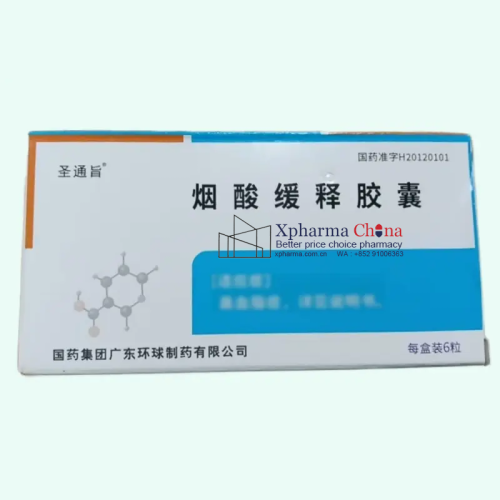
Shengtongzhi Nicotinic Acid Sustained‑release Capsules
Brand Name: 圣通旨®(Shengtongzhi®)
Generic Name: Nicotinic Acid
Strength: 0.25 g
Manufacturer: Sinopharm Group Guangdong Global Pharmaceutical Co., Ltd.
Marketing Authorization Holder: Sinopharm Group Guangdong Global Pharmaceutical Co., Ltd.
Approval Date in China: 2012‑03‑26
Registration Number: H20120101
Storage: Store in light‑proof and air‑tight container.
Price&Cost:Contact Us now for the best price of Nicotinic Acid(Shengtongzhi)
Only logged in customers who have purchased this product may leave a review.
Reviews
There are no reviews yet.