
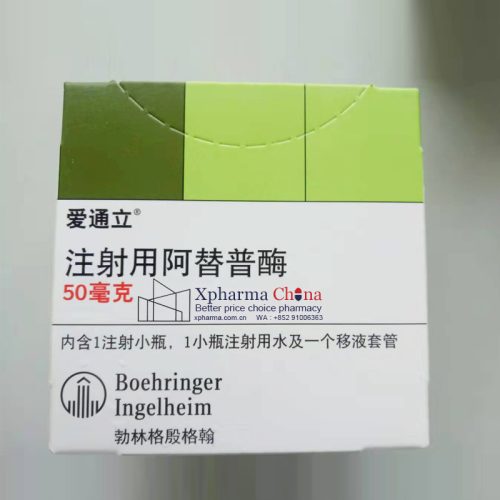
Actilyse Alteplase for Injection
Brand Name: 爱通立®(Actilyse®)
Generic Name: Alteplase
Strength: 50mg per vial(1 vial + 1 ampoule solvent per box)
Manufacturer: Boehringer Ingelheim Pharma GmbH & Co. KG
Marketing Authorization Holder: Boehringer Ingelheim International GmbH
Approval Date in China: 2001
Registration Number: 国药准字 HJ20160054
Storage: Store at 2℃~25℃, protect from light; keep away from children.
Price&Cost:Contact Us now for the best price of Alteplase(Actilyse)
1. Indications and Usage
Acute Ischemic Stroke:
Indicated for patients with acute ischemic stroke to improve neurological outcome and reduce disability. Treatment must be initiated within 3 hours of symptom onset.
Acute Myocardial Infarction (AMI):
Indicated for patients with acute MI to reduce mortality and facilitate coronary artery reperfusion when initiated within 6 hours of symptom onset.
Acute Massive Pulmonary Embolism (PE):
Indicated for patients with acute massive PE to reduce mortality and facilitate thrombus resolution.
Occluded Central Venous Catheters (CVC):
Indicated for restoring patency in CVCs in patients with a history of impaired blood withdrawal.
2. Dosage and Administration
Route of Administration:
For Intravenous (IV) Infusion ONLY.
Acute Ischemic Stroke Dosage:
Dose: 0.9 mg/kg (maximum dose of 90 mg).
Regimen: 10% of the total dose is administered as an initial IV bolus over 1 minute, followed by the remaining dose infused over 60 minutes.
Acute Myocardial Infarction Dosage:
Accelerated Dosing (90-minute regimen): 15 mg IV bolus, followed by 50 mg over 30 minutes, then 34 mg over the next 60 minutes.
Weight-based limits: Maximum total dose is 100 mg.
Acute Massive PE Dosage:
Dose: 100 mg infused over 2 hours.
Administration Instructions:
Reconstitute with Sterile Water for Injection. Do not shake vigorously.
Do not mix with other medications in the same IV line.
3. Mechanism of Action
Fibrin Specificity:
Alteplase is a thrombolytic enzyme. In its native form, it has little affinity for fibrinogen but binds strongly to fibrin.
Plasmin Generation:
When bound to fibrin, alteplase catalyzes the conversion of plasminogen to plasmin. Plasmin then degrades fibrin, fibrinogen, and other plasma proteins, leading to thrombolysis (clot dissolution).
4. Safety and Warnings
Bleeding (Major Risk):
The most common serious complication is bleeding, including intracranial hemorrhage (ICH) and gastrointestinal bleeding.
Contraindications:
Active internal bleeding.
History of hemorrhagic stroke or intracranial neoplasm.
Recent intracranial or intraspinal surgery or trauma.
Suspected aortic dissection.
Hypersensitivity:
Anaphylactic reactions have been reported, particularly in patients taking ACE inhibitors.
5. Adverse Reactions
Most Common:
Bleeding (gastrointestinal, genitourinary, gum, retroperitoneal), hypotension, nausea, vomiting, and fever.
Serious Reactions:
Intracranial hemorrhage, cardiac perforation (during catheter treatment), and severe anaphylaxis.
6. Drug Interactions
Anticoagulants and Antiplatelets:
Concomitant use of heparin, warfarin, aspirin, clopidogrel, or other anticoagulants/antiplatelets prior to, during, or shortly after administration increases the risk of bleeding.
ACE Inhibitors:
Concurrent use may increase the risk of hypotension and hypersensitivity reactions.
7. Pharmaceutical Information
Chemical Composition:
Active Ingredient: Alteplase (recombinant human tissue plasminogen activator).
Appearance: Sterile, white to off-white lyophilized powder.
Excipients: Arginine, Phosphoric Acid, Polysorbate 20.
Storage:
Store at 2°C to 8°C (36°F to 46°F). Do not freeze.
Only logged in customers who have purchased this product may leave a review.
Reviews
There are no reviews yet.