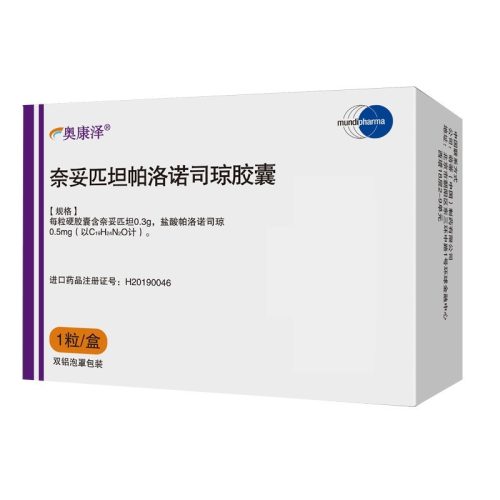
Akynzeo Netupitantand Palonosetron Hydrochloride Capsules
- Generic Name: netupitant and palonosetron hydrochloride
- Brand Name: AKYNZEO
- Dosage Form & Strength: oral capsule; 300 mg netupitant / 0.5 mg palonosetron
- Initial U.S. Approval: 2014
- Packager: Helsinn Birex Pharmaceuticals / Eisai Inc.
1. Name of the medicinal product
Akynzeo 300 mg/0.5 mg hard capsules
2.Qualitative and quantitative composition
Each hard capsule contains 300 mg of netupitant and palonosetron hydrochloride equivalent to 0.5 mg of palonosetron.
Excipients with known effect:
Each hard capsule contains 7 mg of sorbitol and 20 mg of sucrose.
For the full list of excipients, see section 6.1.
3. Pharmaceutical form
Hard capsule.
Opaque gelatin capsule of size “0” (length 21.7 mm) with white body and caramel cap with “HE1” printed on the body. The hard capsule is filled with three tablets and one soft capsule.
4.1 Therapeutic indications
Akynzeo is indicated in adults for the:
– Prevention of acute and delayed nausea and vomiting associated with highly emetogenic cisplatin-based cancer chemotherapy.
– Prevention of acute and delayed nausea and vomiting associated with moderately emetogenic cancer chemotherapy.
4.2 Posology and method of administration
Posology
One 300 mg/0.5 mg capsule should be administered approximately one hour prior to the start of each chemotherapy cycle.
The recommended oral dexamethasone dose should be reduced by approximately 50 % when co-administered with netupitant/palonosetron capsules (see section 4.5 and clinical studies administration schedule in section 5.1).
Special populations
Elderly people
No dosage adjustment is necessary for elderly patients. Caution should be exercised when using this medicinal product in patients over 75 years, due to the long half-life of the active substances and the limited experience in this population.
Renal impairment
Dosage adjustment is not considered necessary in patients with mild to severe renal impairment. Renal excretion for netupitant is negligible. Mild to moderate renal impairment does not significantly affect palonosetron pharmacokinetic parameters. Total systemic exposure to intravenous palonosetron increased by approximately 28% in severe renal impairment relative to healthy subjects. The pharmacokinetics of palonosetron or netupitant has not been studied in subjects with end-stage renal disease requiring hemodialysis and no data on the effectiveness or safety of netupitant/palonosetron capsules in these patients are available. Therefore, use in these patients should be avoided.
Hepatic impairment
No dosage adjustment is necessary for patients with mild or moderate hepatic impairment (Child-Pugh score 5-8). Limited data exist in patients with severe hepatic impairment (Child Pugh score ≥ 9). As use in patients with severe hepatic impairment may be associated with increased exposure of netupitant, this medicinal product should be used with caution in these patients (see sections 4.4 and 5.2).
Paediatric population
The safety and efficacy of Akynzeo capsules in the paediatric population have not been established. No data are available.
Method of administration
For oral use.
The hard capsule should be swallowed whole.
It can be taken with or without food.
4.4 Special warnings and precautions for use
Constipation
As palonosetron may increase large bowel transit time, patients with a history of constipation or signs of subacute intestinal obstruction should be monitored following administration (see section 4.8).
Serotonin syndrome
There have been reports of serotonin syndrome with the use of 5-HT3 antagonists either alone or in combination with other serotonergic medicinal products (including selective serotonin reuptake inhibitors (SSRIs) and serotonin noradrenaline reuptake inhibitors (SNRIs). Appropriate observation of patients for serotonin syndrome-like symptoms is advised (see section 4.8).
QT Prolongation
An ECG study was conducted in adult male and female healthy volunteers with oral netupitant either 200 or 600 mg administered in combination with oral palonosetron 0.5 or 1.5 mg, respectively. The study demonstrated no clinically important effects on ECG parameters: the largest point estimate of the placebo and baseline corrected QTc interval was 7.0 ms (one-sided upper 95% confidence limit 8.8 ms), observed 16 hours after the administration of supratherapeutic doses (600 mg netupitant and 1.5 mg palonosetron). Upper 95% confidence limit of the point estimates of placebo and baseline corrected QTcI was constantly within 10 ms at all time points over 2 days after study substance administration.
However, since netupitant/palonosetron capsules contains a 5-HT3 receptor antagonist, caution should be exercised in concomitant use with medicinal products that increase the QT interval or in patients who have or are likely to develop prolongation of the QT interval. These conditions include patients with a personal or family history of QT prolongation, electrolyte abnormalities, congestive heart failure, bradyarrhythmia, conduction disturbances and in patients taking anti-arrhythmic medicinal products or other medicinal products that lead to QT prolongation or electrolyte abnormalities. Hypokalaemia and hypomagnesaemia should be corrected prior to administration.
Caution should be exercised in patients with severe hepatic impairment since limited data are available in these patients.
This medicinal product should be used with caution in patients receiving concomitant orally administered active substances that are metabolised primarily through CYP3A4 and with a narrow therapeutic range (see section 4.5).
Chemotherapeutic agents that are substrates for CYP3A4
Netupitant is a moderate inhibitor of CYP3A4 and can increase the exposure of chemotherapeutic agents that are substrates for CYP3A4 e.g. docetaxel (see section 4.5). Therefore, patients should be monitored for increased toxicity of chemotherapeutic agents that are substrates for CYP3A4, including irinotecan. Furthermore, netupitant may also affect the efficacy of chemotherapeutic agents that need activation by CYP3A4 metabolism.
Excipients
This medicinal product contains 7 mg of sorbitol in each hard capsule.
This medicinal product also contains 20 mg of sucrose in each capsule. Patients with rare hereditary problems of fructose intolerance, glucose-galactose malabsorption or sucrase-isomaltase insufficiency should not take this medicinal product.
This medicinal product contains less than 1 mmol sodium per (23 mg) per hard capsule, that is to say essentially ‘sodium-free’.
It may also contain a trace of lecithin derived from soya. Therefore, patients with known hypersensitivity to peanut or soya should be monitored closely for signs of an allergic reaction (see section 4.8).
Only logged in customers who have purchased this product may leave a review.
Reviews
There are no reviews yet.