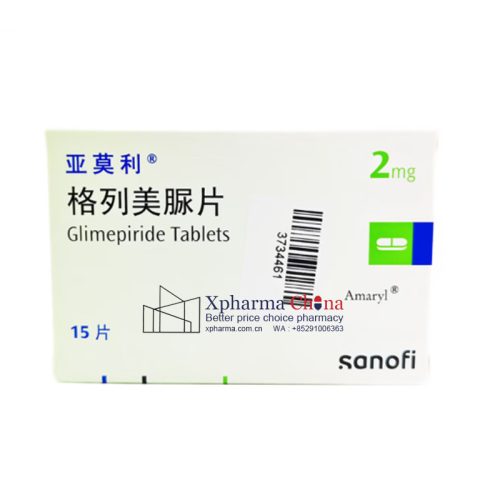
Amaryl Glimepiride Tablets
Brand Name:亚莫利®( Amaryl®)
Generic Name: Glimepiride
Strength: 2 mg per tablet, 15 tablets per box
Manufacturer: Sanofi (Beijing) Pharmaceutical Co., Ltd.
Marketing Authorization Holder: Sanofi (Beijing) Pharmaceutical Co., Ltd.
Approval Date in China: February 1, 2007
Registration Number: 国药准字H20057672
Storage: Seal tightly, store below 25°C, keep away from children
Price&Cost:Contact Us now for the best price of Glimepiride(Amaryl)
1. Indications and Usage
Type 2 Diabetes Mellitus:
Indicated as an adjunct to diet and exercise to improve glycemic control in adults with type 2 diabetes mellitus.
Contraindications:
Not indicated for the treatment of type 1 diabetes mellitus or diabetic ketoacidosis.
2. Dosage and Administration
Administration:
Administer orally with breakfast or the first main meal of the day.
Initial Dosage:
Standard: 1 mg or 2 mg once daily.
High Risk: For patients at increased risk of hypoglycemia (e.g., elderly, renal impairment), the recommended starting dose is 1 mg once daily.
Dosage Adjustment:
Adjust dose based on blood glucose response. Increments of 1 mg or 2 mg may be made at intervals of not less than 1-2 weeks.
Maximum Dosage: The maximum recommended dosage is 8 mg once daily.
3. Mechanism of Action
Stimulation of Insulin Secretion:
Glimepiride closes ATP-sensitive potassium channels (K-ATP) in the beta-cell membrane of the pancreas.
Physiological Effect:
This closure leads to depolarization of the beta cell, opening of voltage-dependent calcium channels, calcium influx, and subsequent secretion of insulin. It also increases peripheral tissue sensitivity to insulin.
4. Safety and Warnings
Hypoglycemia:
Like all sulfonylureas, Glimepiride may cause hypoglycemia. Risk factors include elderly age, renal/hepatic impairment, irregular meals, and strenuous exercise.
Loss of Glycemic Control:
During stress (e.g., trauma, surgery, infection), glycemic control may be lost, and temporary conversion to insulin therapy may be required.
Hemolytic Anemia:
May occur in patients with glucose-6-phosphate dehydrogenase (G6PD) deficiency.
5. Adverse Reactions
Most Common:
Hypoglycemia (symptoms include headache, excitement, insomnia, tremor, sweating).
Other:
Abnormal vision, nausea, vomiting, diarrhea, abdominal pain, elevated liver enzymes, allergic skin reactions (pruritus, urticaria, rash).
6. Drug Interactions
Drugs that may Potentiate Hypoglycemic Effect:
Insulin, metformin, ACE inhibitors, fluconazole (CYP2C9 inhibitor), salicylates, sulfonamides, probenecid.
Drugs that may Reduce Hypoglycemic Effect:
Glucocorticoids, thiazide diuretics, thyroid hormones, rifampin.
Alcohol:
May potentiate or weaken the hypoglycemic effect; acute alcohol intake may cause a disulfiram-like reaction.
7. Pharmaceutical Information
Chemical Composition:
Active Ingredient: Glimepiride.
Storage:
Store at controlled room temperature (20-25°C). Protect from moisture and light.
Only logged in customers who have purchased this product may leave a review.
Reviews
There are no reviews yet.