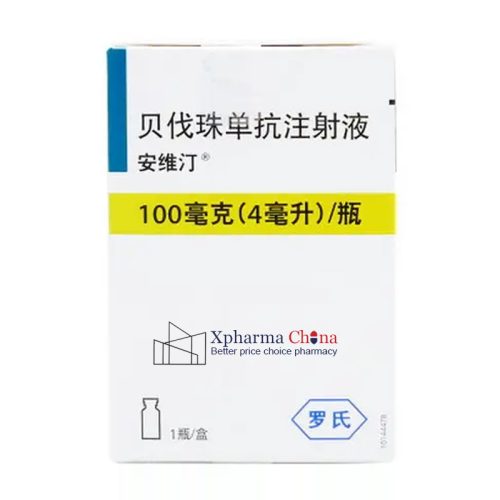
Avastin Bevacizumab Injection
Brand Name: 安维汀 ®(Avastin® )
• Generic Name: Bevacizumab
• Strength: 100 mg (4 mL) per vial, 1 vial per box
• Manufacturer: Roche Diagnostics GmbH
• Marketing Authorization Holder: Roche Pharma (Schweiz) AG (Switzerland); domestic filing entity: Roche (China) Investment Co., Ltd.
• Approval Date in China: February 26, 2010
• Registration Number: 国药准字 SJ20170035
• Storage: Store in the original carton at 2°C–8°C (36°F–46°F), protected from light. Do not freeze or shake. Keep out of reach of children.
Price&Cost:Contact Us now for the best price of Bevacizumab(Avastin)
1. Indications and Usage
Metastatic Colorectal Cancer (MCRC):
In combination with intravenous 5-fluorouracil-based chemotherapy for first-line treatment.
Non-Squamous Non-Small Cell Lung Cancer (NSCLC):
In combination with carboplatin and paclitaxel for unresectable, locally advanced, recurrent, or metastatic non-squamous NSCLC.
Glioblastoma (GBM):
As a single agent for recurrent disease.
Metastatic Renal Cell Carcinoma (MRCC):
In combination with interferon alfa.
Cervical Cancer:
In combination with paclitaxel and cisplatin or topotecan for persistent, recurrent, or metastatic disease.
Ovarian Cancer:
In combination with chemotherapy for advanced disease (specific indications vary by region and study).
2. Dosage and Administration
Route of Administration:
For Intravenous (IV) Infusion ONLY. Do not administer as an IV push or bolus.
Recommended Dosage:
MCRC: 5 mg/kg every 2 weeks OR 7.5 mg/kg every 3 weeks.
NSCLC, GBM, MRCC, Cervical Cancer: 15 mg/kg every 3 weeks.
Administration Instructions:
Dilute the appropriate dose in 100 mL of 0.9% Sodium Chloride Injection.
First Infusion: Administer over 90 minutes.
Subsequent Infusions: If the first is well tolerated, the second can be over 60 minutes; if the 60-minute infusion is well tolerated, all subsequent infusions may be administered over 30 minutes.
Contraindicated Diluents:
Do not dilute or administer with dextrose or glucose solutions.
3. Mechanism of Action
VEGF Inhibition:
Bevacizumab binds to VEGF (Vascular Endothelial Growth Factor), preventing its interaction with VEGF receptors (Flt-1 and KDR) on the surface of endothelial cells.
Anti-Angiogenesis:
By blocking VEGF signaling, it inhibits the proliferation and migration of endothelial cells, thereby preventing the formation of new blood vessels (angiogenesis) that tumors need to grow and metastasize.
4. Safety and Warnings
Gastrointestinal Perforation:
Can occur at any time. Permanently discontinue if perforation occurs.
Surgery and Wound Healing Complications:
Do not administer for at least 28 days following elective surgery and do not administer until the wound is fully healed.
Hemorrhage:
Severe or fatal hemorrhage, including hemoptysis (lung bleeding), may occur. Use with caution in patients with recent hemoptysis or histology showing squamous cell carcinoma.
Arterial Thromboembolism:
Increased risk of fatal arterial thromboembolic events (e.g., stroke, myocardial infarction).
Hypertension and Proteinuria:
Monitor blood pressure and urinalysis regularly. Dose interruption or discontinuation is required for severe hypertension or nephrotic syndrome.
Reversible Posterior Leukoencephalopathy Syndrome (RPLS):
A rare neurological disorder. Permanently discontinue if RPLS occurs.
5. Adverse Reactions
Most Common (>10%):
Hypertension, fatigue or asthenia, diarrhea, abdominal pain, headache, and elevated transaminases.
6. Drug Interactions
Chemotherapy Agents:
Extensively studied in combination with fluoropyrimidines, taxanes, and platinum agents. No significant pharmacokinetic interactions were observed.
7. Pharmaceutical Information
Chemical Composition:
Active Ingredient: Bevacizumab.
Appearance: Clear to slightly opalescent, colorless to pale brown liquid.
Storage: Store at 2°C–8°C. Do not freeze or shake.
Only logged in customers who have purchased this product may leave a review.


Reviews
There are no reviews yet.