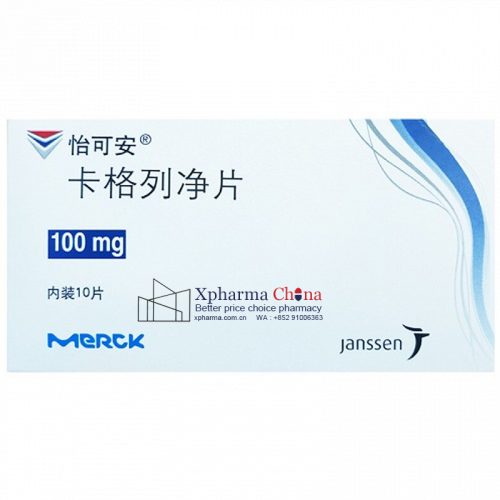
Invokana Canagliflozin Tablets
Brand Name: 怡可安®(Invokana®)
Generic Name: Canagliflozin
Strength: 100mg per tablet, 10 tablets per box
Manufacturer: Janssen-Ortho LLC, USA
Marketing Authorization Holder: Janssen-Cilag International NV
Approval Date in China: 2017
Registration Number: 国药准字 HJ20171196
Storage: Sealed storage below 30℃, avoid dampness and direct sunlight; keep out of reach of children.
Price&Cost:Contact Us now for the best price of Canagliflozin (Invokana)
1. Indications and Usage
Glycemic Control in Type 2 Diabetes:
Indicated as an adjunct to diet and exercise to improve glycemic control in adults with type 2 diabetes mellitus.
Cardiovascular Risk Reduction:
To reduce the risk of major adverse cardiovascular events (cardiovascular death, non-fatal myocardial infarction, or non-fatal stroke) in adults with type 2 diabetes mellitus and established cardiovascular disease.
Diabetic Kidney Disease:
To reduce the risk of end-stage kidney disease, doubling of serum creatinine, cardiovascular death, and hospitalization for heart failure in adults with type 2 diabetes mellitus and diabetic nephropathy with albuminuria.
Limitations of Use:
Not indicated for use in patients with type 1 diabetes mellitus or for the treatment of diabetic ketoacidosis.
2. Dosage and Administration
Route of Administration:
For Oral Use ONLY. Administer once daily prior to the first meal of the day.
Recommended Dosage:
Initial Dose: The recommended starting dose is 100 mg orally once daily.
Titration: For patients tolerating 100 mg with eGFR ≥60 mL/min/1.73 m² who require additional glycemic control, the dose may be increased to 300 mg once daily.
Renal Impairment Adjustment:
eGFR ≥60: No adjustment needed.
eGFR ≥45 to <60: Do not initiate for glycemic control. For established cardiovascular disease or heart failure risk reduction, discontinue if eGFR falls persistently below 45.
eGFR <45: Not recommended for any indication.
eGFR <30: Contraindicated.
Administration Instructions:
Assess renal function prior to initiation and periodically thereafter. Do not initiate in patients with eGFR below 45 mL/min/1.73 m².
3. Mechanism of Action
SGLT2 Inhibition:
Canagliflozin inhibits sodium-glucose co-transporter 2 (SGLT2), which is expressed in the proximal renal tubules.
Glycosuria:
By blocking SGLT2, canagliflozin reduces renal reabsorption of filtered glucose and lowers the renal threshold for glucose, thereby increasing urinary glucose excretion and reducing plasma glucose levels.
4. Safety and Warnings
Ketoacidosis:
Cases of diabetic ketoacidosis (DKA), including euglycemic DKA, have been reported. If suspected, discontinue canagliflozin and evaluate immediately.
Volume Depletion and Hypotension:
Canagliflozin causes intravascular volume contraction. Symptomatic hypotension can occur, especially in elderly patients or those on diuretics. Correct volume status prior to initiation.
Acute Kidney Injury (AKI):
AKI has been reported, often secondary to volume depletion. Monitor renal function periodically.
Lower Limb Amputation:
An increased risk of lower limb amputation (primarily toe or mid-foot) was observed in clinical trials. Monitor patients for infections and new pain in the lower limbs.
Genital Mycotic Infections:
Patients are at increased risk for vulvovaginal candidiasis and balanoposthitis.
Fournier’s Gangrene:
Cases of necrotizing fasciitis of the perineum have been reported. Requires urgent surgical intervention.
5. Adverse Reactions
Most Common:
Female genital mycotic infections, urinary tract infections, increased urination (polyuria), thirst, nausea, and constipation.
Other Reported Reactions:
Male genital mycotic infections, pruritus, rash, hypersensitivity reactions, and increases in LDL cholesterol.
6. Drug Interactions
Insulin and Insulin Secretagogues:
Concomitant use increases the risk of hypoglycemia. A lower dose of insulin or sulfonylureas should be considered.
Diuretics:
May increase the risk of volume depletion and hypotension.
UGT Enzyme Inducers:
Drugs such as rifampin (an inducer of UGT enzymes) can reduce canagliflozin exposure, potentially reducing efficacy.
7. Pharmaceutical Information
Chemical Composition:
Active Ingredient: Canagliflozin.
Available Strengths: Film-coated tablets containing 100 mg or 300 mg of canagliflozin.
Excipients: Microcrystalline cellulose, lactose monohydrate, croscarmellose sodium, magnesium stearate, and others.
Storage:
Store at controlled room temperature, 20°C to 25°C (68°F to 77°F). Protect from moisture.
Only logged in customers who have purchased this product may leave a review.
Reviews
There are no reviews yet.