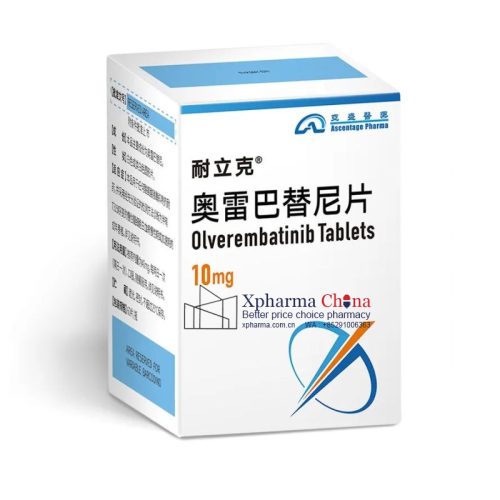
Olverembatinib Tablets
Product Name: Nalike ® (Olverembatinib Tablets)
Common name: Olverembatinib
R&D company: Ascentage Pharma
NMPA approval date: November 19, 2021 (conditional approval), converted to full approval in 2024
Storage conditions: Room temperature (15-30 ° C), away from light and moisture, sealed for storage
Price&Cost: Contact Us now for the best price of Sunvozertinib(ZEGFROVY)
Olverembatinib Tablets ®) The English version of the instruction manual can be obtained through the official channels of China National Medical Products Administration (NMPA) and Yasheng Pharmaceutical. The following is a summary of the core content based on the approval documents:
1. Indications and Usage
Indications: Olverembatinib (HQP1351) is used to treat adult patients with chronic myeloid leukemia (CML) in the chronic or accelerated phase with T315I mutation, as well as adult patients with Philadelphia chromosome positive acute lymphoblastic leukemia (Ph+ALL) with T315I mutation.
This indication was conditionally approved by NMPA (first approved in November 2021) based on the high response rate demonstrated in Chinese registered clinical trials (such as AP-GCP-201).
This drug is a third-generation BCR-ABL tyrosine kinase inhibitor (TKI) designed specifically to overcome T315I resistance mutations.
2. Dosage and Administration
Recommended dosage: 40mg orally, once daily, with a two-week interval followed by a one week break (i.e. 28 days per cycle, 14 days of medication and 14 days of discontinuation).
It can be taken with meals or on an empty stomach, and it is recommended to take the medication at a fixed time every day.
Dosage form and specifications: Tablets containing 10 mg or 20 mg of olcerembatinib.
Dose adjustment:
When grade ≥ 3 non hematological or hematological toxicity occurs, medication can be suspended until it returns to grade ≤ 1, and then restarted once daily at 30 mg or 20 mg.
If the dose of 20 mg cannot be tolerated, the medication will be permanently discontinued.
3. Mechanism of Action
Olverembatinib is a potent, oral, third-generation BCR-ABL inhibitor that effectively inhibits wild-type and various mutant BCR-ABL proteins, particularly highly selective towards the T315I “goalkeeper” mutation. It inhibits leukemia cell proliferation and induces apoptosis by blocking the BCR-ABL driven signaling pathway.
4. Safety and Warnings
Bone marrow suppression: common causes include neutropenia, thrombocytopenia, and anemia. Regular monitoring of whole blood cell count is necessary, and supportive treatment or dose adjustment may be given if necessary.
Hepatotoxicity: Some patients may experience elevated ALT/AST levels. It is recommended to regularly monitor liver function before and during treatment. If transaminase>3 × ULN and total bilirubin>2 × ULN, the medication should be permanently discontinued.
QT interval prolongation: can increase the risk of arrhythmia. It is recommended to monitor electrocardiogram before and during treatment, especially in patients with underlying heart disease or those taking other QT prolonging drugs.
Embryo fetal toxicity: Animal studies have shown that it can cause fetal damage. It is recommended that women with fertility potential take effective contraceptive measures during treatment and for at least 6 months after the last dose.
5. Adverse Reactions
The most common (≥ 20%) adverse reactions:
Thrombocytopenia, neutropenia, anemia, leukopenia, diarrhea, rash, nausea, fatigue, musculoskeletal pain, headache.
Grade 3 or above adverse reactions (mainly hematological toxicity):
Thrombocytopenia (about 40%), neutropenia (about 35%), anemia (about 20%).
Laboratory abnormality:
Elevated liver enzymes (ALT/AST), elevated creatine kinase, abnormal blood lipids, etc.
6. Drug Interactions
Strong CYP3A4 inhibitors (such as ketoconazole): may increase the blood concentration of olcerembatinib, it is recommended to avoid co administration; If combined use is necessary, toxic reactions should be closely monitored.
Strong CYP3A4 inducers (such as rifampicin): may significantly reduce blood drug concentration and should be avoided in combination.
P-gp substrate drug: olcerembatinib may inhibit P-glycoprotein and increase exposure to drugs such as digoxin, and should be used with caution.
7. Pharmaceutical Information
Product Name: Nalike ® (Olverembatinib Tablets)
Common name: Olverembatinib
R&D company: Ascentage Pharma
NMPA approval date: November 19, 2021 (conditional approval), converted to full approval in 2024
Storage conditions: Room temperature (15-30 ° C), away from light and moisture, sealed for storage
⚠️ Attention: Currently, the official English version of the complete instruction manual has not been released on the FDA or EMA platforms, as it is mainly approved in China and international multicenter trials are underway. It is recommended to refer to the Chinese instructions or contact the manufacturer for a translated version when using it clinically.
Only logged in customers who have purchased this product may leave a review.

Reviews
There are no reviews yet.