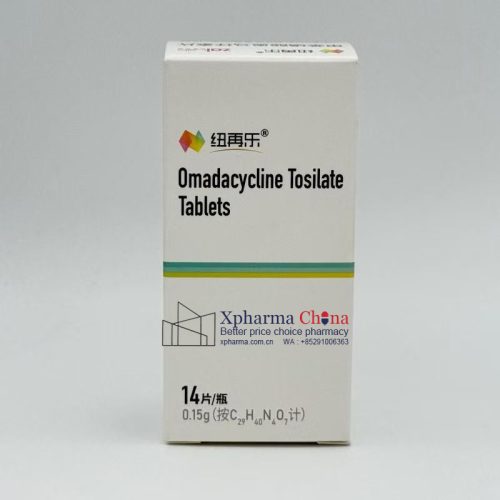
Omadacycline Tosilate Tablets
Product Name: NUZYRA ®
Common name: Omadacycline Tosylate
R&D company: Paratek Pharmaceuticals, Inc
FDA approval date: October 2018 (CABP and ABSSSI)
Storage conditions:
Tablets: Room temperature (20-25 ° C), away from light and moisture.
Freeze dried powder injection: Refrigerate at 2-8 ° C, store away from light, and stabilize at room temperature for 6 hours after reconstitution, or stabilize at 2-8 ° C for 24 hours.
Price&Cost: Contact Us now for the best price of Omadacycline Tosilate Tablets
1. Indications and Usage
Community Acquired Bacterial Pneumonia (CABP): Suitable for treating adult community-acquired bacterial pneumonia (CABP) caused by susceptible pathogens, including Streptococcus pneumoniae, Staphylococcus aureus (MSSA), Haemophilus influenzae, Klebsiella pneumoniae, etc.
Acute Bacterial Skin and Skin Structure Infections (ABSSSI): Used to treat acute bacterial skin and skin structure infections (ABSSSI) caused by bacteria such as Staphylococcus aureus (including MRSA), Streptococcus pyogenes, Escherichia coli, etc.
2. Dosage and Administration
Recommended dosage:
Intravenous injection: 100 mg, once every 12 hours, infusion time ≥ 30 minutes.
Oral administration: 300 mg, changed to 150 mg after the first dose, once every 12 hours.
Course of treatment: usually 7-14 days, adjusted according to the type of infection and clinical response.
Dosage form and specifications:
Tablets: 150 mg (film coated tablets)
Injection powder: 100 mg/bottle (freeze-dried powder injection)
Dose adjustment:
Mild to moderate renal insufficiency patients do not require dose adjustment.
Patients with severe renal insufficiency or end-stage renal disease (ESRD): dose adjustment is not necessary, but it is recommended to supplement medication after hemodialysis.
3. Mechanism of Action
Omadacycline is an aminomethylcycline antibiotic, a semi synthetic derivative of tetracycline, which can inhibit bacterial protein synthesis. It blocks peptide chain extension by binding to the 30S ribosomal subunit, preventing aminoacyl tRNA from entering the A site. Its structural modifications enhance the stability of tetracycline resistance mechanisms, such as efflux pumps and ribosome protective proteins.
4. Safety and Warnings
Fetal toxicity: Animal studies have shown that it may lead to abnormal fetal bone development. Pregnant women are prohibited from using it unless the potential benefits outweigh the risks.
Effects on tooth and bone development: Avoid use in children under 8 years old as it may cause permanent tooth discoloration and bone growth inhibition.
Clostridium difficile associated diarrhea (CDAD): may occur after the use of antibiotics, ranging in severity from mild colitis to lethal colitis, and requires careful monitoring.
Elevated liver enzymes: Some patients may experience elevated ALT/AST, usually transient, but regular monitoring of liver function is necessary.
Photogenic reaction: Although the incidence is low, it is still recommended to avoid excessive sun exposure or ultraviolet radiation during medication.
5. Adverse Reactions
Common adverse reactions (≥ 2%):
Nausea, vomiting, diarrhea, headache, infusion site reactions (when administered intravenously), and elevated liver enzymes.
Grade 3 and above adverse reactions:
ALT/AST elevation (about 3.8%), neutropenia, allergic reactions.
Laboratory abnormality:
Mild to moderate thrombocytopenia, leukopenia, and elevated creatinine (mostly transient).
6. Drug Interactions
Antacids, iron supplements, and cationic preparations (such as calcium, magnesium, and aluminum): can significantly reduce the absorption of omadacycline, and should be avoided within 2 hours before and after medication.
Warfarin: No significant INR effect was observed, but it is still recommended to monitor coagulation function.
CYP450 enzyme system: omadacycline does not significantly induce or inhibit major CYP enzymes, and the risk of drug interactions is low.
7. Pharmaceutical Information
Product Name: NUZYRA ®
Common name: Omadacycline Tosylate
R&D company: Paratek Pharmaceuticals, Inc
FDA approval date: October 2018 (CABP and ABSSSI)
Storage conditions:
Tablets: Room temperature (20-25 ° C), away from light and moisture.
Freeze dried powder injection: Refrigerate at 2-8 ° C, store away from light, and stabilize at room temperature for 6 hours after reconstitution, or stabilize at 2-8 ° C for 24 hours.
Only logged in customers who have purchased this product may leave a review.

Reviews
There are no reviews yet.