
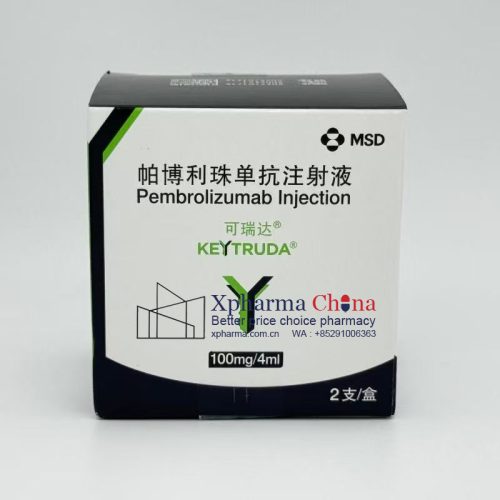
Pembrolizumab(Keytruda) Injection
Formulation: Lyophilized powder or solution for injection.
Packaging: Available in single-use vials of 50 mg, 100 mg, or 200 mg strengths.
Storage: Store refrigerated at 2°C to 8°C (36°F to 46°F). Protect from light.
Packager: Merck Sharp & Dohme LLC
Marketing Status: Biologic Licensing Application
Price&Cost: Contact Us now for the best price of Pembrolizumab(Keytruda)
1. Indications and Usage
Melanoma: Treatment of patients with unresectable or metastatic melanoma. Also indicated for adjuvant treatment in adult and pediatric patients (12 years and older) with IIB, IIC, or III melanoma after complete resection.
Non-Small Cell Lung Cancer (NSCLC):
First-line treatment of metastatic NSCLC with PD-L1 tumor proportion score (TPS) ≥1%, without EGFR or ALK genomic aberrations.
Used in combination with pemetrexed and platinum chemotherapy for metastatic non-squamous NSCLC.
With carboplatin and paclitaxel or nab-paclitaxel for squamous NSCLC.
Head and Neck Squamous Cell Carcinoma (HNSCC): For recurrent or metastatic disease, either as monotherapy (if PD-L1 CPS ≥1) or in combination with platinum and 5-FU.
Classical Hodgkin Lymphoma (cHL): For adult and pediatric patients with refractory disease or those who have relapsed after 2 or more prior therapies.
Urothelial Carcinoma: For locally advanced or metastatic cases that are ineligible for platinum-containing chemotherapy or have progressed after such therapy.
MSI-H or dMMR Tumors: For unresectable or metastatic solid tumors with high microsatellite instability or mismatch repair deficiency, including colorectal cancer.
Additional Approved Indications: Include gastric cancer, esophageal cancer, cervical cancer, hepatocellular carcinoma, Merkel cell carcinoma, renal cell carcinoma, and endometrial cancer (in combination with lenvatinib), among others.
2. Dosage and Administration
Adults:
200 mg every 3 weeks as an intravenous infusion over at least 30 minutes.
Alternatively, 2 mg/kg every 3 weeks for certain indications.
Pediatric Patients (≥12 years): Dosed at 2 mg/kg (up to a maximum of 200 mg) every 3 weeks.
The drug should be administered using a sterile, non-pyrogenic, low-protein-binding in-line filter (0.2–5 μm).
3. Mechanism of Action
Keytruda binds to the PD-1 receptor on T cells, blocking its interaction with PD-L1 and PD-L2 ligands. This inhibition enhances T-cell activation and enables the immune system to detect and destroy tumor cells.
4. Safety and Warnings
Immune-Mediated Adverse Reactions:
Pneumonitis: Monitor for pulmonary symptoms; use corticosteroids for Grade 2 or higher.
Colitis: Evaluate for diarrhea; manage with steroids and withhold or discontinue based on severity.
Hepatitis: Monitor liver enzymes; initiate corticosteroids if AST/ALT >3×ULN or total bilirubin >1.5×ULN.
Endocrinopathies: Includes thyroid disorders, adrenal insufficiency, hypophysitis, and type 1 diabetes mellitus. Hormone replacement may be required.
Nephritis and Renal Dysfunction: Monitor creatinine; use corticosteroids and consider holding or discontinuing therapy.
Infusion-Related Reactions: Severe reactions require immediate discontinuation.
Transplant Rejection Risk: May increase risk of solid organ transplant rejection or graft-versus-host disease (GVHD) post-allogeneic HSCT.
Embryofetal Toxicity: Can cause fetal harm. Advise pregnant women of the risk.
5. Adverse Reactions
Common adverse reactions (≥20%) include:
Fatigue
Pruritus
Diarrhea
Decreased appetite
Rash
Nausea
Cough
Dyspnea
Musculoskeletal pain
Constipation
In combination with chemotherapy, additional common side effects include anemia (55%), neutropenia (36%), and alopecia (35%).
6. Drug Interactions
No formal drug interaction studies have been conducted. However, due to its mechanism, caution is advised when combining with other immunostimulatory agents or immunosuppressants.
7. Patient Selection
Use FDA-approved companion diagnostics to assess PD-L1 expression for certain indications (e.g., NSCLC, HNSCC). Testing information is available at: FDA Companion Diagnostics.
8. Pharmaceutical Information
Formulation: Lyophilized powder or solution for injection.
Packaging: Available in single-use vials of 50 mg, 100 mg, or 200 mg strengths.
Storage: Store refrigerated at 2°C to 8°C (36°F to 46°F). Protect from light.
Only logged in customers who have purchased this product may leave a review.
Reviews
There are no reviews yet.