Rinvoq Upadacitinib Sustained-Release Tablets
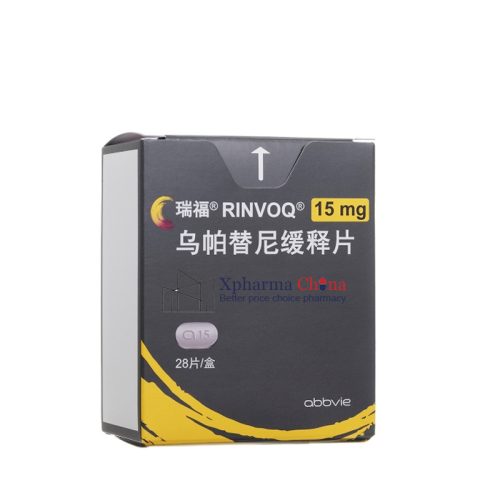
Brand Name: 瑞福 ®(Rinvoq®)
Generic Name: Upadacitinib Sustained-Release
Strength: 15 mg per tablet, 28 tablets per box
Manufacturer: AbbVie Ireland NL B.V.
Marketing Authorization Holder: AbbVie Deutschland GmbH & Co. KG. Domestic filing entity: AbbVie Pharmaceuticals Trading (Shanghai) Co., Ltd.
Approval Date in China: February 24, 2022
Registration Number: 国药准字 HJ20220007
Storage: Store at 20°C–25°C (68°F–77°F) in the original package, protected from light and moisture. Brief exposure to 15°C–30°C (59°F–86°F) is permitted. Keep out of the sight and reach of children.
Price&Cost:Contact Us now for the best price of Upadacitinib Sustained-Release (Rinvoq)
1. Indications and Usage
Rheumatoid Arthritis (RA): Treatment of adult patients with moderately to severely active RA, typically after failure of one or more TNF inhibitors.
Psoriatic Arthritis (PsA): Treatment of adult patients with active PsA.
Ankylosing Spondylitis (AS): Treatment of adult patients with active AS.
Atopic Dermatitis (AD): Treatment of adult and adolescent patients (12 years and older) with moderate to severe AD inadequately controlled with other systemic drugs.
Ulcerative Colitis (UC) & Crohn’s Disease (CD): Treatment of moderately to severely active UC or CD in adults.
2. Dosage and Administration
Route of Administration:
For Oral Use ONLY. Swallow tablets whole; do not crush, chew, or split.
Recommended Dosage:
Standard Dose: 15 mg once daily.
Dose Escalation: May be increased to 30 mg once daily for RA, PsA, or AD if clinical response is inadequate.
Induction Dose (IBD): 45 mg once daily for induction (8 weeks for UC, 12 weeks for CD), followed by 15 mg or 30 mg maintenance.
Dose Adjustments:
Renal/Hepatic Impairment: No adjustment for mild/moderate impairment. Use with caution in severe renal impairment; contraindicated in severe hepatic impairment.
Drug Interactions: Reduce dose to 15 mg once daily when co-administered with strong CYP3A4 inhibitors (e.g., ketoconazole).
3. Mechanism of Action
Selective JAK1 Inhibition:
Upadacitinib is a potent, selective inhibitor of JAK1.
Blocking Signaling:
By selectively inhibiting JAK1 (over JAK2, JAK3, or TYK2), it interferes with the signaling of various pro-inflammatory cytokines (e.g., IL-6, IL-23) involved in the pathogenesis of autoimmune diseases. This selectivity is intended to provide efficacy while minimizing cytokine-independent effects associated with JAK2 inhibition.
4. Safety and Warnings
Boxed Warning (Severe Infections, Malignancy, MACE, Thrombosis):
Infections: Increased risk of serious bacterial, fungal, and viral infections (e.g., Tuberculosis, Herpes Zoster).
Malignancy: Increased risk of lymphoma and lung cancer, especially in patients >50 years with cardiovascular risk factors.
MACE & Thrombosis: Increased risk of myocardial infarction, stroke, and venous thromboembolism (DVT/PE).
Gastrointestinal Perforations:
Cases of GI perforation have been reported, primarily in patients with UC or CD.
Laboratory Abnormalities:
Monitor for lymphopenia, anemia, neutropenia, increased creatinine, and lipid elevations (LDL/HDL).
5. Adverse Reactions
Most Common:
Upper respiratory tract infections (nasopharyngitis), headache, nausea, acne, increased creatine phosphokinase (CPK), and herpes simplex.
6. Drug Interactions
Strong CYP3A4 Inhibitors:
Significantly increase upadacitinib exposure. Dose reduction to 15 mg once daily is required.
Immunosuppressants:
Concomitant use with biologic DMARDs or potent immunosuppressants (e.g., azathioprine) is not recommended.
Live Vaccines:
Avoid concurrent administration of live vaccines.
7. Pharmaceutical Information
Chemical Composition:
Active Ingredient: Upadacitinib.
Available Strength: 15 mg (purple), 30 mg (red), and 45 mg (yellow) sustained-release tablets.
Storage: Store at 20°C–25°C (68°F–77°F).
Only logged in customers who have purchased this product may leave a review.

Reviews
There are no reviews yet.