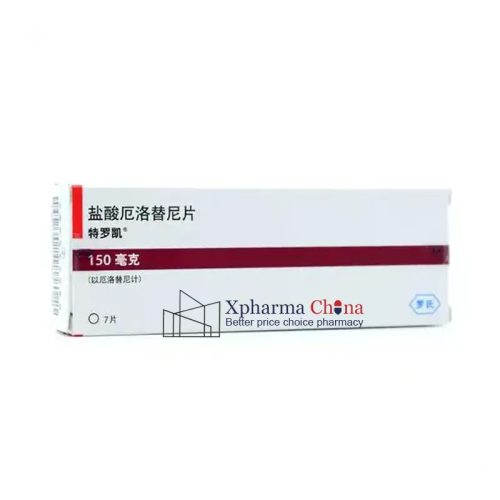
Tarceva Erlotinib Hydrochloride Tablets
Brand Name: 特罗凯 ®(Tarceva®)
Generic Name: Erlotinib Hydrochloride
Strength: 150 mg per tablet (calculated by erlotinib), 7 tablets per box
Manufacturer: F. Hoffmann-La Roche Ltd.
Marketing Authorization Holder: Roche Diagnostics (Shanghai) Co., Ltd. / Roche (China) Investment Co., Ltd.
Approval Date in China: April 17, 2006
Registration Number:国药准字 H20120102
Storage: Seal tightly, store at 25℃, short-term storage allowed at 15–30℃; protect from light and moisture, keep away from children
Price&Cost:Contact Us now for the best price of Erlotinib Hydrochloride(Tarceva)
1. Indications and Usage
Non-Small Cell Lung Cancer (NSCLC):
Indicated for the first-line treatment of patients with locally advanced or metastatic non-small cell lung cancer (NSCLC) with exon 19 deletions or exon 21 L858R substitution mutations in the epidermal growth factor receptor (EGFR) gene.
Pancreatic Cancer:
Indicated in combination with gemcitabine for the first-line treatment of patients with locally advanced, non-resectable, or metastatic pancreatic cancer.
2. Dosage and Administration
Recommended Dosage:
NSCLC: 150 mg orally once daily.
Pancreatic Cancer: 100 mg orally once daily (or 150 mg once daily if body surface area ≥ 1.61 m²).
Administration Instructions:
Administer at least 1 hour before or 2 hours after meals.
Dose Modifications:
Dose reductions (by 50 mg increments) are recommended for severe skin toxicity, diarrhea, interstitial lung disease (ILD), or hepatotoxicity.
Consider dose reduction when used concomitantly with strong CYP3A4 inhibitors (e.g., ketoconazole, ritonavir).
Consider dose increase (up to 300 mg) for smokers, as smoking significantly reduces drug exposure.
3. Mechanism of Action
Reversible Tyrosine Kinase Inhibitor (TKI):
Erlotinib is a potent, reversible, highly selective inhibitor of the intracellular tyrosine kinase domain of the epidermal growth factor receptor (EGFR).
Physiological Effect:
It competitively inhibits ATP binding to the intracellular domain of EGFR, blocking phosphorylation and downstream signaling pathways (such as Ras-Raf-MAPK and PI3K-Akt), which leads to inhibition of tumor cell proliferation and induction of apoptosis.
4. Safety and Warnings
Interstitial Lung Disease (ILD):
Fatal and severe cases of ILD have been reported. Interrupt treatment for suspected ILD and discontinue permanently if confirmed.
Gastrointestinal Perforation:
Gastrointestinal perforation has occurred in patients receiving erlotinib. Discontinue in patients who develop this complication.
Skin Toxicity:
Severe skin toxicity is common. Monitor for rash and acneiform dermatitis.
Ocular Disorders:
Cases of keratitis and ulcerative keratitis have been reported.
Hepatotoxicity:
Severe hepatic impairment may increase erlotinib exposure. Use with caution in patients with hepatic dysfunction.
5. Adverse Reactions
Most Common:
Rash, diarrhea, nausea, anorexia, fatigue, dyspnea, cough, and vomiting.
Laboratory Abnormalities:
Increased serum ALT and AST, increased total bilirubin, increased creatinine.
6. Drug Interactions
CYP3A4 Inhibitors:
Concomitant use of strong CYP3A4 inhibitors (e.g., ketoconazole, itraconazole, ritonavir) increases erlotinib exposure. Dose reduction should be considered.
CYP3A4 Inducers:
Concomitant use of CYP3A4 inducers (e.g., rifampin, phenytoin, carbamazepine) significantly decreases erlotinib exposure. Alternative agents without CYP3A4 induction activity should be considered.
Gastric Acid Suppressants:
Proton pump inhibitors (PPIs) and H2 blockers may decrease the solubility of erlotinib and reduce its bioavailability.
7. Pharmaceutical Information
Chemical Name:
N-(3-Ethynylphenyl)-6,7-bis(2-methoxyethoxy)-4-quinazolinamine hydrochloride.
Storage:
Store at 25°C (77°F); excursions permitted to 15-30°C (59-86°F). Protect from moisture and light.
Only logged in customers who have purchased this product may leave a review.
Reviews
There are no reviews yet.