Truqap Capivasertib Tablets
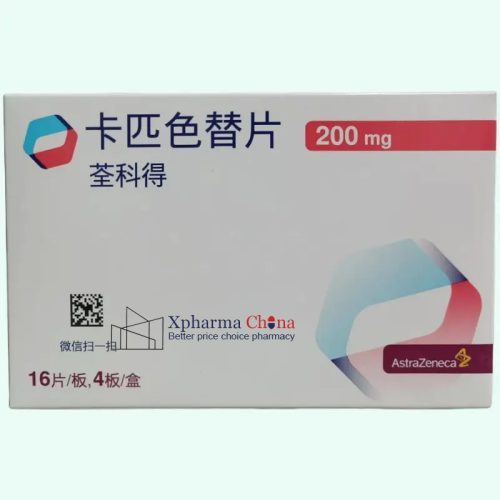
Brand Name: 荃科得 ® ( Truqap®)
Generic Name: Capivasertib
Strength: 200mg per tablet, 64 tablets per box (16 tablets/board, 4 boards/box)
Manufacturer: AstraZeneca AB
Marketing Authorization Holder: AstraZeneca UK Limited;AstraZeneca (Wuxi) Trading Co., Ltd.
Approval Date in China: April 18, 2025
Registration Number: 国药准字 HJ20250047
Storage: Store at controlled room temperature (20°C to 25°C/68°F to 77°F), excursions permitted to 15°C to 30°C (59°F to 86°F). Keep tightly closed in the original packaging, protect from moisture, and keep out of reach of children.
Price&Cost:Contact Us now for the best price of Capivasertib (Truqap)
1. Indications and Usage
Hormone Receptor (HR)-Positive, HER2-Negative Advanced Breast Cancer:
Indicated in combination with fulvestrant for the treatment of adult patients with HR-positive, HER2-negative advanced or metastatic breast cancer with a PIK3CA/AKT1/PTEN alteration, as detected by an FDA-approved test.
Treatment History: Patients must have disease progression after at least one endocrine-based regimen in the metastatic setting or recurrence within 12 months of adjuvant therapy.
2. Dosage and Administration
Route of Administration:
For Oral Use ONLY.
Recommended Dosage:
Dose: 400 mg twice daily (approximately every 12 hours).
Schedule: Administered on Days 1–4 of a 7-day cycle, followed by a 3-day rest period (Days 5–7).
Administration Instructions:
Can be taken with or without food. Swallow tablets whole; do not crush, chew, or split.
Missed Dose:
If a dose is missed, it may be taken up to 4 hours after the scheduled time. If more than 4 hours have passed, skip the missed dose and resume at the next scheduled time.
3. Mechanism of Action
AKT Pathway Inhibition:
Capivasertib is a potent, selective inhibitor of the AKT kinase family (AKT1, AKT2, and AKT3).
Downstream Signaling:
By inhibiting AKT, it blocks the phosphorylation of downstream substrates, thereby suppressing tumor cell proliferation and survival in cancers driven by PIK3CA/AKT1/PTEN alterations .
4. Safety and Warnings
Hyperglycemia:
Can cause severe hyperglycemia, including diabetic ketoacidosis. Monitor fasting glucose and HbA1c before and during treatment. Not recommended for patients with insulin-dependent diabetes .
Diarrhea:
Severe diarrhea can occur. Monitor and manage promptly with antidiarrheals and hydration.
Skin Reactions:
Can cause severe dermatologic reactions, including erythema multiforme and drug reaction with eosinophilia and systemic symptoms (DRESS) .
Embryo-Fetal Toxicity:
Can cause fetal harm. Effective contraception is required during treatment and for at least 1 month after the final dose.
5. Adverse Reactions
Most Common:
Metabolic: Hyperglycemia (45%), Hypertriglyceridemia.
Gastrointestinal: Diarrhea (59%), Nausea (30%), Vomiting, Stomatitis.
Dermatologic: Rash (21%), Palmar-plantar erythrodysesthesia (Hand-Foot Syndrome).
General: Fatigue (18%) .
6. Drug Interactions
Metabolic Pathway:
Capivasertib is primarily metabolized by CYP3A4.
CYP3A4 Inhibitors (e.g., Itraconazole, Clarithromycin, Grapefruit): Avoid co-administration. If unavoidable, dose reduction is recommended .
CYP3A4 Inducers (e.g., Rifampin, Carbamazepine): Avoid co-administration as they significantly decrease capivasertib exposure.
7. Pharmaceutical Information
Chemical Composition:
Active Ingredient: Capivasertib.
Appearance: Beige, film-coated, round, biconvex tablets. The 160 mg tablet is imprinted with “CAV 160”.
Storage: Store at 20°C–25°C (68°F–77°F).
Only logged in customers who have purchased this product may leave a review.
Reviews
There are no reviews yet.