Vitrakvi Lenvatinib Sulfate Capsules
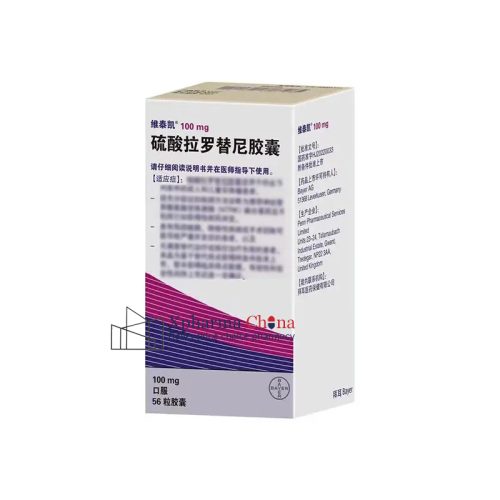
Brand Name: 维泰凯 ®(Vitrakvi®)
Generic Name: Larotrectinib Sulfate
Strength: 100mg per capsule, 56 capsules per bottle
Manufacturer: Penn Pharmaceutical Services Limited
Marketing Authorization Holder: Bayer AG;domestic filing entity: Bayer Healthcare Co., Ltd.
Approval Date in China: April 8, 2022
Registration Number: 国药准字 HJ20220033
Storage: Store at 20°C to 25°C (68°F to 77°F), excursions permitted between 15°C and 30°C (59°F and 86°F). Keep tightly closed in the original container, protect from moisture, and keep out of reach of children.
Price&Cost:Contact Us now for the best price of Larotrectinib Sulfate (Vitrakvi)
1. Indications and Usage
Hepatocellular Carcinoma (HCC):
Indicated as a single agent for the treatment of patients with unresectable HCC who have not received prior systemic therapy .
Differentiated Thyroid Carcinoma (DTC):
Indicated for the treatment of patients with locally recurrent or metastatic, progressive, radioactive iodine-refractory DTC .
Renal Cell Carcinoma (RCC):
Indicated in combination with pembrolizumab for the treatment of advanced RCC .
2. Dosage and Administration
Route of Administration:
For Oral Use ONLY.
Recommended Dosage (HCC/DTC):
Based on body weight:
<60 kg: 8 mg once daily.
≥60 kg: 12 mg once daily .
Note: Dosage for RCC combination therapy differs (typically 18 mg once daily).
Administration Instructions:
Take at the same time each day, with or without food.
Swallow capsules whole. If unable to swallow, the capsule contents may be mixed with one tablespoon of water or apple juice in a glass, stirred for at least 3 minutes, and swallowed immediately. Rinse the glass with the same amount of liquid and drink .
Missed Dose:
If a dose is missed and cannot be taken within 12 hours, skip the dose and resume at the next scheduled time .
3. Mechanism of Action
Tyrosine Kinase Inhibitor (TKI):
Lenvatinib inhibits the kinase activity of VEGFR1–3, FGFR1–4, PDGFRα, RET, and KIT .
Anti-angiogenesis:
By blocking these receptors, it inhibits tumor angiogenesis (blood vessel formation) and tumor cell proliferation.
4. Safety and Warnings
Hypertension:
Can cause severe hypertension. Monitor blood pressure regularly and manage with antihypertensive therapy as needed .
Proteinuria and Nephrotic Syndrome:
Monitor urine protein. Severe proteinuria may require dose interruption or discontinuation .
Hepatotoxicity:
Monitor liver function tests (LFTs). Severe hepatic impairment (Child-Pugh C) is not recommended .
Cardiovascular Events:
Risk of cardiac failure and arterial thrombotic events.
Embryo-Fetal Toxicity:
Can cause fetal harm. Effective contraception is required during treatment and for at least 1 month after the final dose .
5. Adverse Reactions
Most Common:
Hypertension (45%), fatigue (44%), diarrhea (39%), decreased appetite (34%), weight loss (31%), joint pain (31%), and proteinuria (26%) .
Dermatologic:
Palmar-plantar erythrodysesthesia syndrome (Hand-Foot Syndrome) .
6. Drug Interactions
CYP3A4 Substrates:
Caution is advised when co-administering with CYP3A4 substrates with a narrow therapeutic index .
Antacids:
Aluminum/magnesium hydroxide antacids may decrease lenvatinib exposure; separate administration by at least 4 hours .
7. Pharmaceutical Information
Chemical Composition:
Active Ingredient: Lenvatinib Mesilate.
Appearance: White to off-white granules contained in hard gelatin capsules.
Storage: Store at 20°C–25°C (68°F–77°F) .
Only logged in customers who have purchased this product may leave a review.

Reviews
There are no reviews yet.