1. Indications and Usage
Vincamine Sustained-release Capsules are indicated for the treatment of:
Age-related psycho-behavioral disorders (e.g., loss of alertness and memory, dizziness, tinnitus, time and space orientation disorders, and insomnia).
Acute cerebrovascular diseases and post-traumatic brain syndrome.
Ischemic retinal diseases (ophthalmology).
Cochlear vestibular diseases (otolaryngology).
2. Dosage and Administration
Standard Dose: The usual adult dosage is one capsule (30 mg) taken orally twice daily (morning and evening).
Administration: It is preferably taken after meals. As this is a sustained-release formulation, the capsule must be swallowed whole and should not be chewed, crushed, or split.
3. Mechanism of Action
Metabolic Improvement: Vincamine is an alkaloid isolated from Vinca roseus (periwinkle). It improves the ability of neurons to utilize glucose and circulate oxygen.
Vasodilation: It dilates cerebral blood vessels and capillaries, thereby improving cerebral blood flow without affecting systemic circulation or cardiac output.
4. Safety and Warnings
Contraindications: This medication is contraindicated in patients with intracranial hypertension (including intracranial tumors), acute cerebrovascular hemorrhage, severe electrolyte disturbances (hypokalemia or hyperkalemia), QT interval prolongation, and those with known hypersensitivity to vincamine or excipients (e.g., lactose intolerance).
Cardiovascular Precautions: Vincamine may cause arrhythmias. It should be used with caution in patients with a history of myocardial infarction, organic heart disease, or heart failure. Baseline and periodic ECG monitoring is recommended during initiation.
Special Populations: Contraindicated in pregnant and lactating women. Safety in pediatric and elderly populations has not been fully established.
5. Adverse Reactions and Clinical Research
Gastrointestinal: Nausea, vomiting, indigestion, abdominal pain, diarrhea, dry mouth, and constipation.
Neurological: Headache and somnolence.
Cardiovascular: Palpitations, QT interval prolongation, ventricular arrhythmias, and hypotension. Rare cases of Torsades de Pointes have been reported internationally.
Dermatological: Polymorphic erythema, rash, urticaria, pruritus, and increased sweating.
6. Drug Interactions
QT-Prolonging Agents: Concomitant use with drugs that induce Torsades de Pointes (e.g., amisulpride) is contraindicated.
CYP3A4 Inhibitors: Strong CYP3A4 inhibitors (e.g., itraconazole) can increase vincamine plasma concentrations. Close monitoring is required if co-administered.
Antihypertensives: Vincamine does not have a long-term antihypertensive effect and cannot replace standard antihypertensive therapy, though it may interact with other cardiovascular medications.
7. Pharmaceutical Information
Active Ingredient: Vincamine.
Chemical Name: (3α,14β,16α)-14,15-dihydro-14-hydroxyibogamin-14-carboxylic acid methyl ester.
Molecular Formula: C₂₁H₂₆N₂O₃.
Molecular Weight: 354.45 g/mol.
Strengths: 30 mg sustained-release capsules.
Appearance: Hard capsules containing white spherical micropellets.
Storage: Store in a tightly sealed container, protected from light and moisture.
Shelf Life: 36 months.
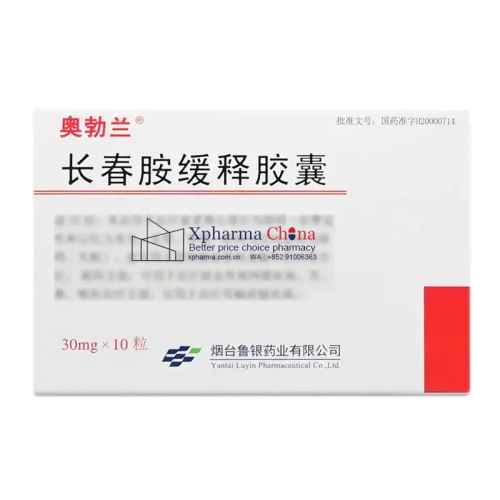
Aobolan Vincamine Sustained‑release Capsules
Brand Name: 奥勃兰®(Aobolan®)
Generic Name: Vincamine
Strength: 30 mg per capsule
Manufacturer: Yantai Luyin Pharmaceutical Co., Ltd.
Marketing Authorization Holder: Yantai Luyin Pharmaceutical Co., Ltd.
Approval Date in China: 2000‑08‑21
Registration Number: H20000714
Storage: Store in a light‑proof and sealed place.
Price&Cost:Contact Us now for the best price of Vincamine(Aobolan)
Only logged in customers who have purchased this product may leave a review.
Reviews
There are no reviews yet.