1. Indications and Usage
Type 2 Diabetes: Indicated as an adjunct to diet and exercise to improve glycemic control in adults with type 2 diabetes mellitus.
Monotherapy or Combination: Can be used as monotherapy or in combination with insulin or sulfonylureas.
2. Dosage and Administration
Starting Dose: The usual starting dose is 50 mg three times daily, taken at the beginning of each main meal.
Titration: The dose may be increased to 100 mg three times daily after 4 to 12 weeks based on glycemic response and tolerability. The maximum recommended dose is 300 mg daily in divided doses.
Administration: The tablet must be swallowed with water at the beginning of a meal (with the first bite). If a meal is skipped, the dose should be omitted.
3. Mechanism of Action
Enzyme Inhibition: Miglitol inhibits alpha-glucosidase enzymes (such as maltase, glucoamylase, and sucrase) on the brush border of the small intestine.
Delayed Absorption: This inhibition delays the breakdown and absorption of complex carbohydrates and disaccharides, thereby reducing postprandial hyperglycemia.
Absorption: Unlike acarbose, miglitol is partially absorbed into the systemic circulation.
4. Safety and Warnings
Gastrointestinal Effects: Flatulence, diarrhea, and abdominal pain are very common, especially during the first few weeks of therapy.
Hypoglycemia: Miglitol alone does not cause hypoglycemia. However, if hypoglycemia occurs during combination therapy, it must be treated with glucose (dextrose), as sucrose (table sugar) is ineffective.
Renal Impairment: Miglitol is excreted unchanged by the kidneys. It is contraindicated in patients with significant renal impairment (creatinine clearance < 20 mL/min).
Contraindications: Contraindicated in patients with inflammatory bowel disease, colonic ulceration, intestinal obstruction, or chronic digestive disorders.
5. Adverse Reactions and Clinical Research
Common Adverse Reactions: Flatulence, diarrhea, abdominal pain, and distension.
Other Adverse Effects: Rare cases of liver function abnormalities and hypersensitivity reactions have been reported.
Clinical Findings: Clinical trials have shown that miglitol effectively reduces postprandial glucose spikes and HbA1c with a low risk of hypoglycemia.
6. Drug Interactions
Hypoglycemic Agents: Concomitant use with insulin or sulfonylureas increases the risk of hypoglycemia.
Digestive Enzymes: Concomitant use with pancreatic enzyme preparations may reduce the efficacy of miglitol.
Charcoal: Activated charcoal may decrease the absorption of miglitol.
Antihypertensives: Concomitant use with antihypertensive agents may increase the risk of hypotension in some patients.
7. Pharmaceutical Information
Active Ingredient: Miglitol.
Strengths: Typically available as 50 mg and 100 mg tablets.
Appearance: The tablets are usually white or off-white.
Storage: Store below 30°C in a dry place, protected from light.
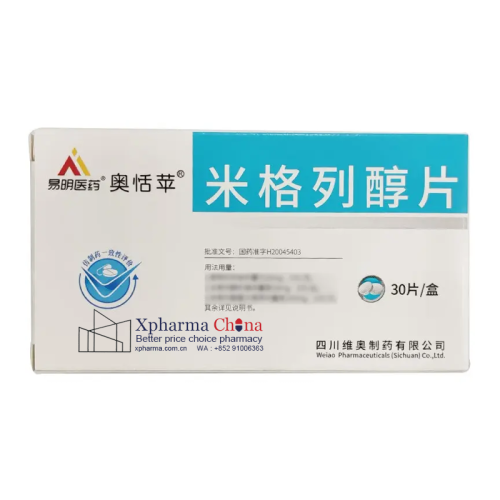
Aotuoping Miglitol Tablets
Brand Name: 奥恬苹®(Aotuoping®)
Generic Name: Miglitol
Strength: 50 mg per tablet, 30 tablets per box
Manufacturer: Weiao Pharmaceuticals (Sichuan) Co., Ltd.
Marketing Authorization Holder: Weiao Pharmaceuticals (Sichuan) Co., Ltd.
Approval Date in China: 2004‑05‑21
Registration Number: 国药准字H20045403
Storage: Store in a sealed, dry place, protected from light.
Price&Cost:Contact Us now for the best price of Miglitol(Aotuoping)
Only logged in customers who have purchased this product may leave a review.

Reviews
There are no reviews yet.