1. Indications and Usage
Diabetes Mellitus: Treatment of adult and pediatric patients with diabetes mellitus.
Glucose Regulation: Provides basal insulin coverage to control elevated blood glucose levels in both Type 1 and Type 2 diabetes.
2. Dosage and Administration
Route: Subcutaneous injection only. Do not administer intravenously or intramuscularly.
Frequency: Typically administered once daily at the same time each day.
Injection Sites: Abdomen, thigh, or deltoid region. Sites should be rotated to prevent lipodystrophy.
Administration: May be mixed with short-acting insulin solutions in the same syringe, but should not be mixed with NPH or other intermediate-acting insulins.
3. Mechanism of Action
Receptor Binding: Binds to insulin receptors on muscle and fat cells, promoting glucose absorption and inhibiting hepatic glucose release.
Absorption Kinetics: The substitution of asparagine with glutamic acid prevents hexamer formation, resulting in rapid absorption after subcutaneous injection.
Duration: Provides a relatively constant hypoglycemic effect over 24 hours with no pronounced peak.
4. Safety and Warnings
Hypoglycemia: The most common adverse reaction. Symptoms include sweating, palpitations, tremors, dizziness, and hunger.
Allergic Reactions: Local allergic reactions (redness, swelling, itching) or systemic hypersensitivity may occur.
Hypokalemia: Insulin therapy may cause a shift of potassium into cells, leading to potentially life-threatening hypokalemia.
Injection Site Reactions: Lipodystrophy may occur if injection sites are not rotated.
5. Adverse Reactions and Clinical Research
Adverse Reactions: Hypoglycemia, injection site reactions, lipodystrophy, and weight gain.
Clinical Research: Clinical trials have demonstrated that this agent effectively reduces fasting blood glucose and HbA1c levels while maintaining a low risk of nocturnal hypoglycemia compared to NPH insulin.
6. Drug Interactions
Agents Increasing Glucose: Corticosteroids, thiazides, glucagon, and thyroid hormones may increase blood glucose, requiring an increase in insulin dosage.
Agents Decreasing Glucose: Oral antidiabetic agents, ACE inhibitors, salicylates, and alcohol may decrease blood glucose, requiring a reduction in insulin dosage.
Beta-Blockers: May mask the symptoms of hypoglycemia (e.g., tachycardia and tremors).
7. Pharmaceutical Information
Active Ingredient: Insulin glargine (recombinant DNA origin).
Excipients: Metacresol, phenol, zinc chloride, glycerin, and water for injection.
Appearance: Clear and colorless solution.
Storage: Store in a refrigerator at 2°C to 8°C. Do not freeze. Once in use, it may be kept at room temperature below 30°C for up to 28 days.
Apidra Insulin Glulisine Injection
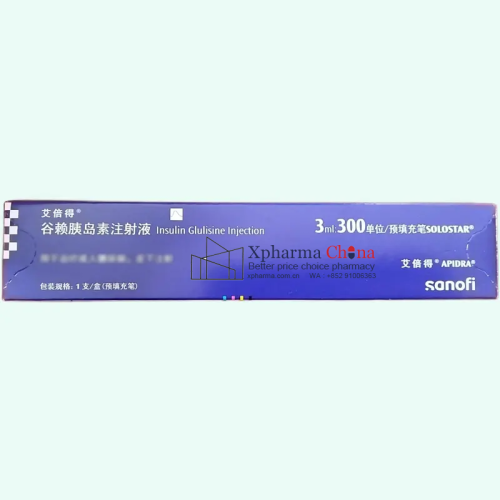
Brand Name: 艾倍得®(Apidra®)
Generic Name: Insulin Glulisine
Strength: 100 IU/mL, 3 mL (300 insulin units) per SoloStar pre‑filled pen, 1 pen per box
Manufacturer: Sanofi‑Aventis Deutschland GmbH
Marketing Authorization Holder: Sanofi‑Aventis Deutschland GmbH (Sanofi group)
Approval Date in China: 2015
Registration Number: 国药准字J20150062
Storage:
Unopened pens: refrigerate at 2–8 ℃, avoid freezing and direct sunlight;
Pen in use: store below 25 ℃, discard within 28 days after first use, do not re‑refrigerate;
Keep out of reach of children, follow full storage guidance from the official package insert.
Price&Cost:Contact Us now for the best price of Insulin Glulisine(Apidra)
Only logged in customers who have purchased this product may leave a review.

Reviews
There are no reviews yet.