1. Indications and Usage
Type 2 Diabetes: Primarily indicated for the control of blood glucose in patients with type 2 diabetes, especially those who are overweight.
Combination Therapy: For adults, it can be used as monotherapy or in combination with sulfonylureas or insulin. It is also indicated for children aged 10 years and older.
2. Dosage and Administration
Starting Dose: The usual starting dose is 500 mg once daily with the evening meal.
Titration: The dose can be increased after 10 to 15 days based on blood glucose response. The maximum recommended daily dose is 2000 mg.
Administration: The tablets must be swallowed whole and should not be chewed or split. This is critical to maintain the controlled-release mechanism.
3. Mechanism of Action
Hepatic Glucose Suppression: It decreases hepatic glucose production (gluconeogenesis and glycogenolysis).
Insulin Sensitization: It increases insulin sensitivity in peripheral tissues, enhancing glucose uptake and utilization.
Intestinal Absorption: It slightly inhibits the absorption of glucose from the intestine.
Hypoglycemia Risk: Unlike insulin secretagogues, it generally does not cause hypoglycemia when used as monotherapy.
4. Safety and Warnings
Lactic Acidosis: A very rare but serious metabolic complication. Risk factors include renal impairment, sepsis, dehydration, and alcohol abuse.
Renal Function: Contraindicated in patients with eGFR <45 mL/min/1.73m². Renal function should be monitored regularly.
Contrast Media: Use of iodinated contrast agents may increase the risk of lactic acidosis; the drug should be interrupted at the time of or prior to the procedure.
Vitamin B12: Long-term use may reduce vitamin B12 absorption, potentially leading to megaloblastic anemia.
5. Adverse Reactions and Clinical Research
Common Gastrointestinal Effects: Nausea, vomiting, diarrhea, abdominal pain, and anorexia are common, but the risk is significantly reduced compared to immediate-release tablets.
Other Adverse Effects: Taste disturbance is common. Very rare skin reactions (e.g., rash, pruritus) and hepatic function abnormalities have been reported.
6. Drug Interactions
Alcohol: Ethanol intake should be avoided as it may potentiate the effect of metformin on lactate metabolism, increasing the risk of lactic acidosis.
Iohexol and Similar Agents: Co-administration with agents that may cause renal failure increases the risk of lactic acidosis.
Cationic Drugs: Drugs eliminated by tubular secretion in the kidney (e.g., amiloride, digoxin, morphine, procainamide, tramadol, verapamil) may compete for renal tubular clearance.
7. Pharmaceutical Information
Active Ingredient: Metformin Hydrochloride.
Strength: Typically 500 mg per tablet.
Appearance: Film-coated tablets, white or off-white.
Storage: Store below 25°C in a dry place.
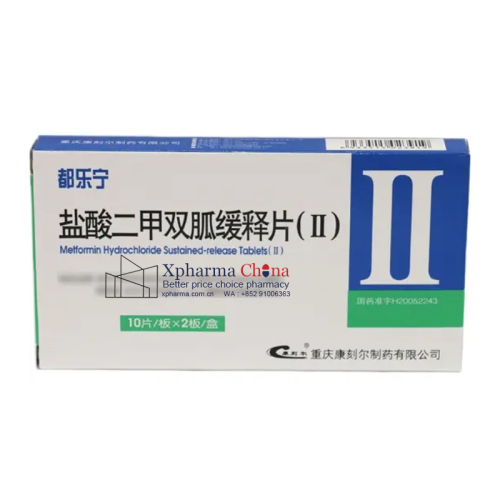
Doulening Metformin Hydrochloride Sustained‑release Tablets (Ⅱ)
Brand Name: 都乐宁®(Doulening®)
Generic Name: Metformin Hydrochloride
Strength: 0.5 g
Manufacturer: Chongqing Conquer Pharmaceutical Co., Ltd.
Marketing Authorization Holder: Chongqing Conquer Pharmaceutical Co., Ltd.
Approval Date in China: 2005‑09‑09
Registration Number: 国药准字H20052243
Storage: Store in a sealed place, avoid moisture.
Price&Cost:Contact Us now for the best price of Metformin Hydrochloride(Doulening)
Only logged in customers who have purchased this product may leave a review.

Reviews
There are no reviews yet.