1. Indications and Usage
Glycemic Control: Indicated as an adjunct to diet and exercise to improve glycemic control in adults with type 2 diabetes mellitus.
Therapeutic Context: Primarily used to control postprandial hyperglycemia. It can be used as monotherapy or in combination with metformin.
2. Dosage and Administration
Starting Dose: The recommended starting dose is 25 mcg taken orally 15 minutes before each main meal (three times daily).
Titration: The dose can be increased by 25 mcg increments every few weeks based on glycemic response, typically up to 100 mcg per meal.
Missed Dose: If a meal is skipped or a dose is taken after eating, it should be omitted to reduce the risk of hypoglycemia.
3. Mechanism of Action
Insulin Secretion: Mitiglinide is a meglitinide analog that stimulates insulin secretion from pancreatic beta cells.
Target Protein: It acts by binding to the sulfonylurea receptor 8 (SUR8) subunit of the ATP-dependent potassium channel.
Glucose-Dependent Effects: It accelerates the closure of potassium channels, leading to depolarization and calcium influx, thereby promoting rapid insulin release in response to food intake.
4. Safety and Warnings
Hypoglycemia: As with other insulin secretagogues, there is a risk of hypoglycemia, particularly if meals are delayed or skipped.
Hepatic Impairment: Use is not recommended in patients with hepatic dysfunction or a history of liver disease.
Renal Impairment: Use with caution in patients with severe renal dysfunction.
Hypersensitivity: Do not use in patients with known hypersensitivity to mitiglinide or related compounds.
5. Adverse Reactions and Clinical Research
Common Adverse Reactions: Hypoglycemia, hypoglycemic symptoms (sweating, palpitations), and gastrointestinal disturbances (nausea, abdominal pain).
Liver Function: Elevations in liver enzymes (AST, ALT, ALP) and bilirubin have been reported.
Other Adverse Effects: Rash, pruritus, and abnormal hematological findings (anemia, leukopenia) may occur rarely.
Clinical Findings: Clinical trials have demonstrated significant reductions in postprandial glucose levels and HbA1c.
6. Drug Interactions
Fibrates: Concomitant use with fibrates may increase the risk of hypoglycemia or hepatotoxicity.
Anticoagulants: May potentiate the effects of oral anticoagulants; monitoring of coagulation parameters is advised.
Hypoglycemic Agents: Concomitant use with other antidiabetic agents may increase the risk of hypoglycemia.
7. Pharmaceutical Information
Active Ingredient: Mitiglinide Calcium.
Strengths: Typically available as 25 mcg and 50 mcg capsules.
Appearance: Capsules with a white or off-white powder inside.
Storage: Store in a cool, dry place, protected from light and moisture.
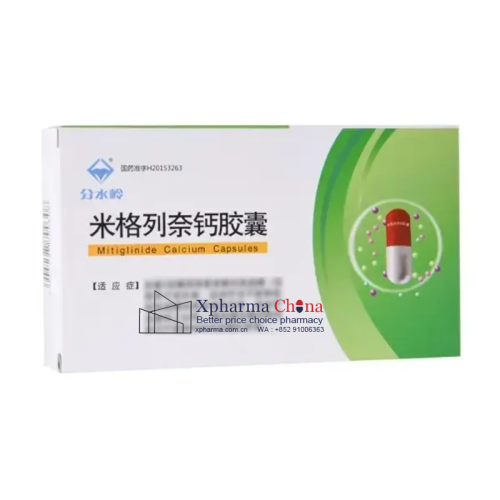
Fenshuiling Mitiglinide Calcium Capsules
Brand Name: 分水岭®(Fenshuiling®)
Generic Name: Mitiglinide Calcium
Strength: 10 mg per capsule, 12 capsules per box
Manufacturer: Yantai Zhengfang Pharmaceutical Co., Ltd.
Marketing Authorization Holder: Yantai Zhengfang Pharmaceutical Co., Ltd.
Approval Date in China: 2015‑08‑10
Registration Number: 国药准字 H20153263
Storage: Store in a sealed, dry place, protected from light.
Price&Cost:Contact Us now for the best price of Mitiglinide Calcium(Fenshuiling)
Only logged in customers who have purchased this product may leave a review.
Reviews
There are no reviews yet.