1. Indications and Usage
Medium and Long Chain Fat Emulsion Injection (C6~24) is indicated for parenteral nutrition to supplement energy and essential fatty acids when oral or enteral nutrition is insufficient or not feasible.
2. Dosage and Administration
Recommended Dosage: The usual dosage is 1~2 g (fat)/kg body weight/day, with a maximum of 2 g/kg/day. The dosage should be determined based on the patient’s metabolic condition and nutritional requirements.
Administration: The infusion should be administered slowly via peripheral or central vein. The initial infusion rate should not exceed 0.05~0.1 g fat/kg/hour. If no adverse reactions occur, the rate can be increased to 0.1~0.2 g fat/kg/hour.
Preparation: It can be infused separately or mixed with glucose and amino acid solutions in a “all-in-one” admixture. It must not be filtered through 0.2 μm filters.
3. Mechanism of Action
Energy Supply: It provides a dense source of non-protein calories. The medium-chain triglycerides (MCT) are rapidly metabolized to provide energy, while long-chain triglycerides (LCT) provide essential fatty acids and are slowly metabolized.
Metabolic Pathway: After intravenous administration, lipid particles are cleared from the bloodstream like chylomicrons. Lipoprotein lipase hydrolyzes triglycerides into free fatty acids and glycerol, which are then oxidized or stored for energy.
4. Safety and Warnings
Contraindications: Contraindicated in patients with severe coagulation disorders, shock, acute thromboembolism, acute hemorrhagic pancreatitis, lipid metabolism disorders, liver or renal insufficiency, and reticuloendothelial system disorders.
Overload Syndrome: Excessive infusion or impaired lipid clearance may lead to fat overload syndrome, characterized by hyperlipidemia, hepatosplenomegaly, fever, and coagulation defects.
Monitoring: Serum triglyceride levels should be monitored regularly and must not exceed 3 mmol/L during infusion. Liver function and blood cell counts should also be monitored during prolonged therapy.
5. Adverse Reactions and Clinical Research
Common Adverse Reactions: Early reactions include fever, chills, flushing, nausea, vomiting, headache, and dyspnea. Late reactions may involve transient liver function abnormalities, thrombocytopenia, and hepatosplenomegaly.
Clinical Research: Clinical studies confirm its efficacy in maintaining nitrogen balance and preventing essential fatty acid deficiency in patients requiring parenteral nutrition.
6. Drug Interactions
Electrolytes: Incompatibility may occur when polyvalent cations (e.g., calcium) are added, especially when calcium is bound with heparin.
Other Drugs: Compatibility with other drugs must be confirmed before mixing. The infusion rate should be adjusted if used concomitantly with drugs that affect lipid metabolism.
7. Pharmaceutical Information
Composition: The emulsion contains soybean oil (LCT), medium-chain triglycerides (MCT), egg yolk lecithin (emulsifier), and glycerin.
Appearance: It is a white emulsion. If oil droplets appear, it should not be used.
Storage: Store at room temperature (below 25°C) and do not freeze.
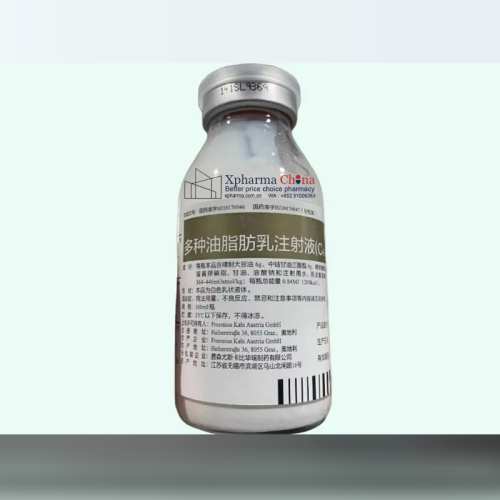
Hewen Multi-oil Fat Emulsion Injection (C6~24)
Brand Name:合文 ®(Hewen®)
Generic Name: Multi-oil Fat Emulsion
Strength: 100 mL per bottle
Manufacturer: Fresenius Kabi Austria GmbH
Marketing Authorization Holder: Fresenius Kabi Austria GmbH
Approval Date in China: August 09, 2021
Registration Number:国药准字 HJ20170046
Storage: Store below 25°C, do not freeze. Keep out of reach of children. Refer to the full package insert for detailed storage specifications.
Price&Cost:Contact Us now for the best price of Multi-oil Fat Emulsion(Hewen)
Only logged in customers who have purchased this product may leave a review.
Reviews
There are no reviews yet.