1. Indications and Usage
Diabetes Mellitus: Pioglitazone Hydrochloride Tablets are indicated as an adjunct to diet and exercise to improve glycemic control in adults with type 2 diabetes mellitus.
Combination Therapy: It may be used alone or in combination with a sulfonylurea, metformin, or insulin.
2. Dosage and Administration
Dosage: As monotherapy, the initial dose may be 15 mg or 30 mg once daily. In combination therapy, the initial dose is 15 mg or 30 mg once daily.
Maximum Dosage: The maximum recommended daily dose is 45 mg as monotherapy or in combination.
Administration: Take once daily, with or without food.
Special Populations: No dosage adjustment is necessary for patients with renal impairment. It is not recommended for pediatric patients.
3. Mechanism of Action
PPAR-γ Agonist: Pioglitazone belongs to a class of antidiabetic agents known as thiazolidinediones. It acts as an agonist for peroxisome proliferator-activated receptor-gamma (PPAR-γ).
Metabolic Effects: Activation of PPAR-γ regulates insulin-responsive genes involved in glucose production, transport, and utilization. This results in decreased hepatic glucose production and increased peripheral glucose uptake, thereby reducing insulin resistance.
4. Safety and Warnings
Heart Failure: Thiazolidinediones, including pioglitazone, can cause fluid retention and exacerbate or precipitate heart failure. Caution is advised in patients with edema.
Hepatotoxicity: Elevations in liver transaminases may occur. Liver function tests should be monitored before starting treatment and periodically thereafter.
Bladder Cancer: Long-term use has been associated with an increased risk of bladder cancer.
Hypoglycemia: Risk increases when combined with insulin or sulfonylureas.
Ovulatory Function: May induce ovulation in premenopausal anovulatory women.
5. Adverse Reactions and Clinical Research
Adverse Reactions: Common adverse reactions include mild to moderate edema, anemia, upper respiratory tract infection, headache, and myalgia.
Clinical Research: Clinical trials demonstrate that pioglitazone significantly reduces fasting plasma glucose, postprandial glucose, and HbA1c levels.
6. Drug Interactions
CYP2C8 Inhibitors: Drugs like gemfibrozil may significantly increase pioglitazone plasma concentrations.
CYP2C8 Inducers: Drugs like rifampin may decrease pioglitazone plasma concentrations.
Oral Contraceptives: May decrease the effectiveness of hormonal contraceptives.
Other Antidiabetics: May potentiate hypoglycemic effects when used in combination.
7. Pharmaceutical Information
Active Ingredient: Pioglitazone Hydrochloride.
Excipients: Microcrystalline cellulose, lactose, magnesium stearate, and film-coating agents.
Appearance: White to off-white tablets.
Storage: Protect from light and moisture. Store in a tight container.
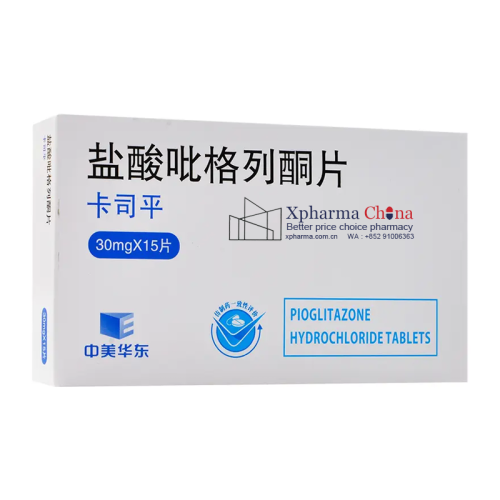
Kasiping Pioglitazone Hydrochloride Tablets
Brand Name: 卡司平®(Kasiping®)
Generic Name: Pioglitazone Hydrochloride
Strength: 30 mg per tablet (calculated based on pioglitazone equivalent), 15 tablets per box
Manufacturer: Hangzhou Zhongmei Huadong Pharmaceutical Co., Ltd.
Marketing Authorization Holder: Hangzhou Zhongmei Huadong Pharmaceutical Co., Ltd.
Approval Date in China: 2006
Registration Number: 国药准字H20060664
Storage: Keep the container tightly sealed, store in a dry and shaded place at room temperature; keep out of children’s reach, abide by the detailed storage requirements written on the official package insert.
Price&Cost:Contact Us now for the best price of Pioglitazone Hydrochloride(Kasiping)
Only logged in customers who have purchased this product may leave a review.


Reviews
There are no reviews yet.