
1. Indications and Usage
Huntington’s Disease: Indicated for the treatment of moderate to severe chorea associated with Huntington’s disease.
Tardive Dyskinesia: Used for the treatment of moderate to severe tardive dyskinesia in adults.
2. Dosage and Administration
Initiation: Start at 12.5 mg once daily.
Titration: The dose may be increased by 12.5 mg every 3 to 7 days as tolerated.
Target Dose: The usual effective dose is 25 mg twice daily (50 mg/day). The maximum recommended dose is 50 mg twice daily (100 mg/day).
Administration: Tablets can be taken with or without food. The lowest effective dose should be used.
3. Mechanism of Action
VMAT2 Inhibition: Tetrabenazine selectively inhibits the vesicular monoamine transporter 2 (VMAT2) in nerve terminals.
Catecholamine Depletion: This inhibition prevents the packaging of dopamine, norepinephrine, and serotonin into synaptic vesicles, leading to a depletion of these neurotransmitters in the brain, which reduces involuntary movements.
4. Safety and Warnings
Depression and Suicidality: Tetrabenazine carries a black box warning for depression and suicidal thinking. Patients should be monitored closely, and the drug should be discontinued if depression or suicidal ideation occurs.
QT Prolongation: Can cause QT/QTc interval prolongation. It is contraindicated in patients with long QT syndrome or arrhythmias.
CNS Depression: May cause sedation and somnolence. Patients should be cautioned about driving or operating machinery.
Parkinsonism: Can induce or worsen parkinsonian symptoms.
5. Adverse Reactions and Clinical Research
Common Adverse Reactions: Somnolence, insomnia, anxiety, depression, parkinsonism (tremor, rigidity), nausea, diarrhea, and dry mouth.
Serious Effects: Suicidal ideation, QT prolongation, dysphagia, and aspiration pneumonia.
Clinical Findings: Clinical trials have demonstrated significant reduction in chorea severity scores compared to placebo.
6. Drug Interactions
CYP2D6 Inhibitors: Strong CYP2D6 inhibitors (e.g., quinidine, fluoxetine, paroxetine) significantly increase tetrabenazine exposure and increase the risk of adverse reactions. Use is contraindicated or requires strict dose limitation.
CNS Depressants: Concurrent use with alcohol, benzodiazepines, or opioids may potentiate CNS depression.
Antipsychotics: May increase the risk of parkinsonism and QT prolongation.
7. Pharmaceutical Information
Active Ingredient: Tetrabenazine Hydrochloride.
Strengths: Typically available as 12.5 mg and 25 mg tablets.
Appearance: White to off-white tablets.
Storage: Store at controlled room temperature (20°C–25°C) in a tight, light-resistant container.
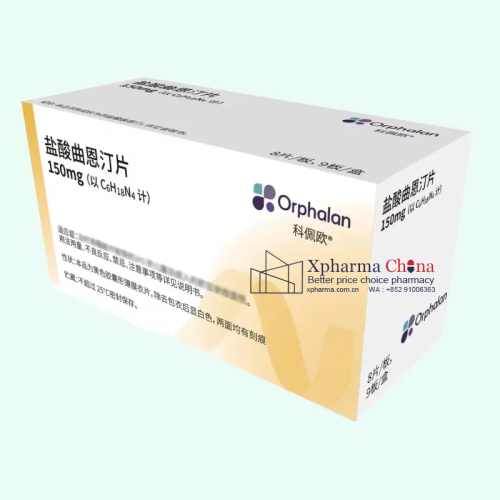
Kepeiou Tetrabenazine Hydrochloride Tablets
Brand Name: 科佩欧®(Kepeiou®)
Generic Name: Tetrabenazine Hydrochloride
Strength: 150mg per tablet (calculated as C₆H₁₈N₄), 72 tablets per box (8 tablets per plate ×9 plates)
Manufacturer: Orphalan
Marketing Authorization Holder: Orphalan
Approval Date in China: 2023‑11‑21
Registration Number: HJ20230068
Storage: Store sealed below 25℃
Price&Cost:Contact Us now for the best price of Tetrabenazine Hydrochloride(Kepeiou)
Only logged in customers who have purchased this product may leave a review.

Reviews
There are no reviews yet.