1. Indications and Usage
Allergic Rhinitis: Relief of symptoms of allergic rhinitis.
Dermatoses: Relief of symptoms of urticaria, eczema, dermatitis, and pruritus.
2. Dosage and Administration
Adults and Children ≥12 years: Oral administration: 10mg or 20mg each time for adults or children over 12 years old, once a day.
Severe Hepatic Impairment: The daily dose for patients with severe liver dysfunction should not exceed 10mg.
Administration: Can be taken with or without food. The tablet must be swallowed whole with a small amount of water.
3. Mechanism of Action
H1-Receptor Antagonism: Ebastine is a selective histamine H1-receptor antagonist.
Peripheral Selectivity: It is rapidly metabolized into its active metabolite, carebastine, which has potent antagonistic activity at peripheral H1 receptors. It has weak effects on the central nervous system and muscarinic receptors, resulting in minimal sedation.
4. Safety and Warnings
QT Prolongation: Patients with known risk factors for heart disease (such as QT prolongation syndrome, hypokalemia) and those currently taking CYP3A4 enzyme inhibitors (such as ketoconazole, itraconazole, erythromycin) should use it with caution.
Drug Testing: This product affects the results of the skin test. The skin test can only be conducted 5 to 7 days after discontinuation of ebastine.
Hepatic Impairment: Patients with severe liver injury should use it with caution.
5. Adverse Reactions and Clinical Research
Common Adverse Reactions: The most frequently reported adverse reactions are headache, drowsiness and dry mouth.
Rare Adverse Reactions: Rare cases of hypersensitivity reactions (including angioedema) and liver enzyme elevation have been reported.
Clinical Research: Clinical trials have demonstrated its efficacy in controlling allergic symptoms with a low incidence of CNS-related side effects compared to first-generation antihistamines.
6. Drug Interactions
CYP3A4 Inhibitors: When used in combination with drugs such as ketoconazole or erythromycin, ebastine may increase the plasma concentration, so it should be used with caution.
Rifampin:
When taken together with rifampicin, it may lead to a decrease in plasma concentration and a reduction in antihistamine effect.
Food: Taking with food increases plasma concentration but does not affect the time to peak concentration or clinical efficacy.
7. Pharmaceutical Information
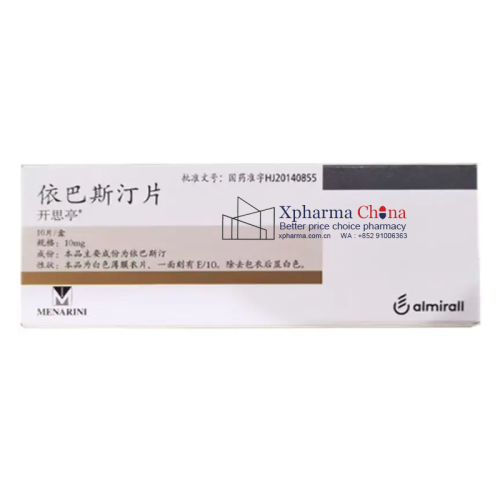
Active Ingredient: Ebastine.
Appearance:
This product is a film coating piece. It appears white after the coating is removed.
Storage:
StoragePreserve in well-closed containers.
Reviews
There are no reviews yet.