
1. Indications and Usage
Monotherapy or Combination: Indicated as an adjunct to diet and exercise to improve glycemic control in adults with type 2 diabetes mellitus. It can be used as monotherapy or in combination with metformin.
2. Dosage and Administration
Starting Dose: The recommended starting dose is 20 mg once daily, taken orally without regard to meals.
Titration: If glycemic control is inadequate, the dose may be increased to 40 mg once daily after sufficient observation.
Missed Dose: If a dose is missed, it should be taken as soon as remembered. If it is close to the next dose, skip the missed dose.
3. Mechanism of Action
DPP-4 Inhibition: Teneligliptin is a selective inhibitor of dipeptidyl peptidase-4 (DPP-4).
Incretin Regulation: It inhibits the inactivation of incretin hormones (GLP-1 and GIP), increasing their plasma concentrations.
Glucose-Dependent Effects: Elevated incretin levels enhance glucose-dependent insulin secretion and suppress glucagon release, thereby lowering blood glucose levels.
4. Safety and Warnings
Heart Failure: Safety has not been established in patients with severe heart failure (NYHA Class III or IV), and its use is not recommended in this population.
Hypersensitivity: Do not use in patients with known hypersensitivity to the drug.
Hypoglycemia: Low risk as monotherapy, but caution is advised when used with insulin or sulfonylureas.
QT Prolongation: Cases of QT interval prolongation have been reported. Patients with congenital long QT syndrome or congestive heart failure should be monitored closely.
5. Adverse Reactions and Clinical Research
Common Adverse Reactions: Hypoglycemia (2.6%), constipation (0.9%), and abdominal pain.
Hypoglycemia: Low risk as monotherapy, but the risk increases when used in combination with insulin or sulfonylureas.
Other Adverse Effects: Hepatic dysfunction, interstitial pneumonia, bullous pemphigoid, and acute pancreatitis have been reported.
Clinical Findings: Clinical trials have demonstrated significant reductions in HbA1c with a favorable safety profile.
6. Drug Interactions
CYP3A4 and FMO Inhibitors: Teneligliptin is metabolized by CYP3A4 and flavin-containing monooxygenases (FMO). Concomitant use with strong inhibitors (e.g., ketoconazole, clarithromycin) may increase its exposure.
Hypoglycemic Agents: Concomitant use with insulin or sulfonylureas increases the risk of hypoglycemia.
Other Agents: No significant interactions with metformin have been observed.
7. Pharmaceutical Information
Active Ingredient: Teneligliptin Hydrobromide.
Strengths: Typically available as 20 mg tablets.
Appearance: Light red film-coated tablets, white inside.
Storage: Store below 30°C in a dry place.
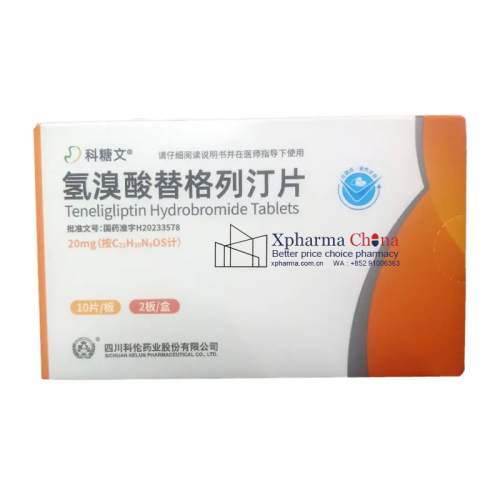
Ketangwen Teneligliptin Hydrobromide Tablets
Brand Name: 科糖文®(Ketangwen®)
Generic Name: Teneligliptin Hydrobromide
Strength: 20 mg per tablet, 20 tablets per box
Manufacturer: Sichuan Kelun Pharmaceutical Co., Ltd.
Marketing Authorization Holder: Sichuan Kelun Pharmaceutical Co., Ltd.
Approval Date in China: 2023‑09‑06
Registration Number: 国药准字 H20233578
Storage: Store in a sealed, dry place, protected from light.
Price&Cost:Contact Us now for the best price of Teneligliptin Hydrobromide(Ketangwen)
Only logged in customers who have purchased this product may leave a review.

Reviews
There are no reviews yet.