1. Indications and Usage
Peptic Ulcer Disease: Treatment of active duodenal and gastric ulcers.
Reflux Esophagitis: Management of gastroesophageal reflux disease (GERD) and erosive esophagitis.
Symptomatic Relief: Relief of heartburn, acid reflux, and gastric discomfort associated with non-ulcer dyspepsia.
2. Dosage and Administration
Adults: The usual dosage is 20 mg (one capsule) twice daily.
Duration:
Duodenal/Gastric Ulcer: Typically treated for 4 to 8 weeks.
Reflux Esophagitis: Typically treated for 6 to 8 weeks.
Special Populations: Dosage for elderly patients should be started at the lower end of the dosing range, and renal impairment may require dosage adjustment.
3. Mechanism of Action
H2-Receptor Antagonism: Lafutidine selectively and competitively blocks histamine H2 receptors on gastric parietal cells.
Acid Suppression: This inhibition suppresses both basal and stimulated gastric acid secretion, effectively raising gastric pH.
Additional Effects: It has been shown to suppress Helicobacter pylori urease activity and promote mucosal healing.
4. Safety and Warnings
Gastric Malignancy: Symptoms of gastric ulcer may resemble those of gastric carcinoma; malignancy should be ruled out before treatment.
Renal Insufficiency: Reduced renal function leads to drug accumulation; dosage reduction is mandatory for patients with significant renal impairment.
Hypersensitivity: Contraindicated in patients with a history of hypersensitivity to lafutidine or other H2-receptor antagonists.
Pregnancy and Lactation: Use only if the potential benefit justifies the risk to the fetus or infant. Safety in nursing mothers has not been fully established.
5. Adverse Reactions and Clinical Research
Common Adverse Reactions: Elevated liver enzymes (AST, ALT), abnormal renal function markers, jaundice, and gastrointestinal symptoms (nausea, constipation, diarrhea).
Rare Adverse Reactions: Leukopenia, thrombocytopenia, skin rashes, urticaria, and subjective symptoms such as headache and dizziness.
Clinical Efficacy: Clinical studies demonstrate lafutidine as a highly effective acid suppressant with a favorable safety profile in healing ulcers and managing GERD.
6. Drug Interactions
pH-Dependent Drugs: May decrease the absorption of drugs requiring an acidic environment (e.g., ketoconazole, itraconazole, iron preparations).
Antacids: Can be used concurrently with antacids, but separation of dosing is recommended to avoid affecting absorption.
Warfarin: Caution is advised as lafutidine may potentially potentiate the effects of anticoagulants.
7. Pharmaceutical Information
Active Ingredient: Lafutidine (C16H20N4O2S).
Appearance: Hard gelatin capsules, typically containing white or off-white powder or granules.
Storage: Store in a tight, light-resistant container at controlled room temperature.
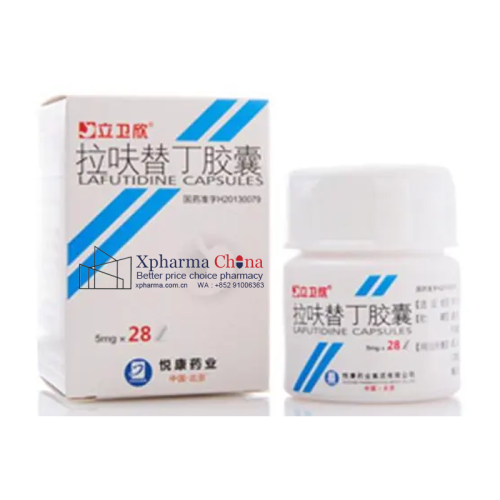
Liweixin Lafutidine Capsules
Brand Name: 立卫欣®(Liweixin®)
Generic Name: Lafutidine
Strength: 5 mg per capsule, 28 capsules per box
Manufacturer: Yuekang Pharmaceutical Group Co., Ltd.
Marketing Authorization Holder: Yuekang Pharmaceutical Group Co., Ltd.
Approval Date in China: Not available
Registration Number: 国药准字H20010079
Storage: Keep tightly sealed, store in a cool and dry place, protected from light
Price&Cost:Contact Us now for the best price of Lafutidine(Liweixin)
Only logged in customers who have purchased this product may leave a review.
Reviews
There are no reviews yet.