1. Indications and Usage
Glycemic Control: Indicated as an adjunct to diet and exercise to improve glycemic control in adults with type 2 diabetes mellitus.
Combination Therapy: Can be used in combination with metformin, a sulfonylurea, or pioglitazone.
2. Dosage and Administration
Starting Dose: The recommended dose is 25 mg once daily, taken without regard to meals.
Renal Adjustment: For patients with severe renal impairment (including those on dialysis), the recommended dose is 12.5 mg once daily.
Hepatic Impairment: No dosage adjustment is necessary for patients with hepatic impairment.
Missed Dose: If a dose is missed, it should be taken on the same day. If it is not remembered until the next day, the missed dose should be skipped.
3. Mechanism of Action
DPP-4 Inhibition: Alogliptin is a potent, selective inhibitor of dipeptidyl peptidase-4 (DPP-4).
Incretin Regulation: By inhibiting DPP-4, it increases the levels of active incretin hormones (glucagon-like peptide-1 [GLP-1] and glucose-dependent insulinotropic polypeptide [GIP]).
Glucose-Dependent Effects: Elevated incretin levels enhance glucose-dependent insulin secretion and suppress glucagon release, thereby lowering blood glucose levels.
4. Safety and Warnings
Heart Failure: Post-marketing cases of heart failure have been reported with DPP-4 inhibitors. Patients should be monitored for signs and symptoms, and the drug discontinued if they occur.
Pancreatitis: Acute pancreatitis, including fatal and non-fatal hemorrhagic or necrotizing pancreatitis, has been reported. If suspected, discontinue immediately.
Hypersensitivity: Severe hypersensitivity reactions, including anaphylaxis, angioedema, and exfoliative skin conditions (e.g., Stevens-Johnson syndrome), have been reported.
Joint Pain: Severe joint pain has been reported, which may require discontinuation of the drug.
5. Adverse Reactions and Clinical Research
Common Adverse Reactions: Nasopharyngitis, headache, and upper respiratory tract infection.
Hypoglycemia: Low risk as monotherapy, but the risk increases when used in combination with sulfonylureas or insulin.
Other Adverse Effects: Hypersensitivity reactions, arthralgia, and rash.
Clinical Findings: Clinical trials have demonstrated significant reductions in HbA1c and fasting plasma glucose with a low incidence of hypoglycemia.
6. Drug Interactions
Renal Elimination Competitors: Drugs that interfere with renal tubular secretion (e.g., cimetidine) may increase alogliptin exposure, though no dosage adjustment is typically required.
Hypoglycemic Agents: Concomitant use with insulin or sulfonylureas increases the risk of hypoglycemia.
Other Agents: No significant interactions with CYP450 enzymes are expected as alogliptin is not extensively metabolized by these enzymes.
7. Pharmaceutical Information
Active Ingredient: Alogliptin Benzoate.
Strengths: Typically available as 12.5 mg (equivalent to 10.7 mg alogliptin) and 25 mg (equivalent to 21.3 mg alogliptin) tablets.
Appearance: Film-coated tablets, typically white to off-white.
Storage: Store at controlled room temperature (20°C to 25°C) in a dry place, protected from light and moisture.
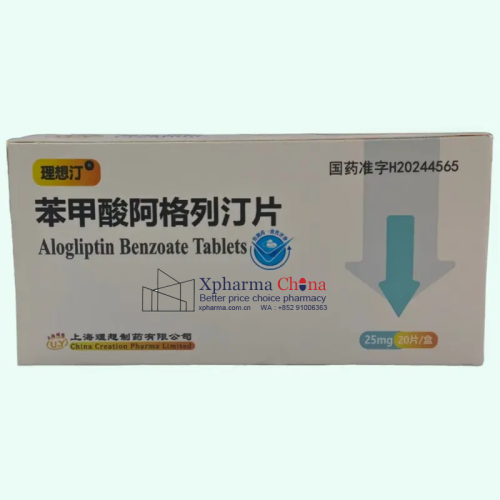
Lixiangding Alogliptin Benzoate Tablets
Brand Name: 理想汀®(Lixiangding®)
Generic Name: Alogliptin Benzoate
Strength: 25 mg per tablet, 20 tablets per box
Manufacturer: China Creation Pharma Limited
Marketing Authorization Holder: China Creation Pharma Limited
Approval Date in China: 2024‑08‑22
Registration Number: 国药准字 H20244565
Storage: Store in a sealed, dry place, protected from light.
Price&Cost:Contact Us now for the best price of Alogliptin Benzoate(Lixiangding)
Only logged in customers who have purchased this product may leave a review.

Reviews
There are no reviews yet.