
1. Indications and Usage
Gastroesophageal Reflux Disease (GERD): Treatment of erosive reflux esophagitis, healing of erosive reflux esophagitis, maintenance of healed erosive reflux esophagitis, and symptomatic relief of GERD.
H. pylori Eradication: In combination with antibiotics for the eradication of H. pylori and reduction of the risk of duodenal ulcer recurrence.
Ulcer Prevention: Treatment of gastric ulcers associated with NSAID use and reduction of the risk of gastric ulcer recurrence in patients at risk.
Pathologic Hypersecretion: Treatment of pathologic hypersecretory conditions such as Zollinger-Ellison syndrome.
2. Dosage and Administration
Recommended Dose: The typical dosage is 20 mg or 40 mg once daily. Specific durations vary by indication (e.g., 4 to 8 weeks for GERD).
Administration: The tablets must be swallowed whole and should not be crushed or chewed.
Timing: Take the tablet at least 1 hour before a meal.
3. Mechanism of Action
Target: Esomeprazole is the S-isomer of omeprazole and a proton pump inhibitor.
Action: It selectively inhibits the H+/K+-ATPase enzyme system at the secretory surface of the gastric parietal cell, blocking the final step of gastric acid production.
4. Safety and Warnings
Renal and Acute Interstitial Nephritis: Acute interstitial nephritis has been observed with PPIs.
Chronic Kidney Disease: Long-term use may cause chronic interstitial nephritis.
Hypomagnesemia: Severe hypomagnesemia has been reported with PPIs used for prolonged periods (>3 months).
Bone Fracture: High doses or long-term use may increase the risk of osteoporosis-related fractures of the hip, wrist, or spine.
Cutaneous and Systemic Lupus Erythematosus: New onset or worsening of existing lupus has been reported.
Clostridium difficile-associated Diarrhea: Use may alter intestinal flora and increase risk of CDAD.
Skin and Liver: Risk of hepatocellular injury and serious skin reactions like Stevens-Johnson syndrome.
5. Adverse Reactions and Clinical Research
Adverse Reactions: Common adverse reactions include headache, diarrhea, abdominal pain, vomiting, flatulence, nausea, and constipation.
Clinical Research: Clinical trials have demonstrated high efficacy in healing erosive esophagitis and relieving symptoms of GERD compared to placebo.
6. Drug Interactions
CYP2C19 Substrates: Esomeprazole may increase plasma concentrations of drugs metabolized by CYP2C19, such as diazepam, phenytoin, and citalopram.
Clopidogrel: Esomeprazole may decrease the effect of clopidogrel by inhibiting its conversion to the active metabolite.
Drugs Affected by Gastric pH: Absorption of drugs requiring acidic gastric pH (e.g., ketoconazole, itraconazole, iron salts) may be reduced.
Methotrexate: High-dose methotrexate toxicity has been reported; temporary discontinuation may be necessary.
7. Pharmaceutical Information
Composition: The active ingredient is esomeprazole magnesium.
Appearance: The tablets are enteric-coated and resistant to gastric acid.
Storage: Store at controlled room temperature, protected from moisture.
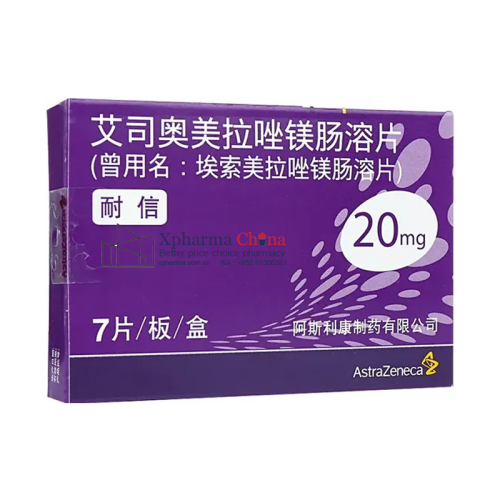
Nexium Esomeprazole Magnesium Enteric-coated Tablets
Brand Name: 耐信®(Nexium®)
Generic Name: Esomeprazole Magnesium
Strength: Each tablet contains 20 mg esomeprazole magnesium, 7 tablets per blister box
Manufacturer: AstraZeneca Pharmaceutical Co., Ltd. (China)
Marketing Authorization Holder: AstraZeneca Pharmaceutical Co., Ltd. (China)
Approval Date in China: November 22, 2006 (initial official approval; original registration approval year 2004)
Registration Number: 国药准字H20046379
Storage: Seal tightly, store below 30 ℃, keep away from moisture and direct sunlight. Keep out of children’s reach. Refer to the package insert for full storage rules.
Price&Cost:Contact Us now for the best price of Esomeprazole Magnesium(Nexium)
Only logged in customers who have purchased this product may leave a review.
Reviews
There are no reviews yet.