1. Indications and Usage
Zinc Deficiency: Indicated for the treatment and prevention of zinc deficiency in patients with inadequate dietary intake, malabsorption syndromes, or increased metabolic demand (e.g., chronic diarrhea).
Wilson’s Disease: Used as an alternative chelating agent for the maintenance treatment of Wilson’s disease to reduce copper levels in the body.
2. Dosage and Administration
Zinc Deficiency: The usual dosage for adults is 50–150 mg of zinc acetate (providing 15–30 mg of elemental zinc) daily, divided into 1–2 doses.
Wilson’s Disease: The typical dosage is 150 mg of zinc acetate (33 mg elemental zinc) three times daily on an empty stomach.
Administration: To minimize gastric irritation, tablets should be taken with food (unless specified for Wilson’s disease where empty stomach absorption is prioritized). Swallow whole with water.
3. Mechanism of Action
Zinc Supplementation: Zinc is an essential trace element that acts as a cofactor for numerous enzymes involved in DNA synthesis, protein synthesis, cell division, and immune function.
Copper Chelation: In Wilson’s disease, zinc acetate induces the synthesis of metallothionein in intestinal epithelial cells. This protein binds dietary copper, preventing its absorption into the bloodstream and promoting its excretion into the feces.
4. Safety and Warnings
Gastrointestinal Toxicity: The most common side effect is gastric irritation, nausea, and vomiting.
Copper Deficiency: Long-term use of zinc acetate for Wilson’s disease can lead to copper deficiency (anemia, neutropenia). Periodic monitoring of copper levels is required.
Renal/Hepatic Impairment: Use with caution in patients with severe renal or hepatic dysfunction.
5. Adverse Reactions and Clinical Research
Common Adverse Reactions: Nausea, vomiting, epigastric pain, diarrhea, and headache.
Rare Effects: Metallic taste in the mouth, skin rash, and pruritus.
Clinical Findings: Clinical studies have demonstrated efficacy in correcting zinc deficiency and maintaining low copper levels in Wilson’s disease patients.
6. Drug Interactions
Tetracyclines / Quinolones: Zinc can form chelates with these antibiotics, significantly reducing their absorption. They should be spaced by at least 2 hours.
Penicillamine: Zinc may reduce the absorption of penicillamine.
Folic Acid: Zinc may interfere with the absorption of folic acid.
Thiazide Diuretics: May increase zinc excretion, potentially reducing the supplement’s efficacy.
7. Pharmaceutical Information
Active Ingredient: Zinc Acetate (often dihydrate).
Strengths: Typically available as 15 mg or 33 mg (elemental zinc) per tablet.
Appearance: White or off-white tablets or film-coated tablets.
Storage: Store in a tight, light-resistant container at controlled room temperature (20°C–25°C).
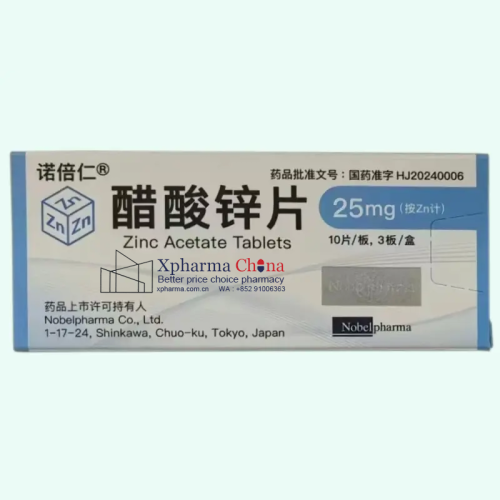
Nuobeiren Zinc Acetate Tablets
Brand Name: 诺倍仁®(Nuobeiren®)
Generic Name: Zinc Acetate
Strength: 25 mg (calculated as Zn) per tablet, 30 tablets per box (10 tablets per plate ×3 plates)
Manufacturer: Nobelpharma Co., Ltd.
Marketing Authorization Holder: Nobelpharma Co., Ltd.
Approval Date in China: 2024‑03‑15
Registration Number: HJ20240006
Storage: Store in a sealed, dry place, protected from light.
Price&Cost:Contact Us now for the best price of Zinc Acetate(Nuobeiren)
Only logged in customers who have purchased this product may leave a review.


Reviews
There are no reviews yet.