
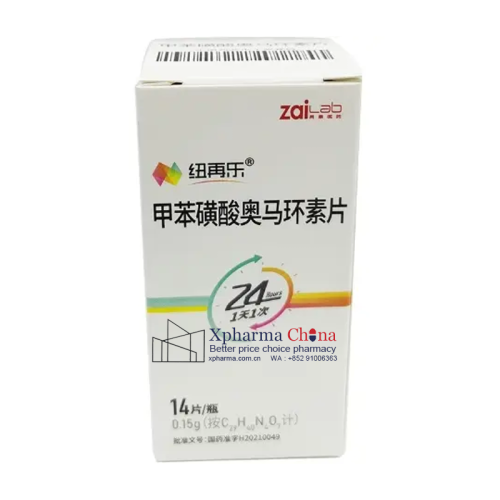
1. Indications and Usage
Omacycline toluenesulfate tablets are used to treat community-acquired bacterial pneumonia (CABP) and acute bacterial skin and skin structure infections (ABSSSI).
2. Dosage and Administration
CABP (Adults): The recommended dosage is 300 mg orally twice on Day 1, followed by 300 mg orally once daily.
ABSSSI (Adults): The recommended dosage is 450 mg orally once daily on Day 1 and Day 2, followed by 300 mg orally once daily.
Duration: Treatment should continue for 7 to 14 days.
Administration: Swallow NUZYRA tablets whole with water after fasting for at least 4 hours. No food or drink (water excepted) for 2 hours after administration, and no dairy products, antacids, or multivitamins for 4 hours after administration.
3. Mechanism of Action
Omadacycline is a semi-synthetic aminomethylcarbamoyl-pseudotetracycline (a new-generation tetracycline). It inhibits bacterial protein synthesis by binding reversibly to the 30S ribosomal subunit, thereby preventing the binding of aminoacyl-tRNA to the ribosomal acceptor site. It overcomes common tetracycline resistance mechanisms.
4. Safety and Warnings
Hepatotoxicity: Postmarketing cases of severe hepatotoxicity, including liver failure and death, have been reported. Monitor liver function tests during treatment.
Tooth Discoloration: Use during tooth development (last half of pregnancy, infancy, and childhood up to 8 years) may cause permanent tooth discoloration.
Intracranial Hypertension: Pseudotumor cerebri has been reported. Discontinue if signs of intracranial hypertension occur.
Hypersensitivity: Severe hypersensitivity reactions, including Stevens-Johnson syndrome, have been reported.
Fetal/Embryonic Toxicity: Use during pregnancy may cause adverse effects on fetal development.
5. Adverse Reactions and Clinical Research
Common Adverse Reactions: The most common adverse reactions include nausea, vomiting, diarrhea, injection site reactions, and headache.
Clinical Research: In pivotal Phase III clinical trials, omadacycline demonstrated non-inferiority to comparators in clinical success rates for CABP and ABSSSI.
6. Drug Interactions
Antacids and Multivitamins: Aluminum, calcium, or magnesium-containing antacids, bismuth subsalicylate, and iron preparations decrease oral absorption of tetracyclines.
Anticoagulants: Tetracyclines may inhibit plasma prothrombin activity; monitor INR and prothrombin time in patients on warfarin.
Penicillins: Tetracyclines may antagonize the bactericidal effect of penicillins.
7. Pharmaceutical Information
Composition: Active ingredient is Omadacycline Tosylate.
Appearance: Diamond-shaped film-coated tablets, pale yellow to orange or brownish-yellow.
Storage: Store at controlled room temperature in the original packaging.


Reviews
There are no reviews yet.