
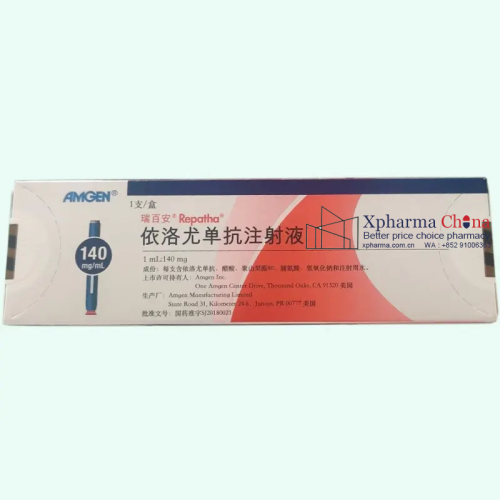
1. Description
Repatha (evolocumab) is a fully human monoclonal antibody (IgG2) that inhibits proprotein convertase subtilisin/kexin type 9 (PCSK9). It is supplied as a sterile, preservative-free, clear to opalescent, colorless to pale yellow solution in prefilled syringes, prefilled autoinjectors, or single-use prefilled cartridges for subcutaneous injection. Each formulation delivers 140 mg/mL or 420 mg/3.5 mL of evolocumab, with excipients including proline, polysorbate 80, sodium acetate, and water for injection.
2. Indications
Primary Hyperlipidemia (including Heterozygous Familial Hypercholesterolemia, HeFH): As an adjunct to diet and maximally tolerated statin therapy, to reduce low-density lipoprotein cholesterol (LDL-C) in adults with primary hyperlipidemia.
Homozygous Familial Hypercholesterolemia (HoFH): For use in patients aged 10 years and older with HoFH, in combination with other lipid-lowering therapies (e.g., statins, ezetimibe, LDL apheresis), to lower LDL-C.
Established Cardiovascular Disease (CVD): To reduce the risk of myocardial infarction, stroke, and coronary revascularization in adults with established atherosclerotic cardiovascular disease (ASCVD), on top of maximally tolerated statin therapy.
3. Dosage and Administration
3.1 Administration
Repatha is for subcutaneous injection only, administered into the abdomen, thigh, or upper arm. Patients or caregivers can be trained to self-administer the product after proper instruction. The 420 mg dose can be delivered via the prefilled cartridge pump over 9 minutes, or as three consecutive 140 mg injections within 30 minutes. Do not inject into areas of active skin disease, irritation, or with other injectable drugs at the same site.
3.2 Dosage
Primary Hyperlipidemia / HeFH: The recommended dose is 140 mg every 2 weeks, or 420 mg once monthly, with equivalent therapeutic efficacy.
HoFH: The recommended starting dose is 420 mg once monthly. For patients requiring further LDL-C reduction, the dose can be increased to 420 mg every 2 weeks after 12 weeks of treatment.
Renal Impairment: No initial dose adjustment is required for any stage of renal disease, as evolocumab is not cleared via renal excretion.
Hepatic Impairment: No dose modification is needed for mild to moderate hepatic impairment; data in severe hepatic impairment are limited.
4. Warnings and Precautions
Hypersensitivity Reactions: Serious allergic reactions including anaphylaxis, angioedema, rash, and urticaria have been reported in post-marketing surveillance. Discontinue Repatha immediately if signs of severe hypersensitivity occur, and initiate appropriate symptomatic treatment.
Neurocognitive Adverse Events: Confusion, memory impairment, and cognitive dysfunction have been rarely reported in clinical trials. Monitor patients for new or worsening neurological symptoms, and evaluate alternative causes if these events appear.
Diabetes Mellitus Risk: PCSK9 inhibitors, including evolocumab, are associated with a small increase in HbA1c levels. Monitor fasting blood glucose periodically in patients with pre-existing diabetes.
Injection Site Reactions: Common local reactions include redness, pain, bruising, and swelling at the injection site. Rotate injection sites to reduce local irritation.
5. Contraindications
Severe hypersensitivity to evolocumab or any excipient in the Repatha formulation.
No absolute contraindications related to organ function are defined, but the product is not recommended for patients with a history of life-threatening anaphylaxis to other monoclonal antibodies of the same class without strict medical supervision.
6. Adverse Reactions
Most Common (≥ 5% incidence): Nasopharyngitis, upper respiratory tract infection, injection site reaction, back pain, arthralgia, influenza-like illness.
Serious Adverse Reactions: Severe hypersensitivity (anaphylaxis, angioedema), rare cases of elevated liver transaminases >3 times the upper limit of normal, and myalgia with creatine kinase elevation.
Post-marketing reports include very rare events of muscle-related symptoms and gastrointestinal disorders.
7. Drug Interactions
Statins and Other Lipid-Lowering Agents: Co-administration with maximally tolerated statins, ezetimibe, or fibrates does not cause clinically significant pharmacokinetic interactions. The combination produces additive LDL-C lowering effects, and no dose adjustment of Repatha is required.
No Metabolic Drug-Drug Interactions: Evolocumab is not metabolized via the cytochrome P450 enzyme system, and does not interact with CYP substrates, inhibitors, or inducers. No interactions with common oral antidiabetic, antihypertensive, or antiplatelet drugs have been identified.
No clinically relevant interactions with monoclonal antibodies used for other chronic diseases have been reported.
8. Use in Specific Populations
Pregnancy: Repatha should be used during pregnancy only if the potential benefit justifies the potential risk to the fetus. Human data are limited, but animal studies show no evidence of developmental toxicity.
Lactation: It is unknown whether evolocumab is excreted in human milk. Consider the developmental and health benefits of breastfeeding, along with the mother’s clinical need for Repatha and any potential risks to the infant.
Pediatric Use: Safety and effectiveness have been established in pediatric patients aged 10 years and older with HoFH. The safety and efficacy in pediatric patients under 10 years of age or with HeFH have not been established.
Geriatric Use: No overall differences in safety or efficacy were observed between elderly patients (≥ 65 years) and younger patients. No special dose adjustment is required, but close monitoring is recommended for patients with multiple comorbidities.
Renal/Hepatic Impairment: No dose adjustment is needed for any degree of renal impairment or mild to moderate hepatic impairment, as the drug is eliminated via the reticuloendothelial system rather than the kidneys or liver.

Reviews
There are no reviews yet.