
1. Indications and Usage
Edematous Conditions: Indicated to manage edema associated with congestive heart failure, liver cirrhosis, and renal disease (including nephrotic syndrome, acute and chronic glomerulonephritis, and early chronic renal failure). It helps eliminate excess sodium and water.
Hypertension: Indicated for the management of hypertension, alone or in combination with other antihypertensive agents.
Other Uses: Also used in the management of central or nephrogenic diabetes insipidus and to prevent calcium-containing renal stones.
2. Dosage and Administration
Edema: The usual adult starting dose is 25–50 mg once daily or every other day. A weekly regimen of 3–5 consecutive days may also be used.
Hypertension: The usual adult dosage is 25–100 mg daily, administered in one or two divided doses.
Pediatric: Children (over 2 years) are typically dosed at 1–2 mg/kg/day or 30–60 mg/m² body surface area, given in one or two divided doses.
Administration: Should be taken in the morning to avoid nocturnal diuresis.
3. Mechanism of Action
Diuretic Effect: Hydrochlorothiazide acts on the distal convoluted tubules of the kidney to inhibit sodium and chloride reabsorption, promoting the excretion of water and electrolytes.
Antihypertensive Effect: By reducing plasma volume and peripheral arteriolar resistance, it effectively lowers blood pressure.
4. Safety and Warnings
Electrolyte Imbalance: The most common risk is hypokalemia, hyponatremia, and hypochloremic alkalosis. Regular monitoring of electrolytes is essential.
Metabolic Effects: May cause hyperglycemia, hyperuricemia, and an increase in serum cholesterol and triglycerides.
Contraindications: Contraindicated in patients with anuria or hypersensitivity to this drug or other sulfonamide-derived drugs.
Special Populations: Use with caution in patients with severe hepatic disease, systemic lupus erythematosus, or diabetes mellitus.
5. Adverse Reactions and Clinical Research
Common Adverse Reactions: Dizziness, vertigo, headache, muscle cramps, weakness, fatigue, nausea, vomiting, and diarrhea.
Serious Adverse Reactions: Severe electrolyte disturbances, pancreatitis, jaundice (intrahepatic cholestatic jaundice), leukopenia, thrombocytopenia, and photosensitivity reactions.
6. Drug Interactions
Digoxin/Antiarrhythmics: Hypokalemia induced by hydrochlorothiazide may increase the toxicity of digoxin or other antiarrhythmic drugs.
Lithium: Thiazides reduce lithium clearance, potentially increasing serum lithium levels and causing toxicity.
NSAIDs: Nonsteroidal anti-inflammatory drugs (e.g., indomethacin) may diminish the diuretic and antihypertensive effects of hydrochlorothiazide.
Antidiabetic Agents: May decrease the effectiveness of oral antidiabetic agents and insulin.
7. Pharmaceutical Information
Active Ingredient: Hydrochlorothiazide.
Chemical Name: 6-chloro-3,4-dihydro-2H-1,2,4-benzothiadiazine-7-sulfonamide 1,1-dioxide.
Molecular Formula: C7H8ClN3O4S2
Strengths: Typically available as 12.5 mg, 25 mg, 50 mg, and 100 mg tablets.
Appearance: White tablets.
Storage: Store in a tight, light-resistant container.
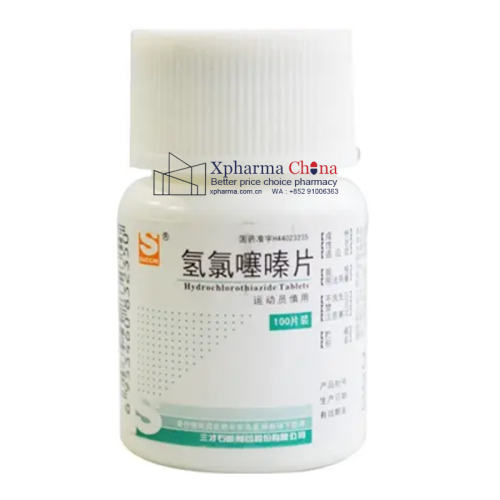
Sancai Hydrochlorothiazide Tablets
Brand Name: 三才®(Sancai®)
Generic Name: Hydrochlorothiazide
Strength: 25mg per tablet, 100 tablets per bottle
Manufacturer: Sancai Shiqi Pharmaceutical Co., Ltd.
Marketing Authorization Holder: Shiqi Pharmaceutical (Guangdong) Co., Ltd.
Approval Date in China: 2002‑07‑10
Registration Number: 国药准字 H44023235
Storage: Store in a sealed, dry place, protected from light.
Price&Cost:Contact Us now for the best price of Hydrochlorothiazide(Sancai)
Only logged in customers who have purchased this product may leave a review.


Reviews
There are no reviews yet.