
1. Indications and Usage
Diabetic Peripheral Neuropathic Pain: Indicated for the management of diabetic peripheral neuropathic pain in adults.
Postherpetic Neuralgia: Indicated for the management of postherpetic neuralgia in adults.
2. Dosage and Administration
Diabetic Peripheral Neuropathic Pain: The recommended starting dose is 20 mg twice daily. For patients with inadequate pain relief, the dose may be increased to 40 mg twice daily.
Postherpetic Neuralgia: The recommended dose is 20 mg or 40 mg twice daily, depending on efficacy and tolerability.
Renal Impairment: No dose adjustment is required for mild impairment. For moderate impairment, reduce the total daily dose by half; for severe impairment, reduce to one-fourth of the normal dose.
Administration: Capsules can be taken with or without food.
3. Mechanism of Action
α2δ-1 Ligand: Crisugabalin binds to the α2δ-1 subunit of voltage-gated calcium channels in the central nervous system.
Neurotransmitter Inhibition: This binding reduces calcium influx into presynaptic neurons, subsequently inhibiting the release of excitatory neurotransmitters such as glutamate, norepinephrine, and substance P, thereby alleviating neuropathic pain.
4. Safety and Warnings
Somnolence and Dizziness: Common side effects that may impair daily activities and increase the risk of falls, particularly during dose titration.
Suicidal Ideation and Behavior: Monitoring for depression and suicidal thoughts is recommended, as with other gabapentinoids.
Peripheral Edema: Clinical studies have observed an increased incidence of peripheral edema.
Withdrawal: Abrupt discontinuation may cause insomnia, nausea, headache, or diarrhea; tapering is recommended.
5. Adverse Reactions and Clinical Research
Adverse Reactions: The most common adverse reactions include dizziness, somnolence, peripheral edema, increased weight, and nausea.
Clinical Research: Clinical trials have demonstrated that crisugabalin significantly improves pain scores and sleep interference in patients with diabetic peripheral neuropathy and postherpetic neuralgia compared to placebo.
6. Drug Interactions
CNS Depressants: Concomitant use with opioids, benzodiazepines, or alcohol may potentiate somnolence and dizziness.
Renal Excretion Inhibitors: Drugs that compete for renal tubular secretion may increase crisugabalin plasma concentrations.
CYP Metabolism: Crisugabalin is not metabolized by CYP450 enzymes; significant CYP-mediated drug interactions are unlikely.
7. Pharmaceutical Information
Composition: The active ingredient is crisugabalin besilate.
Appearance: Typically gelatin capsules containing white or off-white powder.
Storage: Store at controlled room temperature, protecting from moisture.
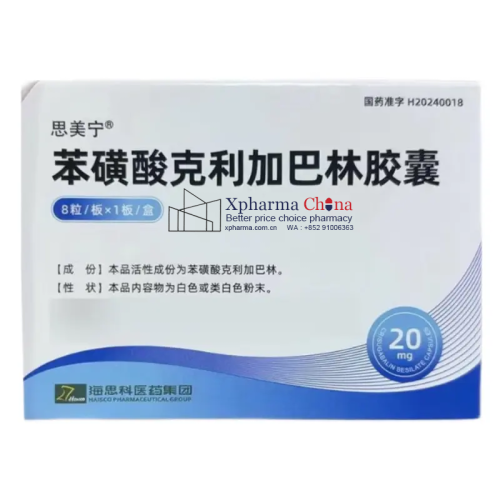
Simaining Crisugabalin Besilate Capsules
Brand Name: 思美宁 ®(Simaining®)
Generic Name: Crisugabalin Besilate
Strength: 20 mg per capsule, 8 capsules per box (1 blister with 8 capsules)
Manufacturer: Haisco Pharmaceutical Group Co., Ltd.
Marketing Authorization Holder: Haisco Pharmaceutical Group Co., Ltd.
Approval Date in China: January 06, 2024
Registration Number: 国药准字H20240018
Storage: Store tightly sealed at temperature not exceeding 30°C, protect from light and moisture. Keep out of reach of children. Refer to the full package insert for detailed storage specifications.
Price&Cost:Contact Us now for the best price of Crisugabalin Besilate(Simaining)
Only logged in customers who have purchased this product may leave a review.


Reviews
There are no reviews yet.