1. Indications and Usage
Wilson’s Disease: Indicated for the treatment of symptomatic patients with Wilson’s disease who are intolerant to penicillamine.
Asymptomatic Patients: Used in asymptomatic patients (e.g., those identified by family screening) to prevent the progression of hepatic or neurological disease.
Pregnancy: Can be used in pregnant women with Wilson’s disease to prevent copper toxicity to the fetus, as copper overload is teratogenic.
2. Dosage and Administration
Initiation: The usual starting dose is 750–1000 mg daily, administered in divided doses (e.g., 250 mg three or four times daily or 500 mg twice daily).
Administration: Must be taken on an empty stomach (at least 1 hour before or 2 hours after meals) with a full glass of water.
Titration: The dose is titrated based on urinary copper excretion and clinical response, typically ranging from 750 mg to 2000 mg daily.
Dietary Restrictions: Avoid foods high in copper (e.g., liver, mushrooms, chocolate, nuts, shellfish) during treatment.
3. Mechanism of Action
Copper Chelation: Trientine binds to free copper ions in the bloodstream and tissues, forming a stable, water-soluble complex.
Renal Excretion: The trientine-copper complex is excreted in the urine, thereby reducing the total body copper burden and preventing copper accumulation in vital organs (liver, brain, cornea, kidneys).
4. Safety and Warnings
Iron Deficiency Anemia: Trientine can also chelate iron, potentially leading to iron deficiency anemia. Regular monitoring of hemoglobin and iron levels is required.
Vitamin C Interaction: High doses of Vitamin C can increase copper excretion but may also accelerate oxidative damage if copper levels are not controlled. Dosage adjustments are needed.
Renal Function: Monitor renal function periodically, as trientine is excreted via the kidneys.
Teratogenicity: While used in pregnancy for Wilson’s, it should be used only if clearly needed, as safety in humans is not fully established.
5. Adverse Reactions and Clinical Research
Common Adverse Reactions: Nausea, vomiting, abdominal pain, headache, metallic taste, and skin rash.
Hematological Effects: Iron deficiency anemia and sideroblastic anemia.
Other Effects: Fatigue, dizziness, and arthralgia.
Clinical Findings: Clinical studies show trientine is as effective as penicillamine in maintaining low copper levels and improving symptoms in Wilson’s disease patients.
6. Drug Interactions
Vitamin C: Ascorbic acid increases urinary copper excretion but may increase oxidative stress. If both are used, the dose of Vitamin C should be limited (e.g., ≤250 mg/day).
Iron Supplements: Trientine may reduce the absorption of oral iron supplements.
Zinc Salts: Concurrent use may enhance copper chelation but could also increase the risk of copper deficiency.
Antacids: May interfere with trientine absorption.
7. Pharmaceutical Information
Active Ingredient: Trientine Hydrochloride (often as trientine monohydrate).
Strengths: Typically available as 250 mg capsules.
Appearance: Hard gelatin capsules, usually white or opaque, containing white or slightly yellowish powder.
Storage: Store in a tight, light-resistant container at controlled room temperature (25°C). Protect from moisture.
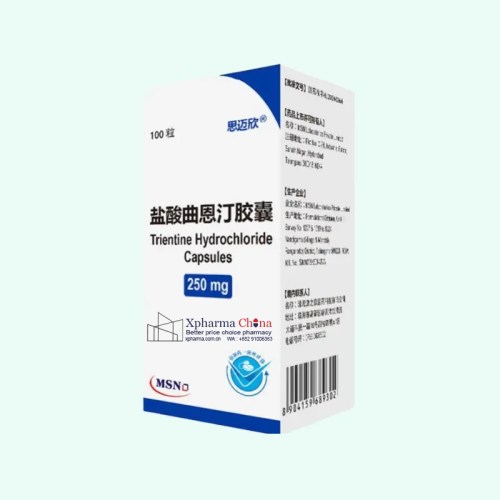
Simaixin Trientine Hydrochloride Capsules
Brand Name: 思迈欣®(Simaixin®)
Generic Name: Trientine Hydrochloride
Strength: 250 mg per capsule, 100 capsules per box
Manufacturer: Formulary Edition, Ltd
Marketing Authorization Holder: MSN Laboratories Private Limited
Approval Date in China: 2024‑04‑28
Registration Number: HJ20240064
Storage: Store in a sealed, dry place, protected from light.
Price&Cost:Contact Us now for the best price of Trientine Hydrochloride(Simaixin)
Only logged in customers who have purchased this product may leave a review.

Reviews
There are no reviews yet.