1. Indications and Usage
Dotinurad is indicated for the chronic management of hyperuricemia associated with gout in adult patients.
2. Dosage and Administration
Recommended Dosage: The usual starting dosage is 0.5 mg once daily. Dosage should be titrated based on serum uric acid levels. The maintenance dosage is typically 1 mg to 2 mg once daily, with a maximum dosage of 4 mg once daily.
Administration: Dosage should be increased gradually (e.g., every 2 to 6 weeks) to prevent rapid fluctuations in uric acid levels.
3. Mechanism of Action
Dotinurad selectively inhibits the urate-anion transporter 1 (URAT1) located in the renal proximal tubule. This inhibition reduces the reabsorption of filtered uric acid from the urine back into the blood, thereby promoting uricosuria and lowering serum uric acid levels.
4. Safety and Warnings
Gout Flares: A rapid decrease in serum uric acid during the initial treatment phase may precipitate acute gouty arthritis. It is recommended to continue the medication during a flare and manage symptoms with nonsteroidal anti-inflammatory drugs (NSAIDs) or colchicine.
Urolithiasis: Increased uric acid excretion in urine may lead to urinary stones, especially if urine is acidic. Patients should maintain adequate hydration and consider urine alkalinization.
Hepatotoxicity: Severe liver injury has been reported with other uricosuric agents. Liver function tests should be monitored regularly during treatment.
Renal Impairment: The efficacy of dotinurad may be reduced in patients with moderate to severe renal impairment (eGFR < 30 mL/min/1.73 m²).
5. Adverse Reactions and Clinical Research
Common Adverse Reactions: The most common adverse reaction is gouty arthritis (acute gout flare). Other reported adverse reactions include arthritis, soft stools, increased gamma-glutamyl transpeptidase, joint pain, and renal calculi.
Clinical Research: Clinical trials have demonstrated that dotinurad effectively lowers serum uric acid levels to target concentrations in patients with gout.
6. Drug Interactions
Pyrazinamide: Pyrazinamide may antagonize the uricosuric effect of dotinurad.
Salicylates: High-dose salicylates (e.g., aspirin) may inhibit uric acid excretion and reduce the efficacy of dotinurad.
Other Uricosurics: Concomitant use with other urate-lowering agents should be carefully managed to avoid excessive uricosuria and stone formation.
7. Pharmaceutical Information
Composition: The active ingredient is dotinurad.
Appearance: Tablets are typically white to off-white and round or oval-shaped.
Storage: Store at controlled room temperature in a tight, light-resistant container.
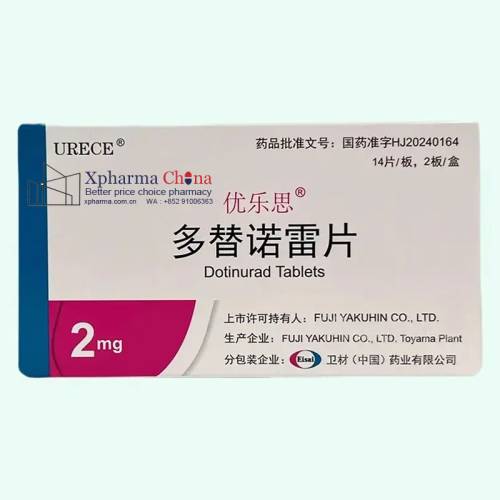
Urece Dotinurad Tablets
Brand Name: 优乐思 ®(Urece®)
Generic Name: Dotinurad
Strength: 2 mg per tablet, 14 tablets per blister, 2 blisters per box (28 tablets total)
Manufacturer: FUJI YAKUHIN CO., LTD. Toyama Plant
Marketing Authorization Holder: FUJI YAKUHIN CO., LTD.
Approval Date in China: March 11, 2024
Registration Number: 国药准字HJ20240164
Storage: Store tightly sealed at room temperature, avoid high temperature and humidity, keep away from direct sunlight. Keep out of reach of children. Refer to the full package insert for detailed storage specifications.
Price&Cost:Contact Us now for the best price of Dotinurad(Urece)
Only logged in customers who have purchased this product may leave a review.


Reviews
There are no reviews yet.