
1. Indications and Usage
Locally Advanced or Metastatic Non-Small Cell Lung Cancer (NSCLC): Treatment of patients with locally advanced or metastatic NSCLC that is ALK-positive or ROS1-positive .
Systemic ALK-Positive Anaplastic Large Cell Lymphoma (ALCL): Treatment of pediatric patients (1 year and older) with recurrent or refractory systemic ALK-positive ALCL .
2. Dosage and Administration
Administration: Oral administration. Capsules must be swallowed whole. Can be taken with or without food .
Standard Dose (NSCLC): 250 mg twice daily (approximately every 12 hours) .
Pediatric Dose (ALCL/IMT): 280 mg/m² twice daily .
Missed Dose: Do not take a missed dose if it is less than 6 hours before the next scheduled dose .
Dose Modification: If severe toxicity occurs, dose reduction to 200 mg twice daily, or 250 mg once daily is recommended .
3. Mechanism of Action
Crizotinib is a tyrosine kinase inhibitor (TKI) of ALK, ROS1, and MET.
It inhibits the phosphorylation of these kinases and downstream signaling pathways (such as PI3K/AKT and MAPK), leading to inhibition of tumor cell proliferation and induction of apoptosis .
4. Safety and Warnings
Emphysematous Lung Disease / Pneumonitis: Severe, life-threatening, or fatal noninfectious pneumonitis can occur. Monitor for respiratory symptoms .
QT Interval Prolongation: Crizotinib can prolong the QT interval. Periodic ECG and electrolyte monitoring are recommended .
Bradycardia: Crizotinib can cause symptomatic bradycardia. Monitor heart rate and blood pressure, especially when co-administered with other drugs that cause bradycardia .
Hepatotoxicity: Severe liver damage may occur. Monitor bilirubin and liver transaminases regularly .
Visual Disturbances: Very common; patients should avoid driving or operating machinery if symptoms occur .
5. Adverse Reactions
Common adverse reactions (incidence ≥25%) include:
Visual disturbances (e.g., blurred vision, visual field defects) .
Gastrointestinal: Nausea, diarrhea, vomiting, constipation.
Edema (e.g., peripheral edema).
Fatigue and decreased appetite .
6. Drug Interactions
CYP3A Inhibitors: Avoid co-administration with strong CYP3A inhibitors (e.g., ketoconazole, clarithromycin) as they increase Crizotinib exposure. If unavoidable, reduce the dose .
CYP3A Inducers: Avoid co-administration with strong CYP3A inducers (e.g., rifampin) as they reduce efficacy .
P-gp Substrates: Crizotinib is a P-gp inhibitor and may increase plasma concentrations of substrates (e.g., digoxin) .
7. Pharmaceutical Information
Chemical Name: 3-[(R)-1-(2,6-Dichloro-3-fluorophenyl)ethoxy]-5-[1-(piperidin-4-yl)-1H-pyrazol-4-yl]pyridin-2-amine .
Molecular Formula: C21H22Cl2FN5O .
Storage: Store at 25°C (77°F); excursions permitted to 15°C-30°C (59°F-86°F) .
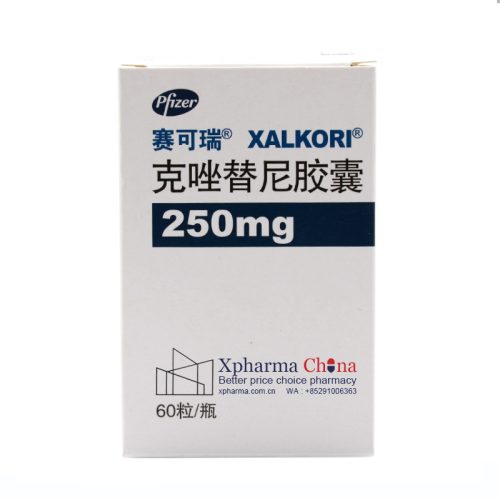
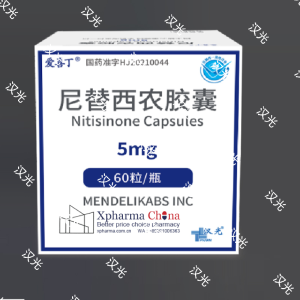
Xalkori®Crizotinib Capsules
Brand Name: 赛可瑞® (Xalkori®)
Generic Name: Crizotinib
Strength: 250 mg per capsule, 60 capsules per bottle
Manufacturer: Pfizer Manufacturing Deutschland GmbH (Germany)
Marketing Authorization Holder: PFIZER EUROPE MA EEIG; Domestic agent: Pfizer Investment Co., Ltd.
Approval Date in China: January 22, 2014
Registration Number:国药准字 HJ20171009
Storage: Store sealed at 25°C with excursions permitted between 15–30°C, protect from light and moisture, keep out of reach of children
Price&Cost:Contact Us now for the best price of Crizotinib(Xalkori)
Only logged in customers who have purchased this product may leave a review.
Reviews
There are no reviews yet.