
1. Indications and Usage
Treatment of Multidrug-Resistant Tuberculosis (MDR-TB):
Bedaquiline is indicated as part of an all-oral combination treatment regimen for adult patients with multidrug-resistant tuberculosis (MDR-TB), defined as resistance to isoniazid and rifampin.
2. Dosage and Administration
Administration: Oral administration with food to enhance absorption. Swallow the tablet whole with water.
Dosing (Adults):
Weeks 1-2: 400 mg once daily for 2 weeks (14 doses).
Weeks 3-24: 200 mg three times per week (e.g., Monday, Wednesday, Friday) for 22 weeks.
Missed Dose: If a dose is missed during Weeks 1-2, skip it and resume the normal schedule. If a dose is missed from Week 3 onwards, take it as soon as possible and resume the weekly schedule.
Monitoring: Obtain baseline ECG and serum electrolytes (potassium, magnesium, calcium) prior to initiation. Monitor ECG periodically during treatment.
3. Mechanism of Action
ATP Synthase Inhibitor: Bedaquiline is a mycobacterial ATP synthase inhibitor.
Pathway: It selectively binds to the subunit c of the mycobacterial membrane proton pump ATP synthase enzyme.
Physiological Effect: By inhibiting this enzyme, it blocks the generation of energy (ATP) essential for the survival of the bacteria, leading to bacterial cell death.
4. Safety and Warnings
QTc Prolongation: Bedaquiline prolongs the QT interval. It is contraindicated in patients with known prolonged QTc interval (>500 ms) or uncorrected hypokalemia, hypomagnesemia, or hypocalcemia. Monitor ECG regularly.
Hepatotoxicity: Hepatic enzyme elevations and severe liver injury can occur. Monitor liver function tests (ALT, AST) before and during treatment.
Increased Mortality: An increase in mortality was observed in the treatment group compared to the placebo group in a clinical trial; the cause is unknown.
Pregnancy and Lactation: Avoid use during pregnancy unless the potential benefit justifies the potential risk to the fetus.
5. Adverse Reactions
Most Common: Nausea, arthralgia (joint pain), headache, hemoptysis (coughing up blood), chest pain, and increased hepatic enzymes.
6. Drug Interactions
CYP3A4 Inhibitors: Strong CYP3A4 inhibitors (e.g., ketoconazole, ritonavir) may increase bedaquiline plasma concentrations and the risk of QTc prolongation. Avoid concomitant use (except for short-course azole antifungals for mucocutaneous candidiasis).
CYP3A4 Inducers: Strong or moderate CYP3A4 inducers (e.g., rifampin, rifabutin, efavirenz) may decrease bedaquiline plasma concentrations and efficacy. Avoid concomitant use.
QTc-Prolonging Drugs: Concomitant use with other drugs known to prolong the QTc interval (e.g., clofazimine, fluoroquinolones, delamanid) is not recommended due to additive effects.
7. Pharmaceutical Information
Chemical Name: (R)-N-(6-bromo-2-methoxy-1-oxo-1,2-dihydronaphthalen-2-yl)-6-(dimethylamino)-3,4-dihydro-1H-quinoline-2-carboxamide; (E)-butenedioate (1:1).
Molecular Formula: C32H31BrN2O2 • C4H4O4.
Storage: Store at 20°C to 25°C (68°F to 77°F); excursions permitted to 15°C to 30°C (59°F to 86°F).
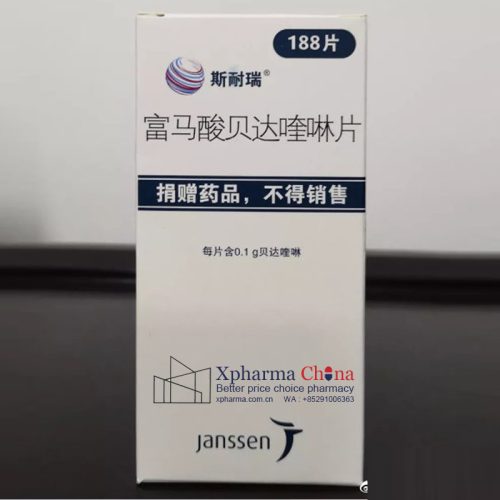
Sirturo Bedaquiline Fumarate Tablets
Brand Name: 斯耐瑞 ®(Sirturo®)
Generic Name: Bedaquiline Fumarate
Strength: 0.1 g (100 mg) per tablet, 188 tablets per box
Manufacturer: Recipharm Pharmaservices Private Limited
Marketing Authorization Holder: Janssen
Approval Date in China: November 23, 2016
Registration Number:国药准字 HJ20171366
Storage: Seal tightly, protect from light, store below 30℃; keep out of sight and reach of children
Price&Cost:Contact Us now for the best price of Bedaquiline Fumarate(Sirturo)
Only logged in customers who have purchased this product may leave a review.



Reviews
There are no reviews yet.