1. Indications and Usage
Parkinson’s Disease:
Indicated for the treatment of the signs and symptoms of idiopathic Parkinson’s disease.
Usage Context:
Monotherapy: As an initial treatment for patients not currently receiving levodopa.
Adjunct Therapy: As an add-on to levodopa for patients experiencing end-of-dose “wearing-off.”
2. Dosage and Administration
Recommended Dosage:
Monotherapy: 1 mg orally once daily.
Adjunct Therapy to Levodopa: 1 mg orally once daily.
Note: In patients taking rasagiline with levodopa, the dose of levodopa may need to be reduced.
Administration Instructions:
Administer orally with or without food.
Dose Modifications:
Patients taking concomitant fluvoxamine or ciprofloxacin (CYP1A2 inhibitors) or patients with mild hepatic impairment should not take more than 0.5 mg of rasagiline once daily.
Rasagiline is not recommended for patients with moderate or severe hepatic impairment.
3. Mechanism of Action
Selective MAO-B Inhibitor:
Rasagiline is an irreversible, selective inhibitor of monoamine oxidase type B (MAO-B).
Physiological Effect:
It inhibits the enzymatic breakdown of dopamine in the brain. By blocking dopamine degradation, it increases the concentration of dopamine in the striatum, enhancing dopaminergic transmission to improve motor function.
4. Safety and Warnings
Orthostatic Hypotension:
Rasagiline may cause orthostatic hypotension. Monitor blood pressure, especially in patients taking antihypertensives or those with a history of falls.
Dyskinesia:
When used as an adjunct to levodopa, dyskinesia may occur. Reduction of the levodopa dose may be necessary.
Hallucinations and Psychotic-like Behavior:
Can occur, particularly in patients with pre-existing dementia or psychosis.
Melanoma:
Epidemiologic studies have reported an increased incidence of melanoma in patients treated with rasagiline compared to the general population. Patients should be monitored for melanoma.
Hypertensive Reaction:
Although rasagiline is selective for MAO-B, selectivity decreases with increasing dose. Caution is advised regarding dietary tyramine intake (though strict restriction is not required at 1 mg/day, high intake should be avoided) and concomitant use of sympathomimetics.
5. Adverse Reactions
Most Common (Monotherapy):
Arthralgia, influenza syndrome, depression, loss of appetite, nausea, and dyspepsia.
Most Common (Adjunct Therapy):
Dyskinesia, headache, nausea, dry mouth, and constipation.
6. Drug Interactions
Serotonin Syndrome:
Concomitant use with SSRIs, SNRIs, TCAs, or dextromethorphan may lead to serotonin syndrome. A washout period of at least 14 days is recommended when switching between MAO-B inhibitors and these agents.
CYP1A2 Inhibitors:
Concurrent use with CYP1A2 inhibitors (e.g., ciprofloxacin, fluvoxamine) significantly increases rasagiline exposure. Avoid concomitant use or limit rasagiline dose to 0.5 mg.
7. Pharmaceutical Information
Chemical Name:
N-propargyl-1(R)-aminoindan methanesulfonate.
Storage:
Store at 25°C (77°F); excursions permitted to 15-30°C (59-86°F).
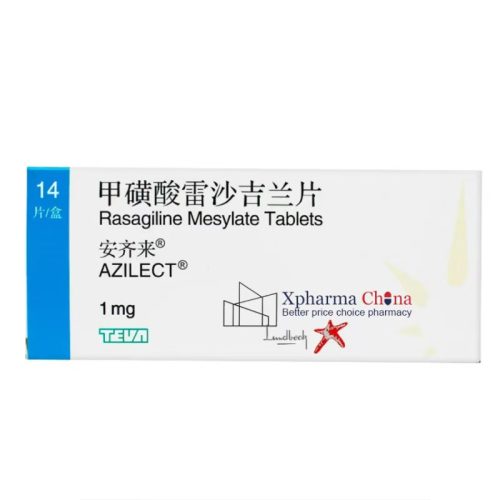
Azilect Rasagiline Mesylate Tablets
Brand Name: 安齐来® (Azilect®)
Generic Name: Rasagiline Mesylate
Strength: 1 mg per tablet (calculated by rasagiline), 14 tablets per box
Manufacturer: Teva Pharmaceutical Industries Ltd.
Marketing Authorization Holder: Teva Pharmaceutical Industries Ltd.;境内负责企业:梯瓦制药(中国)有限公司
Approval Date in China: May 12, 2017
Registration Number:国药准字 H20170336
Storage: Seal tightly and store at a temperature not exceeding 30℃; keep dry, away from light, and out of reach of children
Price&Cost:Contact Us now for the best price of Rasagiline Mesylate(Azilect)
Only logged in customers who have purchased this product may leave a review.
Reviews
There are no reviews yet.